Translated with AI from the Russian original.
MTS Optimus can record and transcribe work meetings, turn them into notes and a list of tasks, and also work with a client base.
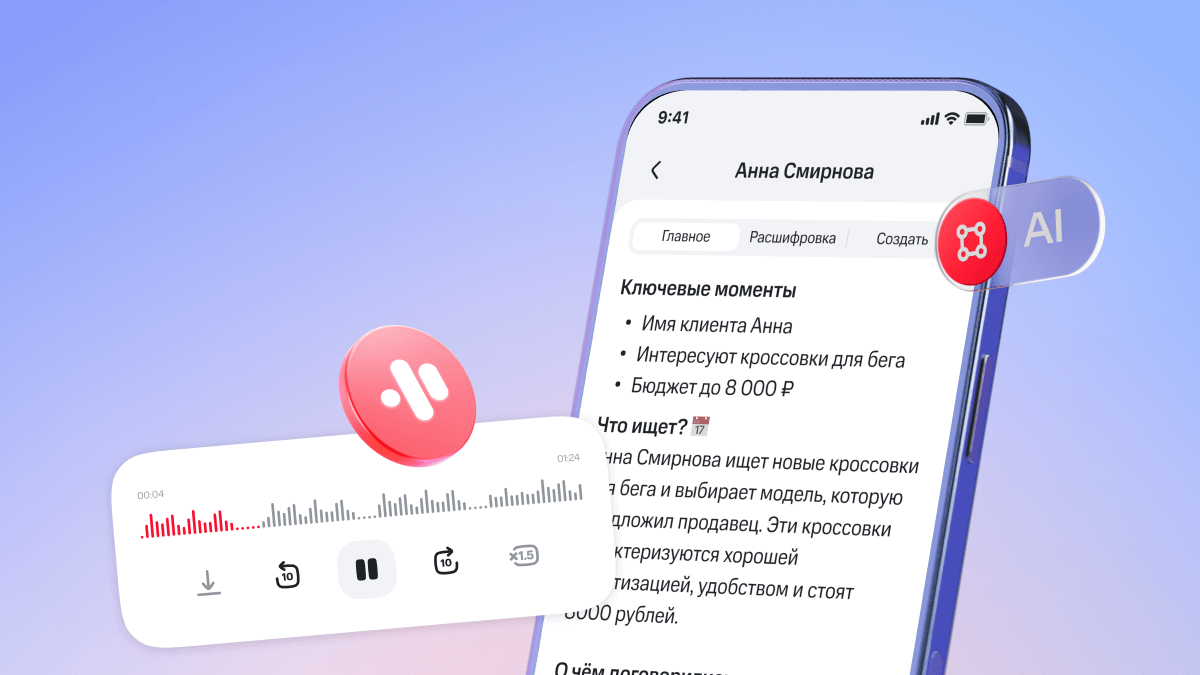
After connecting to the service using "MTS ID", the user gains access to a set of tools for work: automatic recording and transcription of calls, intelligent semantic summaries from AI, contextual search through transcripts, and a task list linked to contact cards.
In addition to the mobile application, MTS Optimus is presented in the format of a mini-CRM - a web version ready to work without integrations. After authorization in the browser by phone number, all calls from the mobile application are automatically pulled into the system. From any conversation, you can record an order, add a contact, or set a task in a few clicks.
Everything works synchronously. If you make a call or add a contact in the mobile application, the data appears in the web version along with the entire history of interactions, for example, order history. The built-in catalog allows you to attach products and services to orders. In the future, users will be able to connect employees to the platform and work with calls from their mobile devices in a single cloud.











