Basis announces the new release of its flagship solution for comprehensive dynamic infrastructure management - Basis Dynamix Enterprise 4.2.0. The main innovation is the first deep integration in the Russian market of the Basis solution and YADRO's TATLIN.UNIFIED storage system with support for snapshots and volume replication. In addition, Dynamix Enterprise 4.2 implements DPDK technology support, quick access to virtual machine management, a new Q35 chipset selection, UEFI boot support for virtual machines, and over 60 new features.

Support for TATLIN.UNIFIED Storage and Data Migration Between Storage Systems
In Dynamix Enterprise 4.2, working with data storage has become more efficient. The platform interacts with TATLIN.UNIFIED storage systems (Gen1 and Gen2) via the public API version 3.1. Now, administrators can use both traditional pools and new volume-type resources with the ability to clone and create snapshots.
A migration mechanism between storage systems has appeared: now you can transfer data between pools within the same storage system, as well as perform migration, even if the target storage uses a different consumption node.
You can create disks from images stored in other storage systems, not just in the one where the disk itself is created.
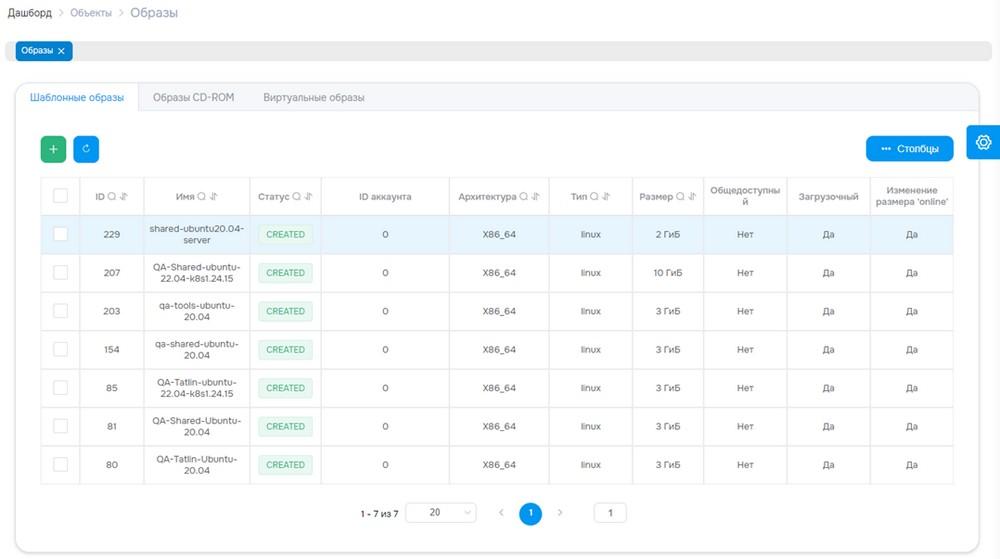
This provides more opportunities for working with different storage systems, simplifies storage infrastructure management, and allows for additional fault tolerance for sensitive data storage systems.
Improved Routing and Network Settings
The updated Dynamix Enterprise implements support for DPDK technology, and a network connection type of the same name for virtual machines (VMs) on Ubuntu OS has become available. Corresponding changes have been made to the solution interface: a page with a list of DPDK networks and a page with the characteristics and settings of a specific DPDK network have been added. Also, the necessary items for the administrator have been added to the dialog boxes for creating VMs, connecting an interface to a VM, etc.
DPDK support is important when intensively using the VM network, as it significantly speeds up the processing of network packets in Linux-based OS.
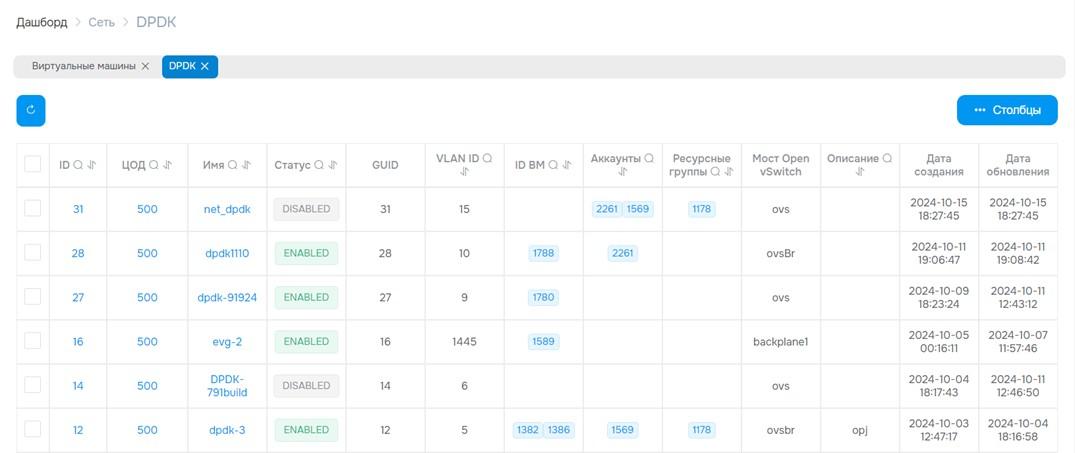
To simplify network configuration, the mechanism for working with static routes has been changed. Now they are configured through a virtual router, and all VMs on the network automatically receive the necessary settings.
For flexible organization of the network infrastructure, support for multiple external networks with overlapping IP address pools has been added when using different VLANs. And to simplify address distribution, you can now reserve groups of IP addresses in external networks for specific accounts.
To speed up network operation on hypervisors with ALT Linux and Basis vCore OS, networkmode: ovs mode has been added. It allows you to create bridges and ports in Open vSwitch directly, without intermediate Linux bridges.
Additionally, spoof check mode has become available when configuring the virtual functions of a compute node, which increases the security of network interaction.
Expanded Virtual Machine Configuration Options
The new version of Basis Dynamix Enterprise introduces support for the Q35 chipset for the virtual machine motherboard. Now, when creating a VM or Kubernetes cluster, you can choose between Intel 440FX and Q35. The new chipset supports connecting more than 9 disks and up to 30 network interfaces to the VM, which significantly expands the capabilities of the virtual environment.
An important addition is support for SCSI UNMAP/SATA TRIM. Thanks to this function, virtual machines use disk space more efficiently, automatically freeing up unused areas in storage systems.
Virtual machines can now be booted in UEFI mode.
Administration and Infrastructure Management
In release 4.2, node identification has become more transparent: now, when adding a compute node, the system automatically assigns it a unique IQN name containing information about the creation date, node, and site.
Flexible placement of virtual machines on nodes has become available thanks to the new interface for managing affinity and antiaffinity rules. Administrators can precisely configure load distribution and increase infrastructure fault tolerance.
Quick access to virtual machine management via the virsh console command directly from the compute node has appeared. This allows administrators to continue managing virtual machines even when the management circuit is completely unavailable.
The platform has received the function of automatically starting VMs attached to a node when the node is restored. When a node exits the maintenance state, the system automatically starts all VMs with the autoStart=true flag, minimizing infrastructure downtime.
For non-certified environments, the installer now has the ability to deploy a management cluster on nodes with vCore, using the modern Kubernetes 1.29.6 + crio + podman stack.
New Monitoring and Management Tools
Monitoring the state of the infrastructure has become clearer thanks to the new "Connections to Storage Systems" and "Tasks" tabs in the physical node interface. The data is displayed in formatted form in XML.
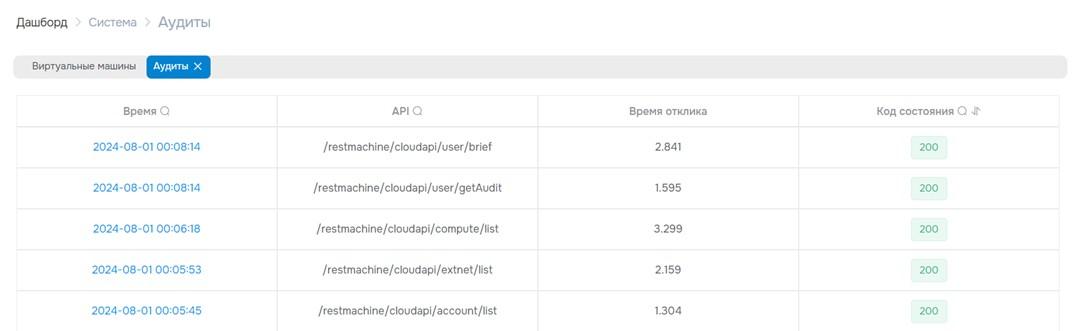
Audit tools have been seriously improved: the administrator can set the storage time for logs and audits via system-config, methods for working with user audits have been added, and the ability to upload audits as files in CSV format has appeared. Audits are uploaded as an archive with files indicating the time of API method calls.
Corresponding changes have been made to the Dynamix Enterprise interface, in particular, the name of the "Journal" tab has been changed to "Audits" on the resource group, virtual machine, and internal network pages.
"In the new release, we focused on supporting current technologies and improving the usability of our flagship solution, including by significantly increasing the speed of the frontend," notedDmitry Sorokin, Technical Director of Basis.