Russians lose over 5 million rubles due to personal data leaks. The number of those who intend to actively respond to such incidents is growing. Half of those surveyed continue to consider leaks a serious problem, and 54% of respondents admitted that they have never checked their data for compromise. The Competence Center of the Garda Group of Companies has found out how the attitude of citizens to personal data leaks has changed compared to last year. The research results were presented at the conference "Save Everything: Information Security" on October 24 in Moscow.
People are losing more money due to data leaks

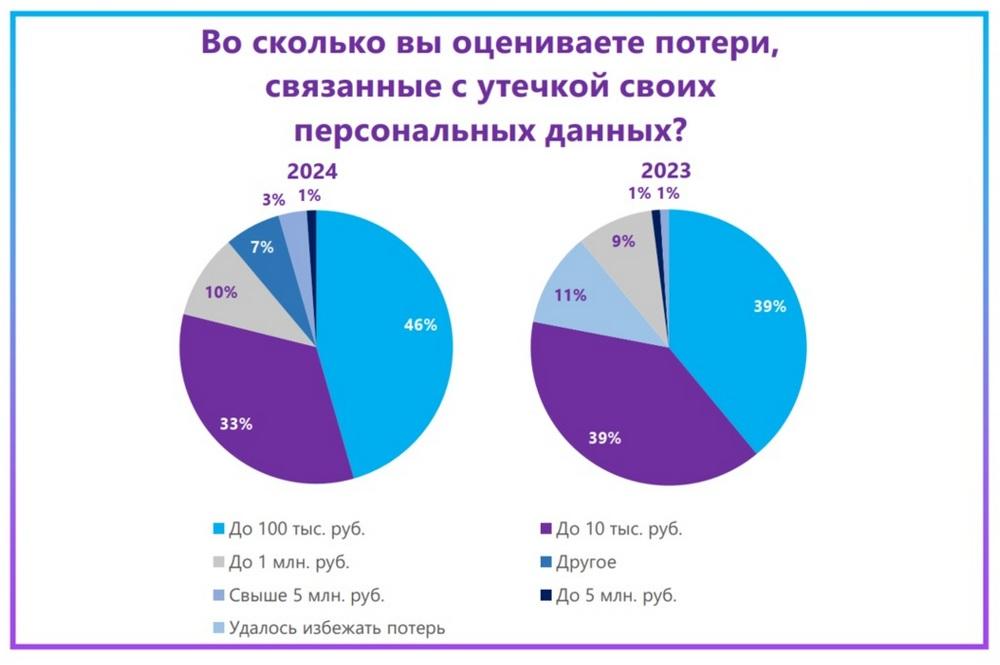
The study showed that Russians continue to face financial losses due to leaks. The number of citizens who noted damage in large amounts (from 100,000 to over 5 million) in different categories either increased or remained at the same level: 46% of respondents estimated their damage at 100,000 rubles, which is seven percentage points more than in 2023. The share of those who reported losses of up to one million rubles increased (10% versus 9% a year earlier). Also this year, 1% indicated damage of up to five million rubles, and another 3% reported losses of over five million rubles.
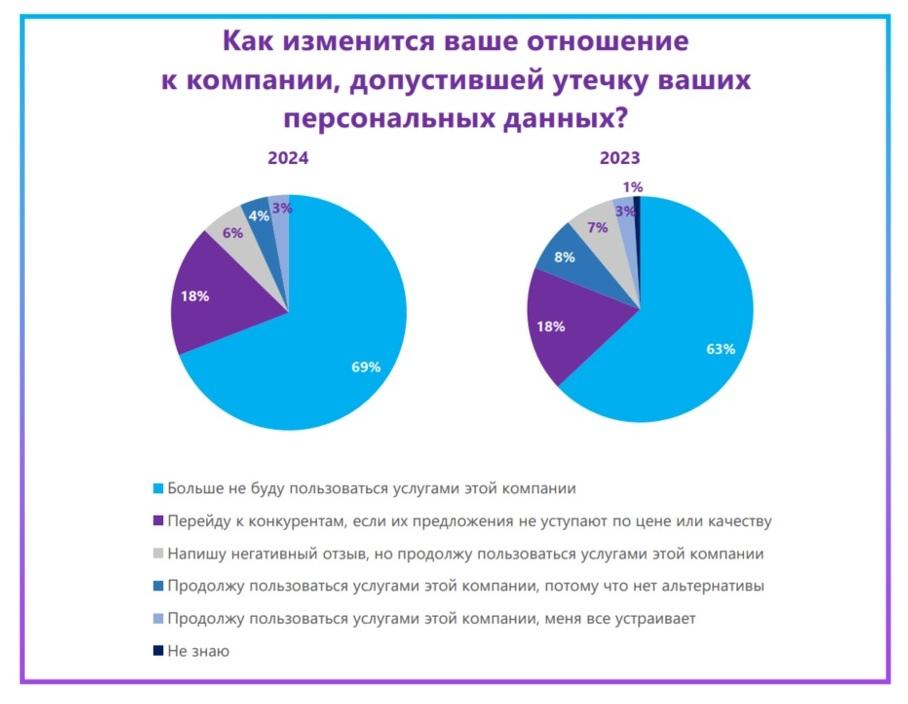
More than half of respondents will not use the services of a company that has leaked
In 2024, 69% of respondents said that they would not use the services of a company that had leaked personal data, which is six percentage points more than in 2023.
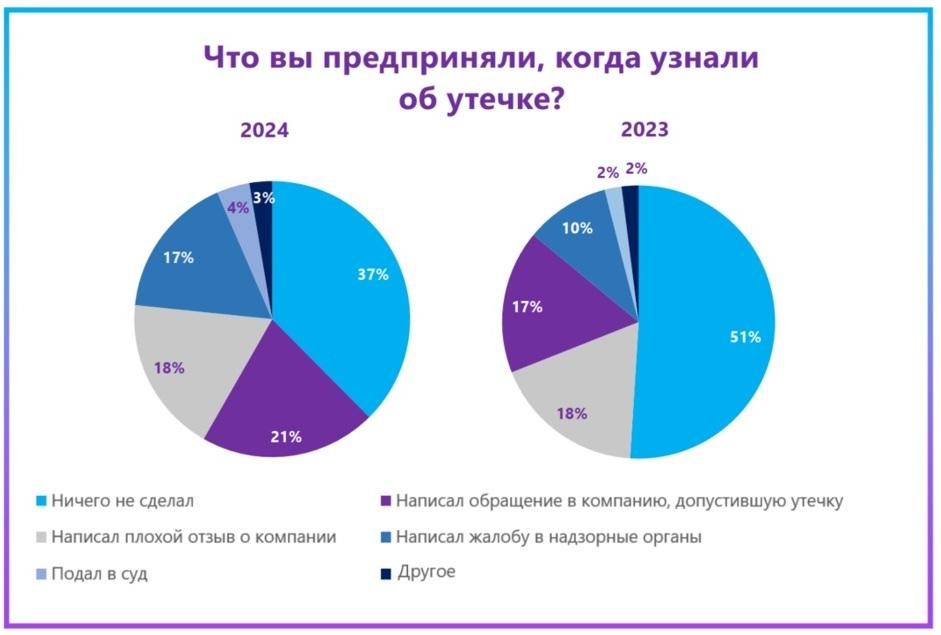
According to the study, in 2024, the number of citizens who ignore cases of leaks decreased from 51% to 37%, which indicates an increase in caution in matters of cybersecurity.
Fraudsters continue to attack users with phone calls and spam
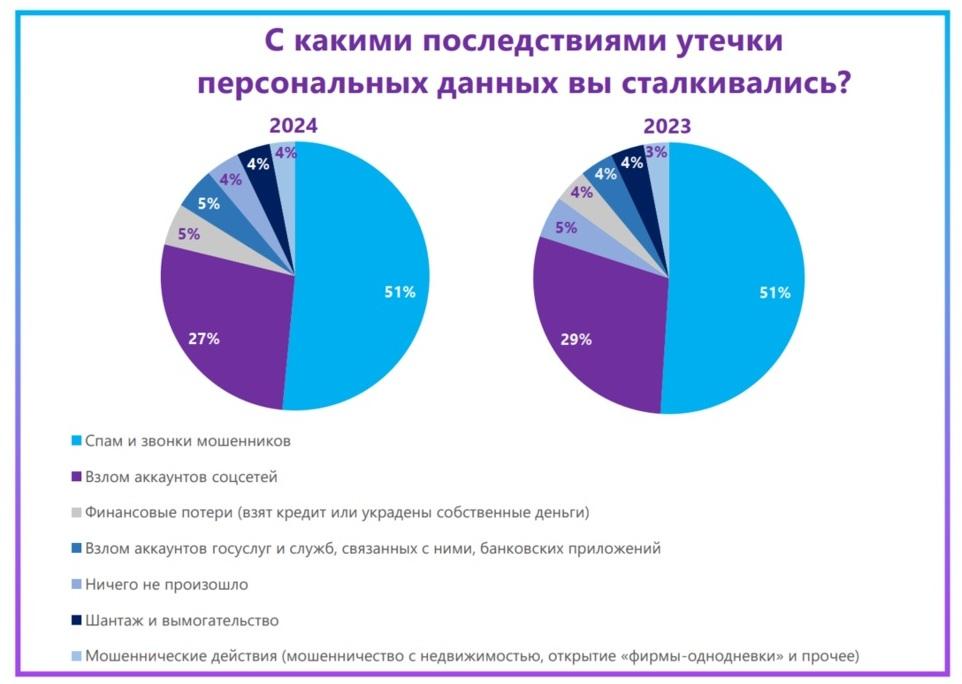
In 2024, 51% of respondents reported that as a result of personal data leaks, they began to receive more spam and calls from fraudsters, which is similar to the 2023 figure. This year, linear employees suffer the most from spam (54%), while a year ago it was pensioners (63%). This may be due to the development of digital services that older people use less. People with more wealth are more likely to encounter the financial consequences of the activity of attackers.
Citizens are more likely to complain to supervisory authorities about data leaks
In 2024, the number of those who actively respond to personal data leaks has increased. Thus, 21% of Russians contacted companies that allowed the leak, compared to 17% in 2023. Citizens are more likely to file complaints with supervisory authorities (an increase from 10% to 17%), and lawsuits in court (an increase from 2% to 4%). Russians are becoming more aware of what can be done to protect their data. In 2024, three percent of respondents chose the "Other" item, where, among other actions, people mentioned changing passwords, blocking and reissuing bank cards, installing two-factor authentication, and deleting accounts from services that allowed the leak.
In 2024, only 9% of respondents were satisfied with the measures taken against the company
In 2024, more citizens began to monitor whether the company that allowed the data leak was punished. Thus, 33% noted that the company did not bear fair responsibility, which is five percentage points lower compared to 2023. At the same time, the number of respondents who believe that the punishment does not correspond to the damage caused increased (from 7% to 12%).
Russians are still exposed to personal information leaks regardless of age, gender, social status, income level and region of residence, however, 54% of respondents admitted that they have never checked their data for compromise. Nevertheless, there is an increase in the number of citizens using special services to monitor leaks. People with high incomes and young people are most actively monitoring leaks. In general, the higher the income, the more attention is paid to data protection.
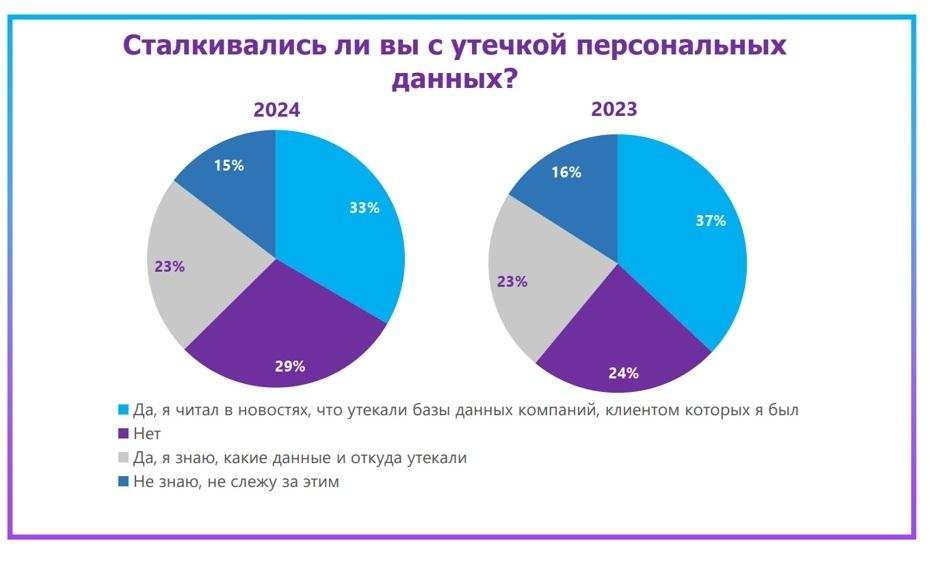
A third of Russians know about personal data leaks
The number of respondents who have encountered data leaks remains high: 33% of Russians know about such facts, and 23% of them know which company caused the incident. Managers and top managers demonstrate an active interest in the topic of leaks: 49% of them know that there were cases of data theft from companies whose services they use.
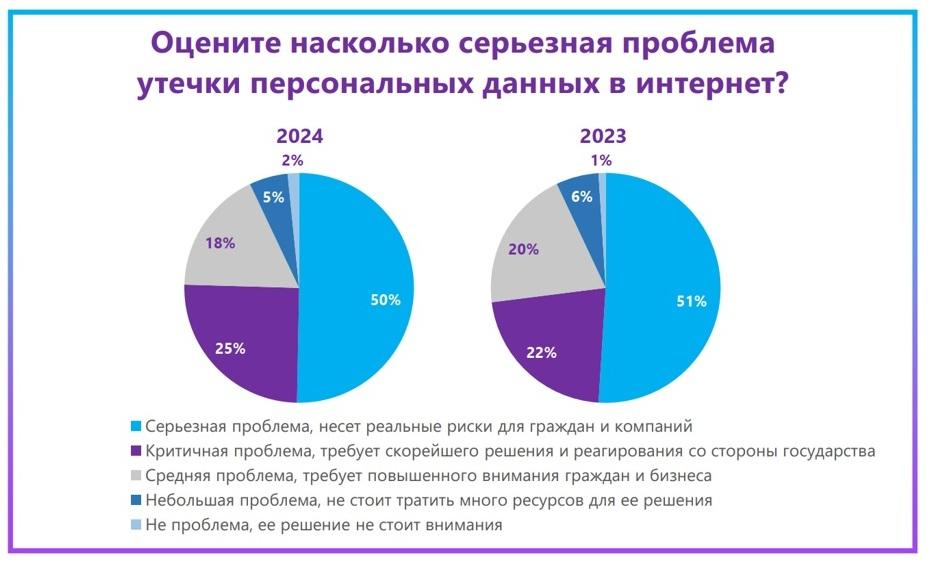
50% of Russians consider data leaks a serious problem
Half of those surveyed consider leaks a serious problem, which demonstrates a stable attitude to the risks associated with the compromise of personal data.
Problem/solution
According to experts, to ensure real data security, active interaction between the state, business and citizens is necessary, and the media can become the connecting link between them. Educational activities of information security system manufacturers through all possible communication channels will contribute to the growth of citizens' cyber literacy. And compliance with basic rules of digital hygiene will help protect at least the unprotected segments of the population.
1. Use strong passwords from a set of letters, numbers and symbols of different cases, without repeating them in different services.
2. Change passwords regularly and use two-factor authentication: in case of a leak, it is important to quickly change access data to important services.
3. Get a special card for online purchases and transfer the required amount to it only at the time of payment. Do not link salary cards to personal accounts.
4. In case of receiving suspicious incoming messages in text or other format from organizations, departments, government agencies, or from management or relatives, call back to official telephone numbers and double-check requests and requests.
5. Regularly check bank accounts and transaction histories for suspicious transactions. If such are found, block the cards and reissue new ones.
Illustrations are provided by the press service of GARDA company.