Translated with AI from the Russian original.
Many of us like to start our day with coffee or tea and often buy these drinks to go on the way to work. The coffee-to-go market began to grow during the 2020 coronavirus pandemic and will continue to grow in 2024. The Russian Environmental Operator (REO) announced statistics that more than 40 billion disposable cups are used annually in Russia.
Most disposable paper cups are lined with a polyethylene film on the inside, making them almost impossible to recycle. In addition, when mixed with organic household waste, cardboard and paper absorb moisture and become heavily contaminated, which also complicates their recycling.
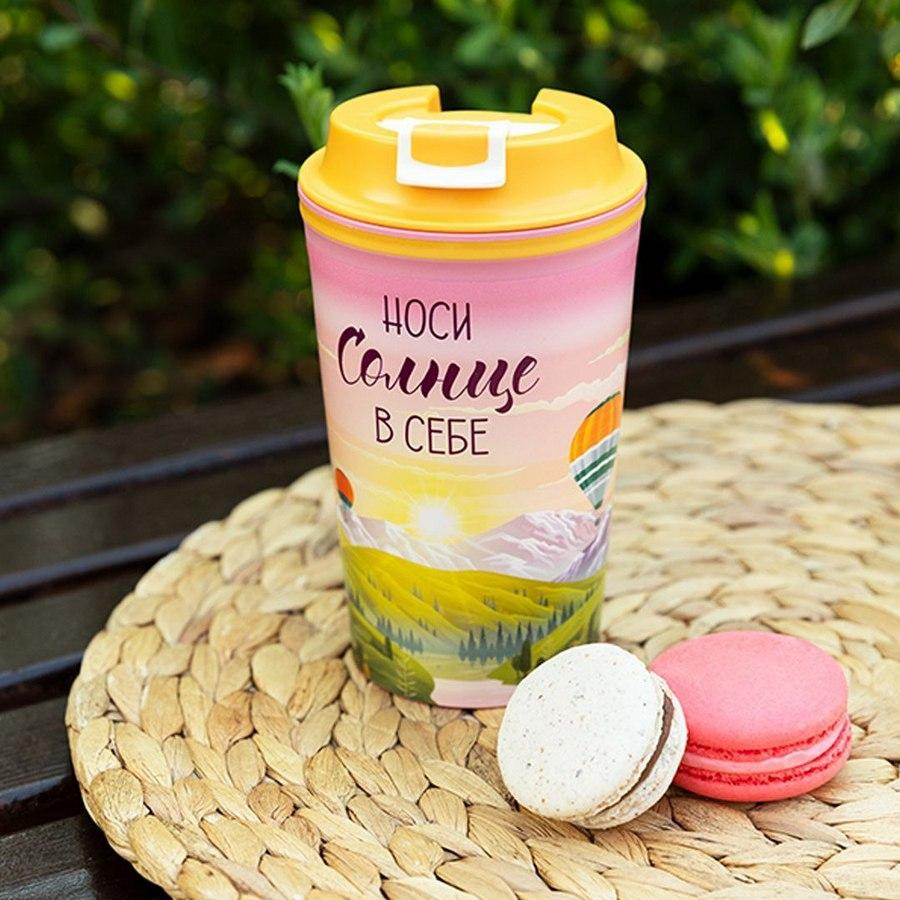
A good alternative to disposable paper cups is mugs or reusable cups for hot drinks. For example, Phibo hot drink cups from the Russian company "Bytplast", which close tightly and will last a long time. These cups are made of polypropylene, one of the best plastics in terms of chemical safety.
Bisphenol A is a harmful substance that may be contained in some types of polymers. For example, it can be released when using polycarbonate dishes. There is no such danger for polypropylene products. And if the product is marked with the number 5, or the letters PP (Latin), or the letters ПП (Russian), this already means that it cannot contain "bisphenol A". Among other things, polypropylene products are subject to full recycling.
A study published in the scientific journal Environmental Science & Technology (ESS) in January 2024 showed that abandoning plastic in favor of analogues generally leads to increased greenhouse gas emissions. Experts examined plastics and their substitutes in various applications, including consumer durables. The results showed that in most cases, the use of plastic products leads to lower greenhouse gas emissions compared to their alternatives.
Therefore, there is no need to "demonize" plastic. To solve the problem of plastic waste disposal, it is necessary first of all to improve the system of separate waste collection.
"Bytplast" strives to develop consumer awareness of responsible consumption and separate waste collection. The company's project to involve solid plastic waste in recycling and the production of new products received the Eco Best Award this year. The company will independently collect and process agrotextiles (non-woven material based on polypropylene, manufactured using "spunbond" technology) and other solid polypropylene waste (post consumer waste) into polypropylene granules.











