Scientists from the Institute of Volcanology and Seismology of the Far Eastern Branch of the Russian Academy of Sciences have successfully made a short-term prediction of the earthquake that occurred on August 18, 2024, causing six-point tremors in Petropavlovsk-Kamchatsky, thanks to a new effective approach to predicting strong Kamchatka earthquakes.
This success is the result of more than 20 years of research by a scientific team led by Doctor of Physical and Mathematical Sciences, Head of the Laboratory of Integrated Monitoring of Seismically Active Environments of the Institute of Volcanology and Seismology of the Far Eastern Branch of the Russian Academy of Sciences, Valery Gavrilov. Valery Alexandrovich also heads the research laboratory of extreme phenomena in Kamchatka at KamSU named after Vitus Bering, for which the development of methods for predicting strong Kamchatka earthquakes is one of the priority tasks.

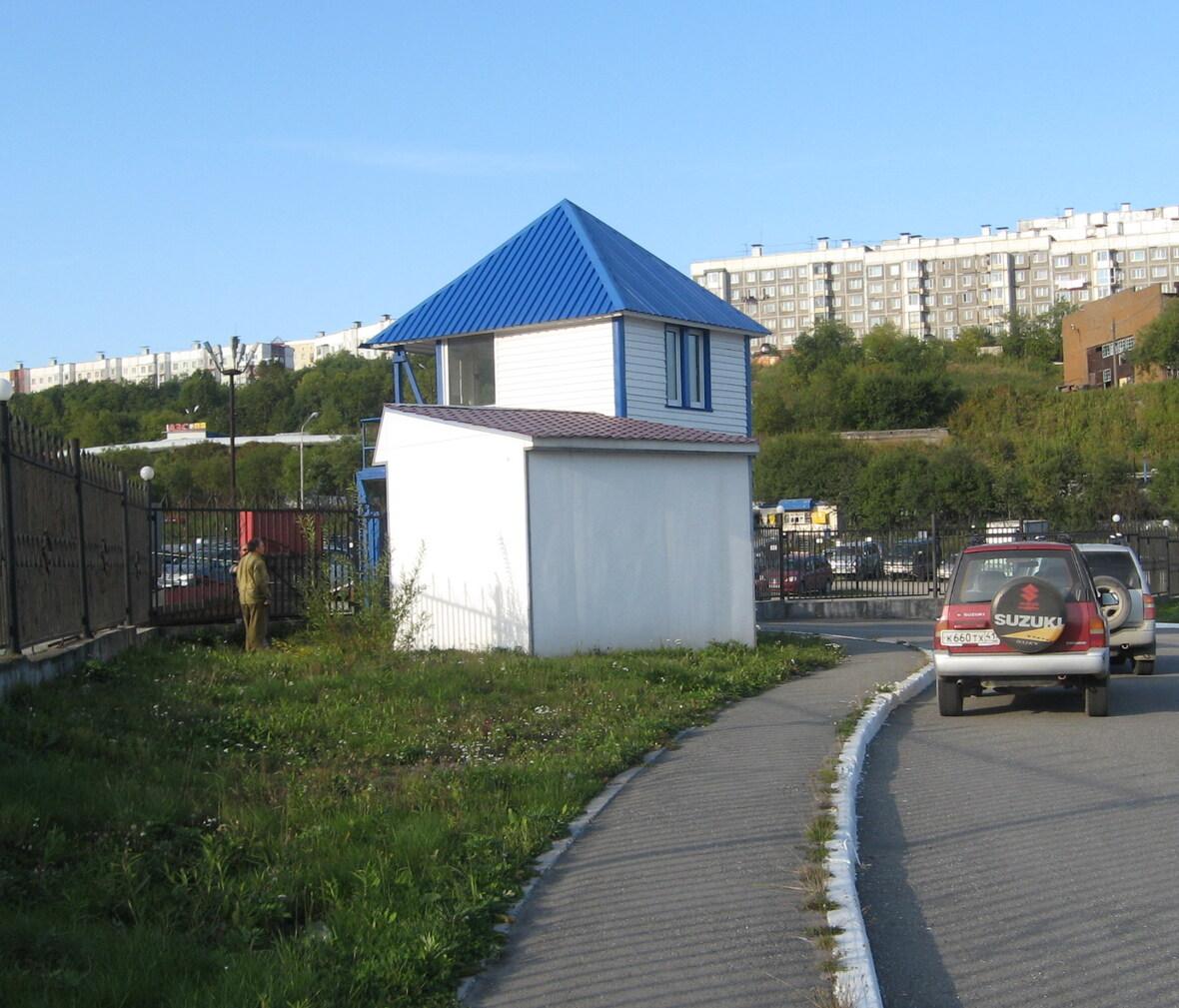
To monitor earthquake preparation processes, scientists use a network of borehole measurement points equipped with special equipment. This allows registering changes in the state of the geosphere at depths of up to 2.5 km. The most effective well - 2542 m - is located in Petropavlovsk-Kamchatsky, approximately one kilometer from Kamchatka State University named after Vitus Bering.
The well was drilled in a well-developed fault zone, which makes the measurements carried out on its basis particularly informative. "Conducting measurements at a significant depth, up to 1000 m, makes it possible to reduce the influence of noise associated, for example, with automobile traffic, winds, precipitation and other similar factors, by about 200 times. This allows obtaining results that are not available when observing on the surface," explains Valery Gavrilov.
The borehole monitoring system includes 10 types of measurements, including unique methods such as measurements using underground electrical antennas and geoacoustic measurements. Also, scientists use satellite systems to analyze the state of the ionosphere. Based on these data, maps of anomalies are created, which are formed before earthquakes.
The effectiveness of these methods was proven in predicting the strong earthquake that occurred on August 18, 2024. 10 days before this seismic event, scientists recorded significant anomalies in all parameters. "We confidently observed the preparation of the earthquake from December 2023. At this stage, we reported an increased probability of a strong earthquake in a certain area around Petropavlovsk-Kamchatsky, indicating its main parameters. And when on August 8 we saw the transition to the final stage of preparation of the seismic event, we gave a forecast of its significant probability," says the scientist.
To increase the accuracy and reliability of forecasts, according to Valery Gavrilov, it is necessary to increase the number of points of complex borehole measurements in the Petropavlovsk-Kamchatsky area from the current three to five to at least 15.
Kamchatka is the most seismically active region in Russia and one of the most seismically active regions in the world. Work related to predicting strong Kamchatka earthquakes is of great importance for ensuring the safety of residents of the peninsula. According to the Ministry of Emergency Situations, in the event of a 9-point earthquake in Petropavlovsk-Kamchatsky, tens of thousands of victims are possible. Timely warning of danger will significantly reduce these risks.