Translated with AI from the Russian original.
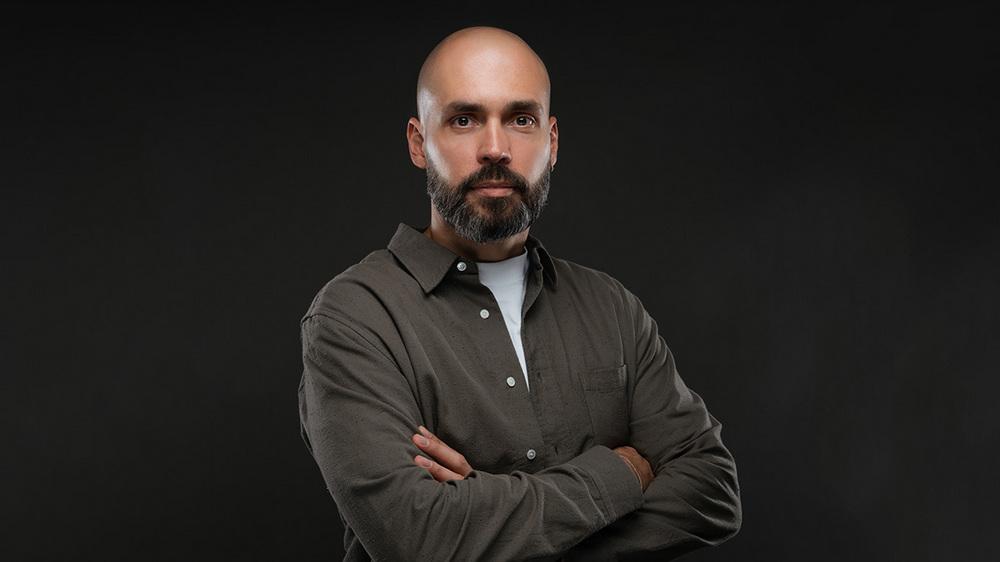
Kirill Kostyushko, Brand Director of Private Labels. Merlion, answers questions from the ixbt.pro division.
How is the development process of your company Merlion, which has been engaged in distribution for more than 30 years?
Over 30 years, the company has gone through various economic periods, invariably maintaining a positive growth dynamic and adapting to new realities. Our experience is not just history, but a foundation for further progress. Each department daily faces new challenges of the time and requests from a dynamically changing market at its own level of activity. We continue to expand our pool of partners, optimize business processes, update product lines and develop new directions.
At what stage of development of Merlion company and in what year did the need arise to form the Private Labels. Merlion division?
It was 2020, right before the pandemic. Now, in retrospect, it is clear that the creation of the Private Labels. Merlion division was a forward-looking strategic step based on the analysis of long-term market trends. The key factor was the growth in the share of private labels (PL), but in addition, trends towards increased deglobalization and diversification of supplies were already noticeable then. The formation of a separate division allowed to consolidate all PLs under a single management, optimize development and promotion processes and increase investment in development. And this decision turned out to be timely - already in 2021-2022, Private Labels. Merlion showed double-digit growth rates.
How would you describe the changes that have occurred in the Russian IT market in the last three years?
As Confucius said: "May God not let you live in an era of change." The last three years in the Russian IT market can be characterized as a structural restructuring. The changes are now of an institutional nature. New rules of the game are being formed that will determine the strategy and work for many years to come. The key factors are not so much technology as the ability to build alternative value chains. The market is no longer "cyclical" - it is transformational.
Managing it through traditional forecasting models is now extremely difficult - only through bifurcation points, where another turn occurs. And let's be honest - few people understand them yet.
What task is set for your department?
Our Division is focused on transforming the traditional distribution model into a comprehensive system for managing our own trademarks. Instead of simply supplying equipment, we create a full cycle - from product development to its final implementation and service support. In fact, we are a vendor within a distributor. We are systematically increasing the share of revenue in the company's total turnover with a parallel increase in profitability. Special attention is paid to categories that form the main turnover. These are large and small household appliances, consumer electronics and IT products. An important part of our work has become the creation of a closed ecosystem. We are introducing tools for forecasting demand and dynamic pricing, which allows us to optimize the entire cycle - from production to after-sales support. At the same time, we are reducing the time to market for new products and developing key sales channels - now these are marketplaces and corporate sales.
What are your responsibilities as Brand Director of Private Labels. Merlion?
As Brand Director of Private Labels. Merlion, I am responsible for managing all of the company's own brands. My work covers strategic development, operational management and cross-team coordination. In the strategic part - this is the definition of long-term development vectors for each brand, analysis of market trends and the formation of the so-called ecosystem of controlled competition, because today there are 16 PLs and brands in our portfolio, some of which exist in the same market segments. Operational work primarily includes the formation and development of a relevant team of specialists and control over the return on brand marketing investments. Cross-team communication is work on establishing effective working relationships with teams responsible for product development, sales and technical support, because "brand" is not so much about beautiful identity and communication, as about creating long-term trusting relationships with the end consumer, for which not only the "packaging" of the product, but also its content and reliability are critical.
How is the process of creating your own brands organized?
The process of creating our own brands in our company is structured as a comprehensive system. It allows you to consistently go through all stages - from identifying market opportunities to launching a product on the market. At the first stage, we conduct a deep analysis of the market and the target consumer. Strategists and analysts study consumer demand, the competitive environment and price segments, identifying promising niches for launching new products. After analyzing and determining the consumer insight to which we want to give our communication response, the development of a brand platform begins - mission, values, ladder of advantages, communication strategy. For each brand, a unique selling proposition, price segment and corresponding product portfolio are formed.
The production stage includes careful selection of suppliers and quality control. Over 30 years of work, we have studied the market to the smallest detail and know where the best factories and suppliers are for the high-quality implementation of an order for the production of our products. The final stage is the launch of the brand on the market. For this, a strategy and a comprehensive program of multi-channel promotion are developed.
How do you exercise full control over brands?
We have built a comprehensive system for managing and monitoring all processes at each stage of the life cycle. Product control includes strict quality standards for each product category. All products undergo multi-stage control before reaching the shelf. We track profitability, turnover and profitability for each category and product, and determine pricing policy. At the communication level, a team of brand managers and brand marketing communications specialists systematically monitor the correct use of the corporate identity of each brand, monitor the accuracy and effectiveness of advertising activities.
What are the differences between brands and PLs?
PLs (private labels) and classic brands represent different approaches to product and marketing management. The main differences concern the level of marketing investment, the positioning model and work with the end consumer. At the product level, brands pay more attention to product uniqueness, materials and the level of implemented technologies. Brands work with emotional attachment, creating a story and controlled impressions, and memories of the product. PLs offer a practical ready-made solution without emotional overtones - an affordable product at a reasonable price on the shelf of various retail chains.
How do you help end customers find solutions for their everyday tasks?
Our support is not limited to just selling goods. We create detailed instructions, video reviews and training materials that help customers navigate our range and use our products as efficiently as possible. For complex technical questions, there is a support service where specialists provide personal consultations. We pay special attention to feedback from users. We regularly conduct surveys, analyze reviews and use this data to improve existing and develop new products. This allows us to constantly improve the range, offering exactly the solutions that people really need in their daily lives.
How many trademarks are under the management of your division?
Currently, the portfolio of our division includes 16 own trademarks. These are brands of household appliances, electronics, computer peripherals, office furniture and stationery. Last year, we acquired Golder Electronics, significantly expanding our presence in the household appliances market. The company our long-liver Starwind was made up of such famous brands as Vitek and Rondell, as well as niche projects Coolfort and Maxwell. Now a lot of work is underway to update the range and relaunch these brands. In the electronics market - this is Digma, one of the oldest domestic trademarks in its segment, its premium sub-brand Digma Pro, where we create products at the level of market leaders, the computer peripherals brand Oklick, which is also celebrating its 20th anniversary this year, and many others.
How is feedback from customers organized?
We have built a transparent system of interaction with business customers, based on constant dialogue. Our specialists directly discuss current projects with clients, advise on the development of new products and jointly develop optimal solutions. This approach allows us to quickly respond to market requests and offer truly demanded products.
For effective coordination, we maintain close communication between all departments of the company. Regular cross-functional meetings for each brand help synchronize the work of teams and clearly define priorities. At these sessions, we jointly analyze market trends, discuss requests received from clients and form a unified vision for the development of the product line.
How creative is your department's team in finding new ideas?
We do not limit the team with rigid frameworks - the only condition remains compliance with common sense and brand values. Our department combines internal expert potential with external innovations: we cooperate with top creative agencies and industry specialists, which allows us to find non-standard ideas and effectively implement them. We deliberately avoid linear development of our own brands, striving for a more conscious and differentiated positioning. Instead of following standard templates, we analyze the market, identify non-obvious consumer insights and form unique communication strategies. This allows our brands to stand out from the competition and create a deeper emotional connection with the audience.
How many teams is your division divided into and what tasks do they face?
The brand marketing department consists of three complementary teams. The branding department is engaged in strategic positioning, develops packaging concepts and monitors the consistency of the implementation of brand platforms. The content and design team creates visual materials, selling product descriptions and all the necessary graphic content for marketplaces and advertising campaigns. The marketing communications department is responsible for PR strategies, information support for new products and coordination of advertising activities. This structured approach allows us to provide a full cycle of marketing support - from product development to its launch on the market and subsequent promotion. All teams work in close cooperation, which guarantees the uniformity of brand communications and the maximum effectiveness of marketing initiatives.
What tasks does your office in China perform?
Our office in China plays a key role in ensuring effective interaction with production partners. Its main task is to maintain constant engineering contacts with manufacturing plants, which allows you to quickly resolve current issues and monitor the implementation of production programs. In addition to working with existing partners, the Chinese office is actively searching for new promising suppliers and production facilities.
A separate important function is product quality control: our engineers test samples, check compliance with technical standards and safety requirements before launching into mass production, and are also responsible for quality control of batches after mass production. In addition, office specialists monitor the local market, analyze new technological trends and help optimize logistics chains. This allows us to quickly respond to changes in market conditions and maintain high delivery standards.
Share your branding case studies
In my background, managing brands in the premium segment - BORK and Togas.
Today, one of the most indicative cases in Private Labels. Merlion is the launch of the flagship sub-brand DIGMA PRO. In this project, we deliberately moved away from mass positioning, building the brand in a near-premium segment. Special attention was paid to the redundancy and quality of product collections, product design, advanced technologies, the quality of visual and communication materials, packaging, built a selective model of advertising placements, creating a focus on a specific target audience. This approach allowed us not only to enter a new price segment, but also to transform the perception of the parent brand DIGMA among the target audience, showing that we have really changed and meet all the challenges of the time.
What are the prospects for PL.M brands in a situation where some Western brands may return to Russia?
Western brands have de facto not disappeared from the market - they have simply moved into the "gray zone", remaining available through parallel imports or local resellers. The consumer still chooses from all options, evaluating the ratio of price, quality and service. Competition is the norm of the market, and it will always be. Our strategy is simple: we make sure that any PL.M product can compete with dignity in any conditions. The main emphasis is on the quality of products and their compliance with the needs of Russian consumers. An important factor is a developed warranty service system, providing customers with reliable support throughout the entire product life cycle.
What tasks will your department face in the future?
Within the brand marketing department, we will focus on the comprehensive development of our brands in several key areas. Firstly, we will strengthen the emotional connection with consumers through well-thought-out communication campaigns and the development of a unique brand style, which will be consistently reflected in all points of contact with the audience. Secondly, we will pay special attention to the digital presence of brands - from optimizing websites and content on marketplaces to creating engaging content in social networks. In parallel, we will work on expanding product lines so that each new product not only meets the expectations of the target audience, but also strengthens the brand's positioning. These efforts are aimed at creating long-term value for our brands and increasing their market share.