Translated with AI from the Russian original.
A new tool, competitive analysis, has appeared in the "Yandex Eats Vendor" service. Now, partner restaurants will be able to track their business performance and compare it with data from competitors in their segment.
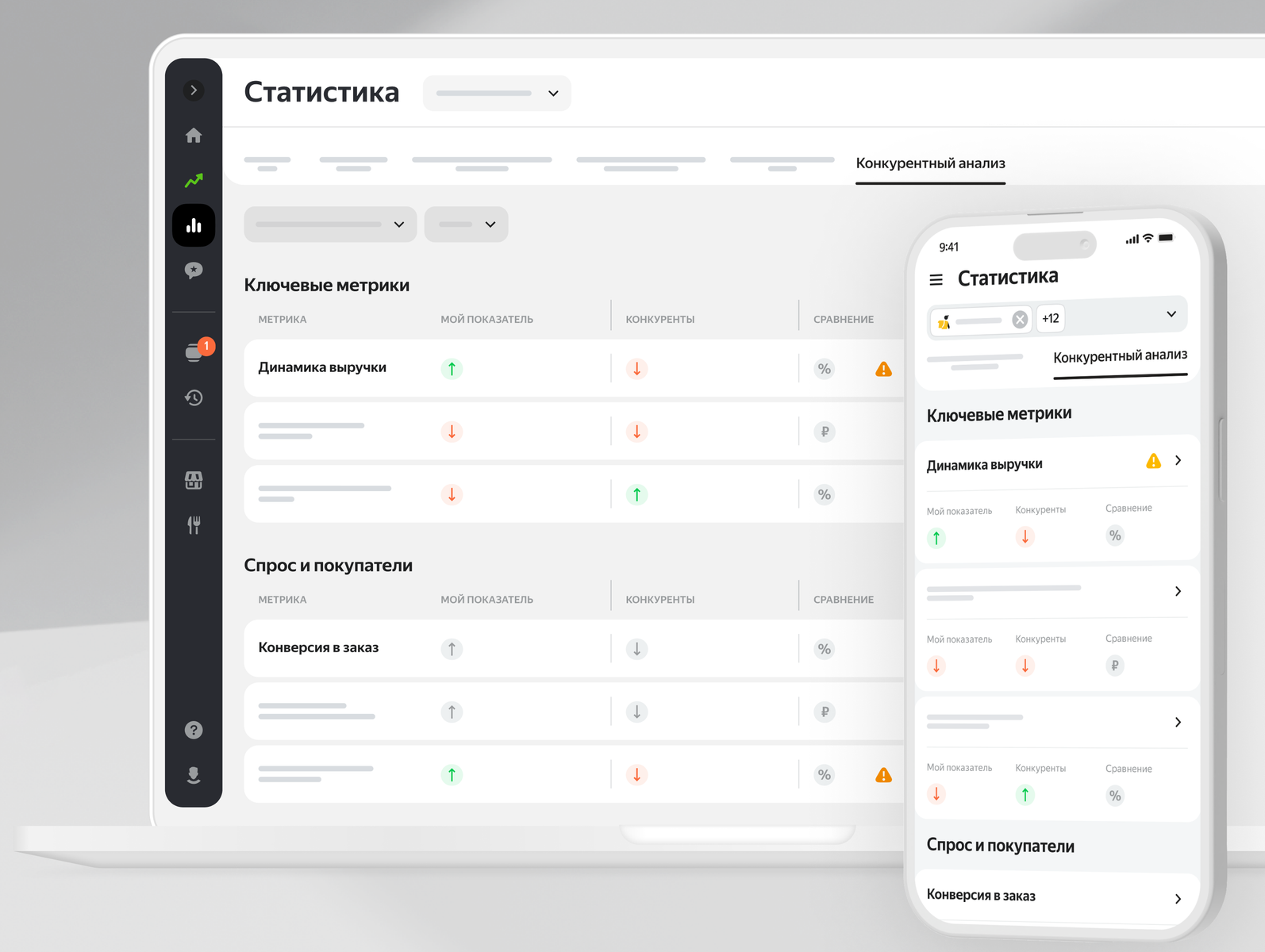
To do this, Yandex developers trained a special algorithm to identify a cluster of restaurants in the region with similar customers, cuisine type, and pricing policy. In the new section, partners will see aggregated data in their niche - the dynamics of orders, revenue, and average check.
The service will show generalized quality metrics of similar establishments - rating, availability, and order preparation time, as well as the number of new and returning customers. Restaurants will be able to monitor how their indicators change against the general background in a specific period - whether they are growing or decreasing.
Competitive analysis and other additional tools are included in a paid subscription for partners. The extended functionality also allows you to receive daily payments, respond to user reviews, offer discounts to various segments of users, generate descriptions of dishes using a neural network, and receive notifications in Telegram.











