The Tech Week 2025 conference, dedicated to digital technologies for business and the application of artificial intelligence, has concluded in Moscow. The event was organized by Synergy Corporation. Representatives from leading companies such as Gazprombank, Yandex, MTS Web Services, Positive Technologies, and others participated in the discussions. The focus of the event was on the practical aspects of integrating AI into business processes and assessing their economic efficiency.
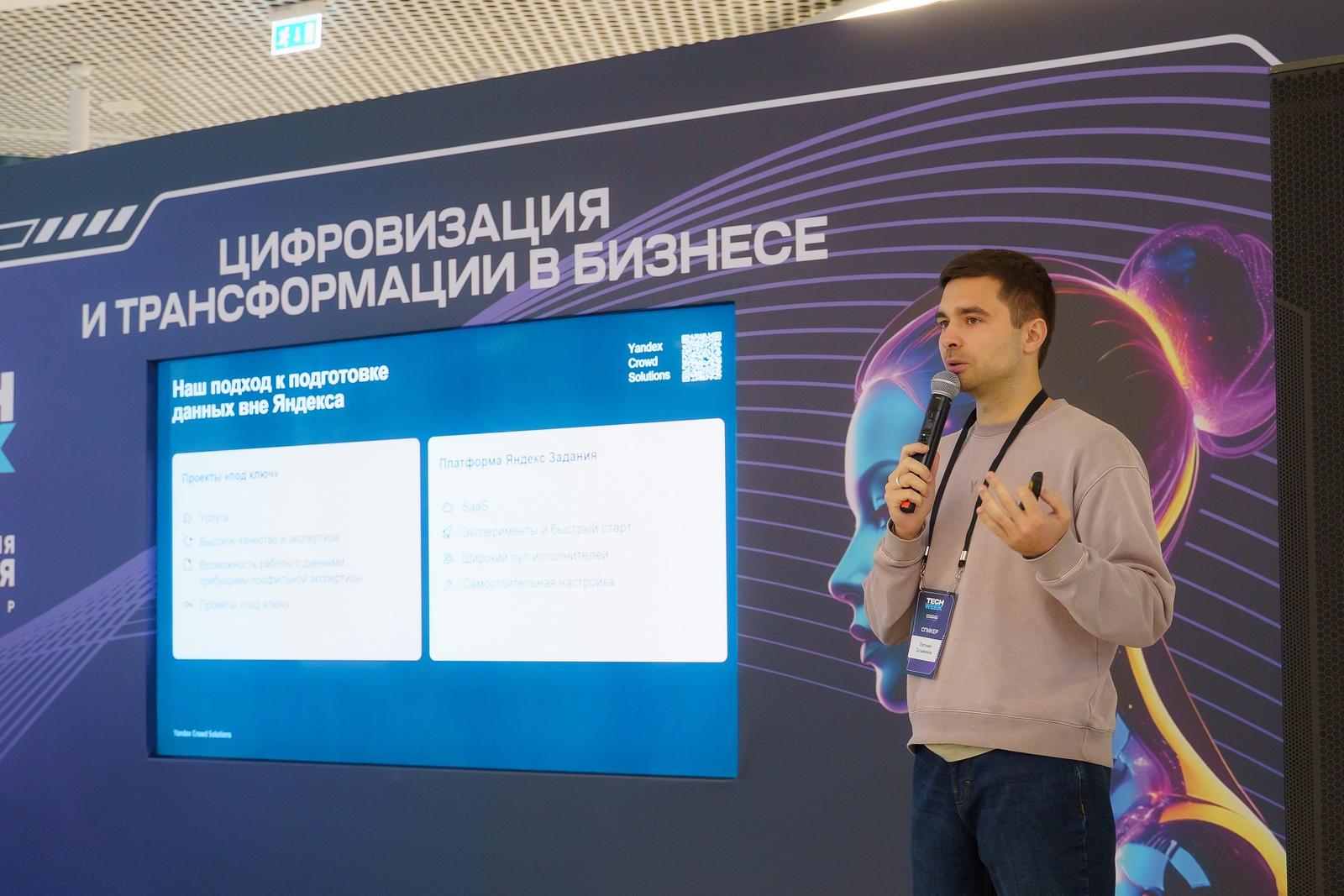
One of the central questions is how businesses should approach the implementation of AI in a balanced way, balancing the calculation of return on investment (ROI) and the acceptance of reasonable risks.
According to Adel Valiullin, First Vice President of Gazprombank JSC, banks today are the main beneficiaries of AI: it is impossible to retain customers without innovation. Gazprombank has a strict criterion for selecting AI projects: a measurable economic effect is mandatory.
At the same time, as noted by Ivan Oseledets, Doctor of Physical and Mathematical Sciences, Professor of the Russian Academy of Sciences and Director of the Artificial Intelligence Institute AIRI, about 80% of companies adhere to a conservative approach: they require successful cases before starting a project. This, in his opinion, blocks innovation.
"The real problem lies not in the plane of technologies, which are already quite developed, but in the field of business processes and implementation systems. A superficial approach is particularly dangerous, when a prototype is created that works in 60% of cases, but there are no mechanisms for its further improvement," Oseledets emphasized.
Participants agreed that digital transformation is impossible without building a culture of trust in AI. Overcoming the internal cultural barrier in organizations is a fundamental task.
"The competitiveness of business today directly depends on strategies based on technology. The implementation of AI allows companies to increase the speed of decision-making by 50%, which improves their ability to adapt to a changing environment," said Vadim Lobov, President of Synergy Corporation.
Artificial intelligence changes not only internal processes, but also interaction with customers.
Anna Ivanova, Executive Director of the Rambler portal, cited data: the introduction of AI services increases the time a user spends on a page from 1.5-2 to 7-9 minutes.
Independent expert Boris Agatov focused on the transformation of decision-making models:
"The first blow to the usual models of behavior was struck by search engines that introduced neural output blocks. We are entering an era when people do not need to click on links, the choice has already been made for them. The second, more significant blow was struck by chatbots with artificial intelligence. Clients who come through them are 8% more involved and 23% less likely to abandon services."
Foresight strategy expert Vitaly Galenchik predicted that up to 40% of the market will become virtual in the future. People will act as supervisors, controlling the work of chatbots and AI assistants.
He also pointed out the need to restructure the education system:
"The new competence is the ability to accept and apply information, to work with "RAM". When the education system adapts to these realities, then we will be successful."
Tech Week 2025 demonstrated:
- AI is already bringing measurable economic benefits in the B2B sector, especially in finance;
- the key obstacle is not technology, but organizational barriers and the conservatism of companies;
- success depends on building a culture of trust in AI and willingness to take managed risks;
- the transformation of consumer behavior requires businesses to rethink customer journeys and channels of interaction.
The conference confirmed that digital transformation is not a trend, but a necessity. Those who manage to build a systematic approach to the implementation of AI will gain a competitive advantage in a changing market.