Translated with AI from the Russian original.
In 2025, the number of companies ready to invest in deep automation and robotization of business processes will almost double. This data is provided in a study by ReIndustry, conducted by the consulting company "KSL".

Robotization is gaining momentum
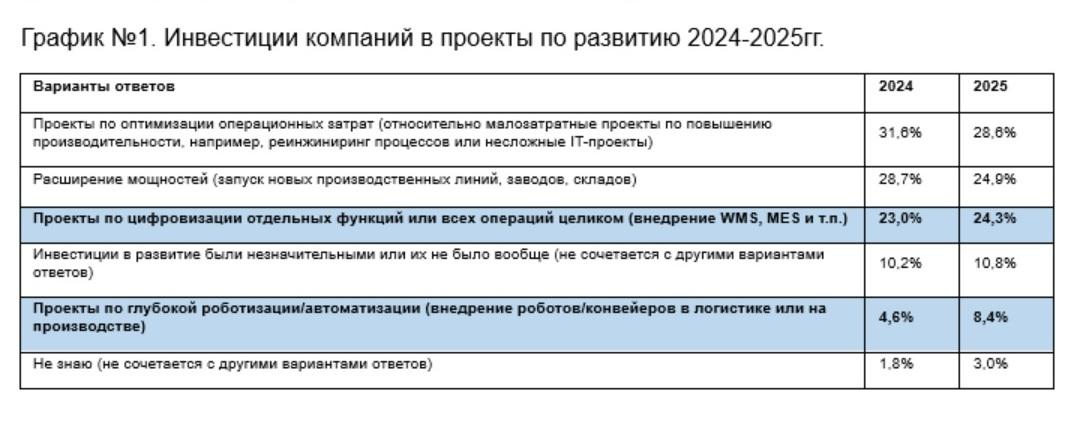
According to the study, in 2024, only 4.6% of companies invested in large-scale robotization and automation projects (for example, the introduction of robots in production or logistics). However, already in 2025, this figure will increase to 8.4%, despite the high key rate and general economic instability.
At the same time, investments in digitalization remain stable: in 2024 23% of companies allocated funds to it, and in 2025 - 24.3%.
The main reasons for switching to robots: personnel crisis and rising costs
The main drivers of robotization were:
· Labor shortage - 15.2% of companies cited the lack of line personnel as a key barrier to growth.
· Increase in operating expenses - businesses are looking for ways to reduce costs without expanding staff.
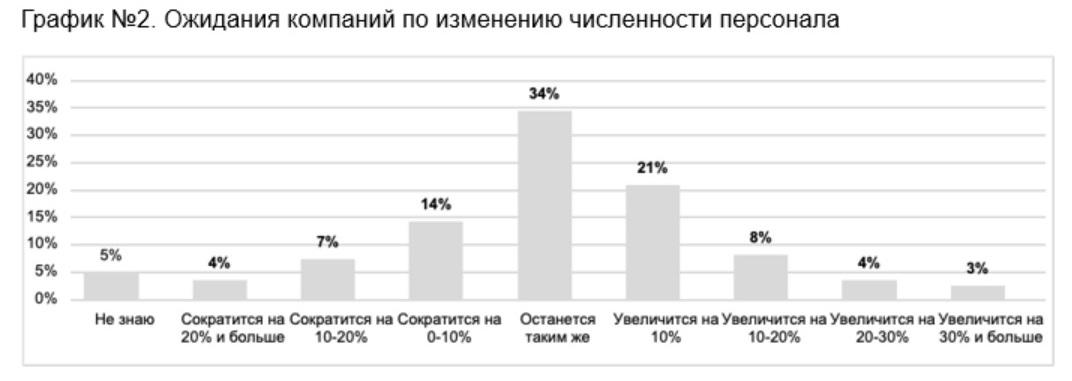
Interestingly, that in 2025, only 36% of companies plan to increase the number of employees, while 34% will retain their current staff, and 25% are preparing for layoffs. For the first time, a trend has been recorded when businesses intend to increase product flow without expanding personnel, relying on technology.
Obstacles to the introduction of robotization
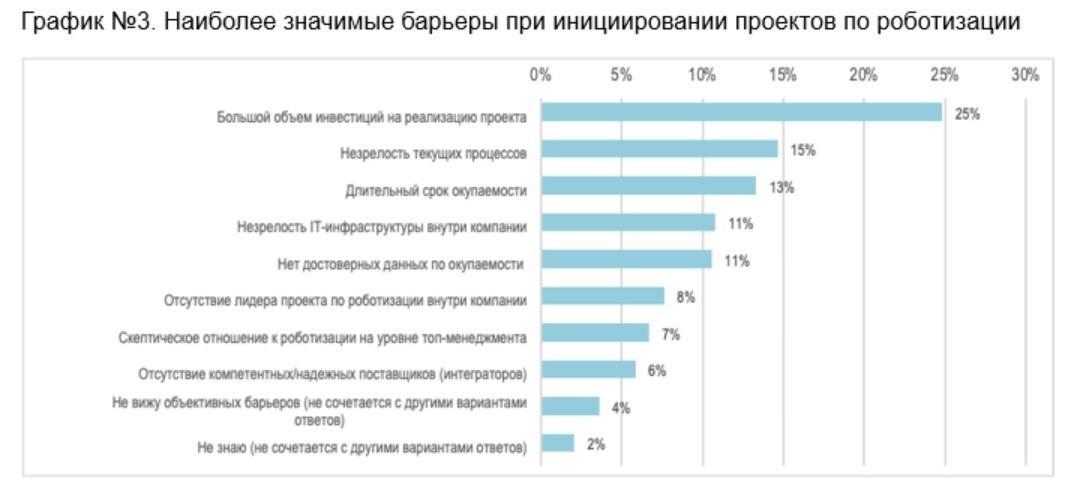
Despite the growing demand, companies face a number of barriers:
· High investments (25% of respondents);
· Immaturity of business processes (15%);
· Long payback period (13%);
· Weak IT infrastructure (11%).
Similar problems also hinder digitalization: 19% of companies are stopped by the volume of investments, 19% - the unpreparedness of processes, 14% - insufficient level of technological base.
Large business adapts faster
The study showed that large companies are less likely to face objective obstacles to digitalization. At the same time, for small and medium-sized businesses, high costs remain a critical factor.
Expert opinion
Vasily Demin, Doctor of Technical Sciences, Executive Director of "KSL" and President of the Organizing Committee of ReIndustry Expo, comments:
"Business is moving from extensive growth to intensive growth: instead of building new factories and warehouses, companies are investing in technologies that allow them to quickly scale production without increasing staff. Robotization and digitalization are becoming key tools for reducing dependence on manual labor. Solutions that can flexibly adapt to changing requirements - from planning to logistics - are especially in demand. At the same time, the labor market continues to put pressure: the cost of physical labor will only increase, which will accelerate the transition to automation."
Conclusion
2025 may be a turning point for Russian industry and logistics: more and more companies are choosing robots and AI to compensate for personnel shortages and reduce costs. The trend towards automation will only intensify, especially in the context of increased competition and rising labor costs.











