Translated with AI from the Russian original.
A storage system is the only infrastructure layer where an error cannot be “rolled back”: neither a reboot nor a configuration rollback will restore lost data. That is why users expect predictability from software-defined storage rather than just new features—ensuring background processes finish what they started, and administrators can see the cluster status not only “right now,” but also over time.
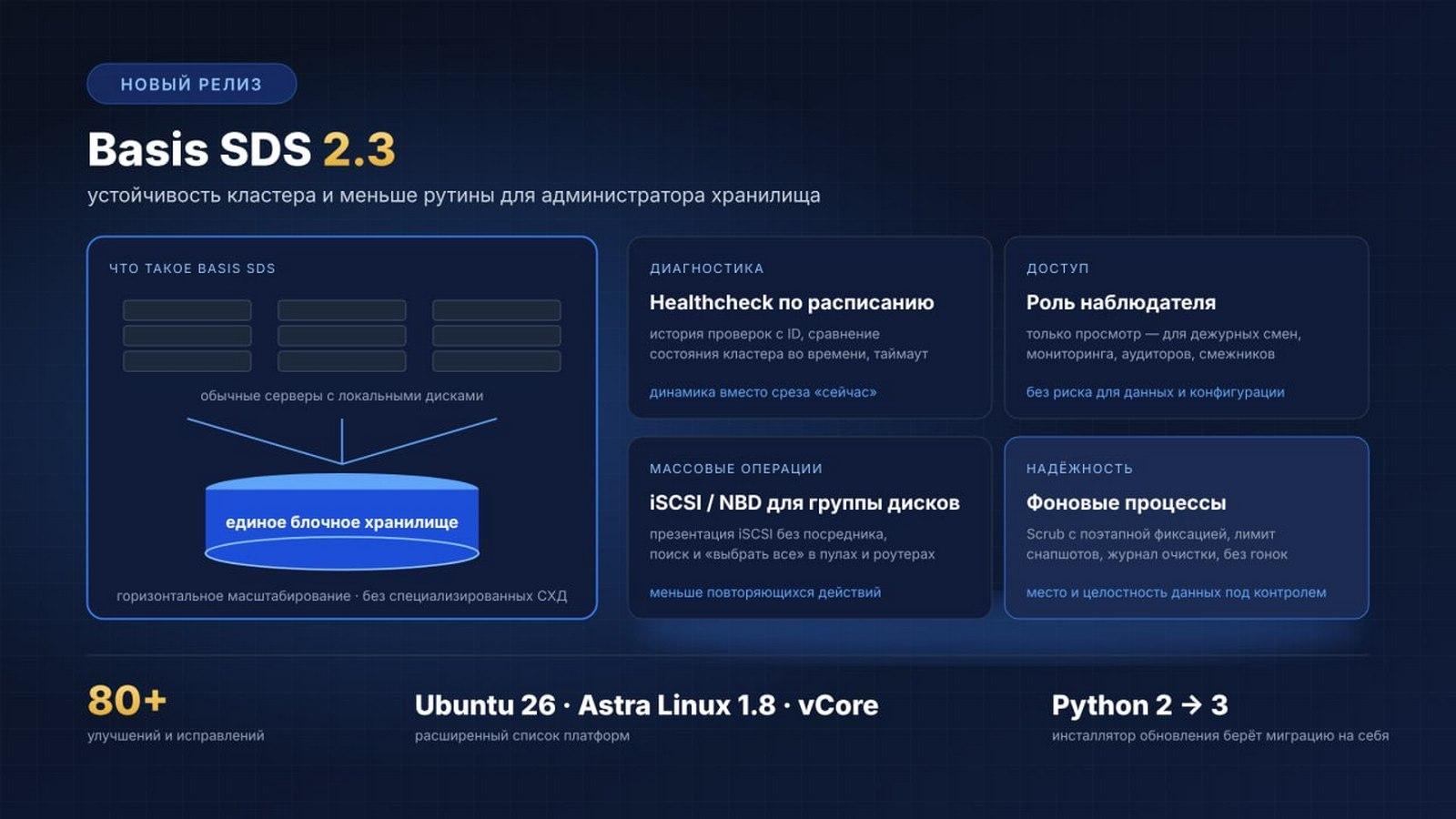
This is precisely the focus of the new version. Basis, the leader in the Russian market for dynamic IT infrastructure management software (part of the RTK-DPC Group), has released Basis SDS 2.3—over 80 improvements and fixes focused on storage resilience and routine administrative tasks: cluster health monitoring, secure privilege separation, and operations with large numbers of virtual disks.
What is Basis SDS
Basis SDS is a horizontally scalable platform that allows you to build a data storage system using standard server hardware: the drives of several servers are combined into a single reliable storage system with block access. It is an alternative to specialized storage systems for those who want to expand capacity by adding standard nodes rather than purchasing expensive storage shelves—and part of the Basis ecosystem, where storage works in tandem with the Basis Dynamix virtualization platform and security tools.
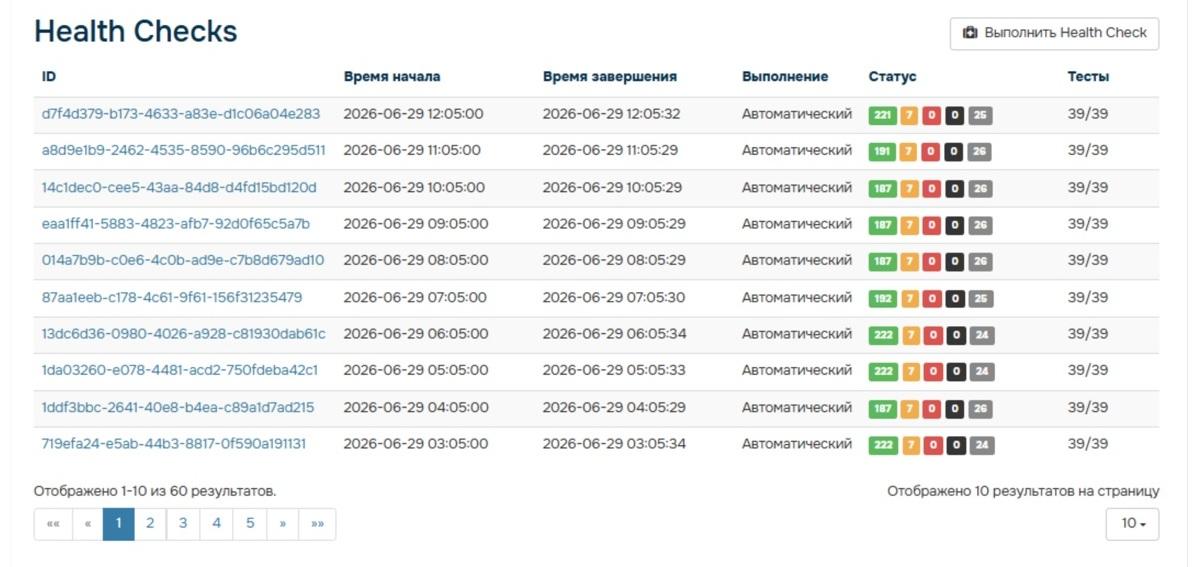
Cluster diagnostics: history instead of a snapshot
Built-in cluster health checks can now be run on a schedule, with the history of recent runs saved and accessible via the web interface. Each result receives a unique identifier that can be used to query it again, allowing the administrator to compare cluster status at different points in time and see what changed between checks. The result calculation logic has also been improved: intermediate messages are saved in the results without skewing overall statistics. When starting diagnostics, a timeout can be set to limit the allowable execution duration.
Observer role: access without risk
Version 2.3 introduces a role-based access model, with the first application role being the observer. Users with this role have read-only access and cannot make any changes. This solves a common organizational issue: duty shifts, monitoring teams, auditors, or related departments need to see what is happening with the storage system, but no one wants to give them full privileges to a system where an error means data loss. Now access can be granted without risking either data or cluster configuration.
Bulk disk operations
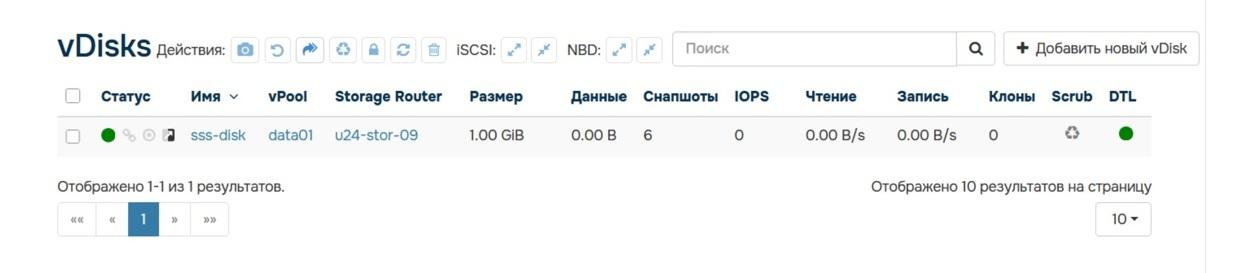
In large deployments, it is not complex tasks that consume an administrator’s time, but repetitive ones. In the new version, iSCSI virtual disk presentation is handled directly by the volume management subsystem, bypassing an internal intermediary protocol. Granting access to disks via iSCSI and NBD can now be done for a group of disks at once; a search bar has been added to the virtual pool and storage router sections, and dropdown lists now support selecting all items at once. Preparing hundreds of virtual drives is no longer a series of identical clicks.
Background processes that finish what they started
A significant part of the release is dedicated to the resilience of background operations that directly affect available space and data integrity. The mechanism for cleaning stale data from snapshots (Scrub) has been refined: results are now recorded incrementally after processing each snapshot, and partial results are correctly applied even if the process was interrupted halfway through. A setting for the number of snapshots has been added, along with logging of the cleanup service featuring configurable report retention depth. Scenarios where cleanup ended incorrectly due to a hanging helper service or was displayed as completed when it had not actually run have been eliminated.
Background task processing has been enhanced: false notifications about instantly completed operations and race conditions when queueing identical tasks simultaneously have been eliminated. Parallel disk clone creation has been synchronized, removing excessive inter-node connections and the errors they cause. Disk initialization timeouts in the storage backend were also fixed, with the default value increased to 60 seconds.
Platforms and upgrades
To upgrade to the new version, an installer was prepared to handle package management and updates, including migrating a node from Python 2 to Python 3—part of the upgrade operations are performed automatically. The list of supported platforms has been expanded: in addition to Ubuntu 26 and Astra Linux 1.8, deployment on Basis’s proprietary vCore hypervisor with limited functionality is now supported.
“A data storage system is the layer of infrastructure where mistakes mean data loss and are the most costly, which is why in the Basis SDS 2.3 release we focused on increasing cluster stability. We also emphasized ease of administration: it is vital for customer specialists to see the cluster state over time and spend less time on repetitive tasks. Cluster diagnostics can now run on a schedule and preserve check history, the observer role grants system access without permission to make changes, and bulk disk presentation saves time when preparing them in large deployments,” comments Dmitry SOROKIN, Chief Technology Officer at Basis.
Part of an ecosystem
According to TMT Consulting, Basis accounts for 31% of the domestic proprietary software-defined storage segment and 40% of Russian virtualization at the end of 2025, while iKS-Consulting ranks it as the leader in the dynamic IT infrastructure management software market with a 19% share. All ecosystem products are built on an in-house codebase, included in the Unified Register of Russian Software, and certified by FSTEK of Russia to Trust Level 4; the ecosystem operates in Gosoblako, Gostekh, and Gosuslugi, as well as in the infrastructure of government agencies and major corporations.
Learn more about the product on the Basis SDS page, and about the entire Basis product line at basistech.ru. A demonstration can also be requested there.
erid: 2VtzqxgvNXF Advertising. OOO “Basis” INN 7731316059