Translated with AI from the Russian original.
The new tool also includes a detailed sales funnel.
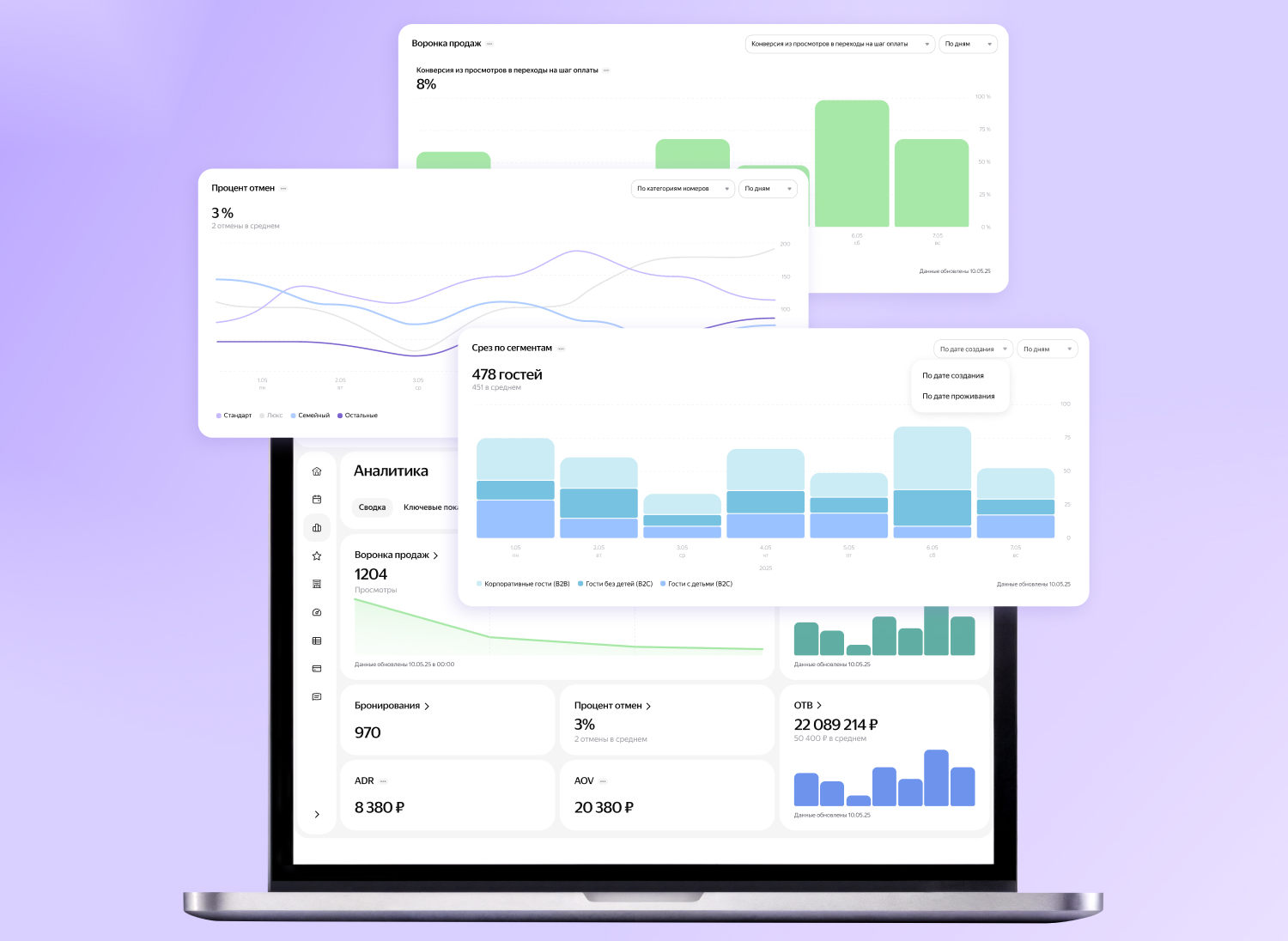
The "Yandex Travel" service has introduced a new tool for partners – the "Analytics" section in the "Extranet". Now hotel owners can track key business indicators, which will help them more effectively manage bookings and analyze customer behavior.
The "Analytics" section provides systematized data, including average night cost and average check, number of room nights and bookings, turnover, and other important metrics.
Data is updated daily, allowing hoteliers to quickly respond to changes in demand. In addition, users can compare their performance with similar properties in the region, which helps identify trends and adjust rates.
The new tool also includes a detailed sales funnel, which shows conversion at each stage of booking – from viewing to completing payment. This allows identifying at what stage users most often abandon the order. The analytics include various customer segments, including corporate clients (B2B) and individual travelers, which helps to better understand the demand structure.
Before launching the "Analytics" section, the service provided demo access to more than 600 hoteliers who were able to test the tool and leave their feedback.











