Translated with AI from the Russian original.
From a mobile workstation on a business trip or at an off-site facility to a stationary personal computer with a monitor.
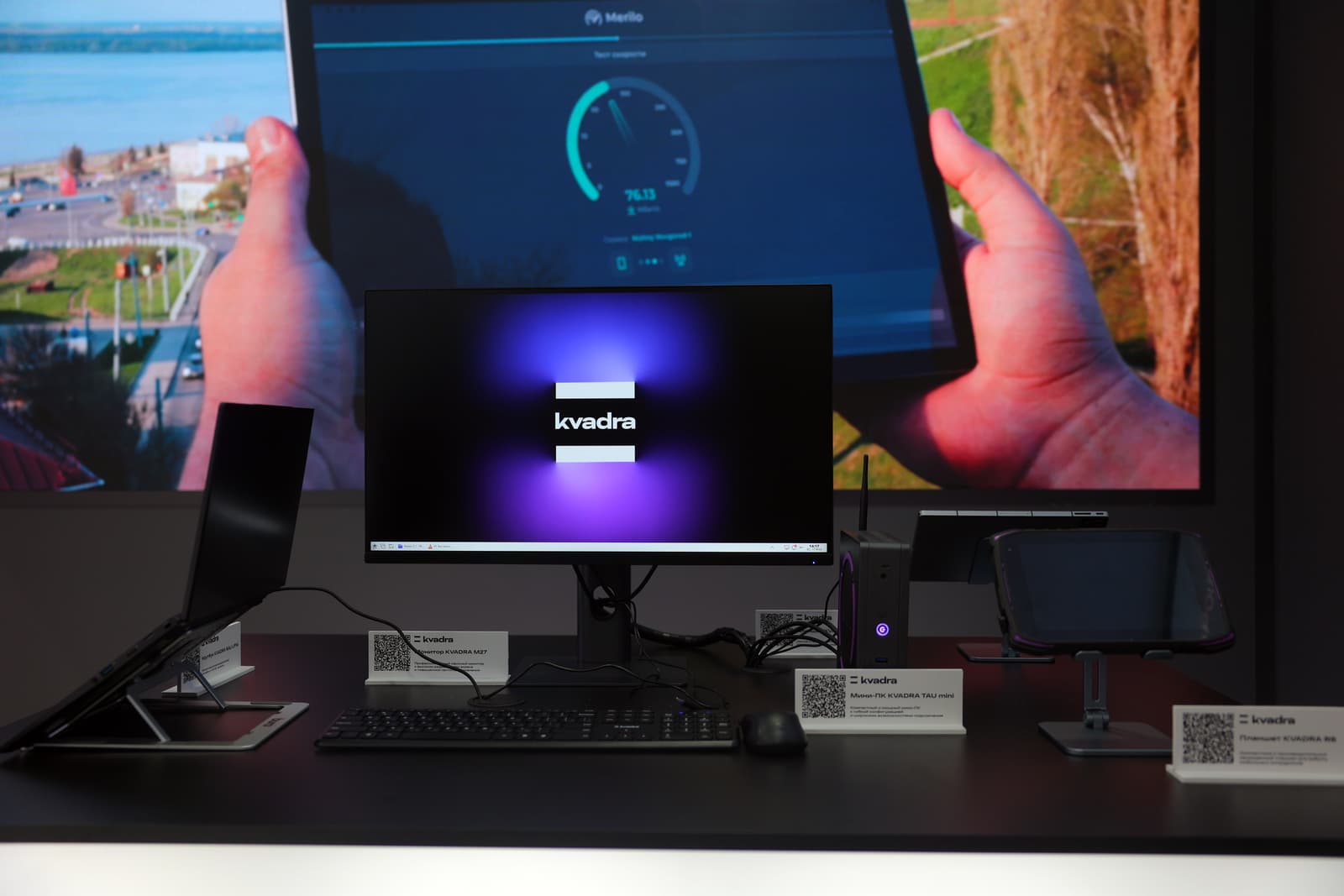
At the CIPR conference, the Russian brand Kvadra, part of Yadro ("IKS Holding"), presented new devices for corporate workplace infrastructure. The lineup includes the rugged Kvadra R8 tablet, the ultrathin Kvadra NAU LP14 laptop, and Kvadra M24 and Kvadra M27 monitors.
The Kvadra R8 tablet is designed for mobile employees working at industrial sites, in urban infrastructure, and in warehouse complexes. It is protected against impacts and falls from a height of up to 1.2 meters, has an IP67 rating, and supports AI tools for speech and text recognition, barcode, and QR code scanning.
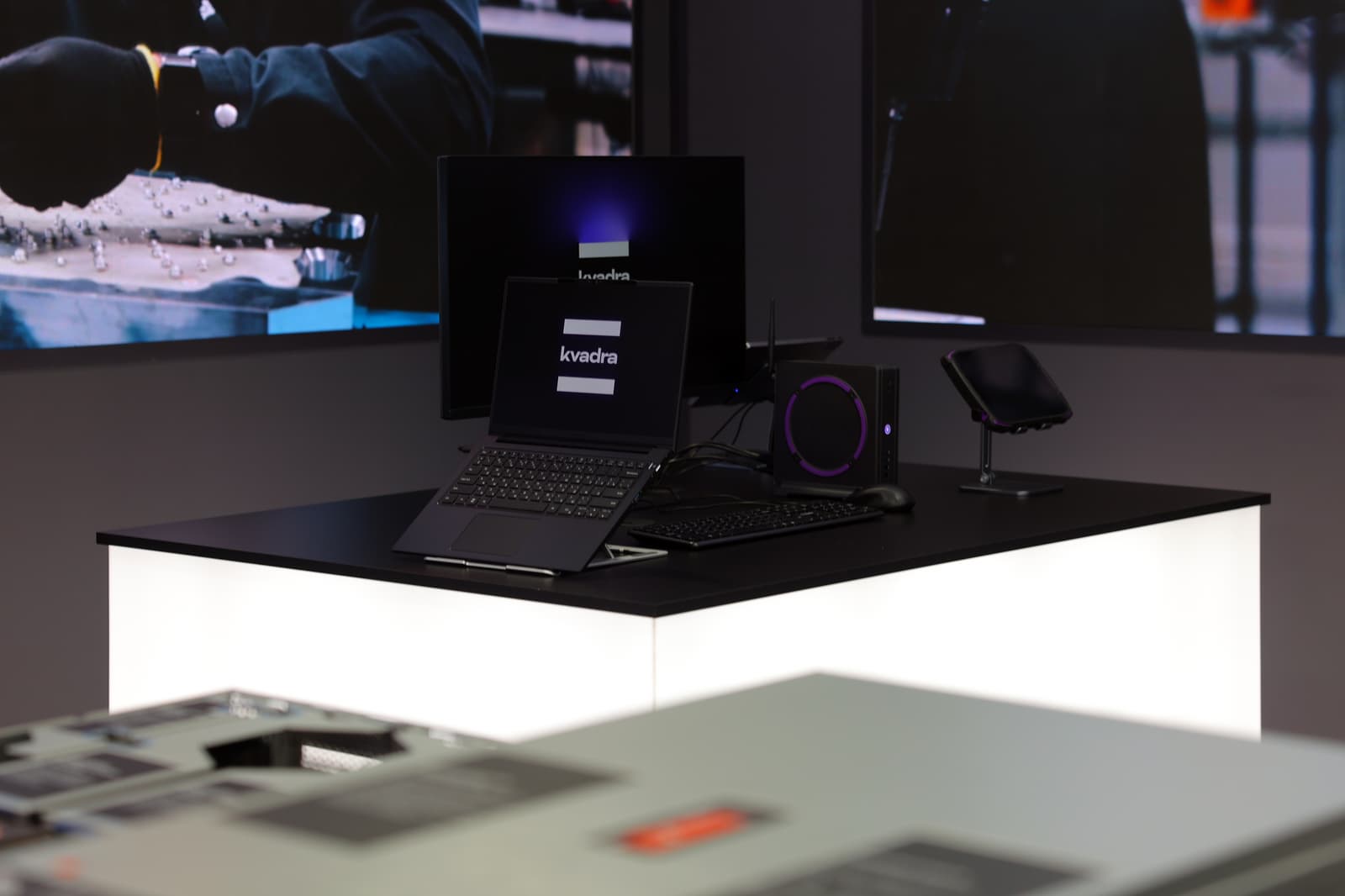
The Kvadra NAU LP14 laptop is aimed at corporate users – executives and mobile employees. The device is equipped with Intel Core Ultra 5/7 processors, DDR5 RAM, and a set of modern interfaces, including Thunderbolt 4, USB-C, USB-A, and HDMI 2.1.
Kvadra M24 and Kvadra M27 monitors are equipped with IPS matrices with 350 nits brightness, 100% sRGB color gamut, and a 144 Hz refresh rate. The lineup includes models with a 23.8-inch diagonal and Full HD resolution, as well as models with a 27-inch diagonal and QHD resolution. Some models are equipped with a built-in USB hub and a USB-C port with support for image transmission and charging up to 65W and 90W.
Kvadra R8 and Kvadra NAU LP14 are already available for demo testing, while Kvadra M24 and Kvadra M27 monitors will be available in the third quarter of this year.