Translated with AI from the Russian original.
The devices are fully developed in Russia and are compatible with domestic operating systems.
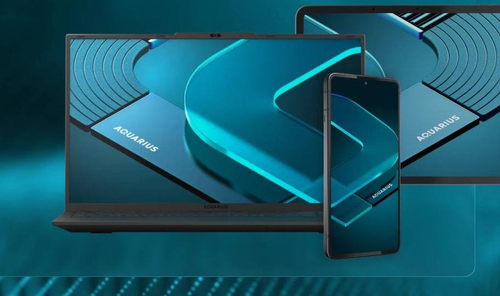
At the CIPR-2026 forum, "Aquarius" company demonstrated three new client devices developed for office work. These include the Aquarius AQfone NS D21 smartphone, the Aquarius AQpad L311 tablet, and the Aquarius AQbook E25 laptop. They are designed to organize automated workstations in government and corporate structures.
The Aquarius AQfone NS D21 smartphone features enhanced durability and 5G support. It is equipped with a 6.67-inch AMOLED screen, up to 12 GB of RAM and up to 512 GB of storage, and a 5000 mAh battery with 33W fast charging support. There is also a physical camera and microphone lock for privacy.
The Aquarius AQpad L311 tablet is designed for document work and biometric data collection. It features an 11.35-inch screen with an aspect ratio similar to an A4 sheet, allowing more information to be displayed without scaling. The tablet has an 8600 mAh battery and two USB Type-C ports. Optional keyboard cover and HDMI adapter transform the tablet into a mobile workstation.
The Aquarius AQbook E25 laptop is a basic model for organizing workstations. It is equipped with a 15.6-inch Full HD IPS screen, 12th or 13th generation Intel Core processors, and DDR5 RAM expandable up to 64 GB. The battery provides up to 10 hours of battery life. It is possible to connect a monitor via USB Type-C.