Translated with AI from the Russian original.
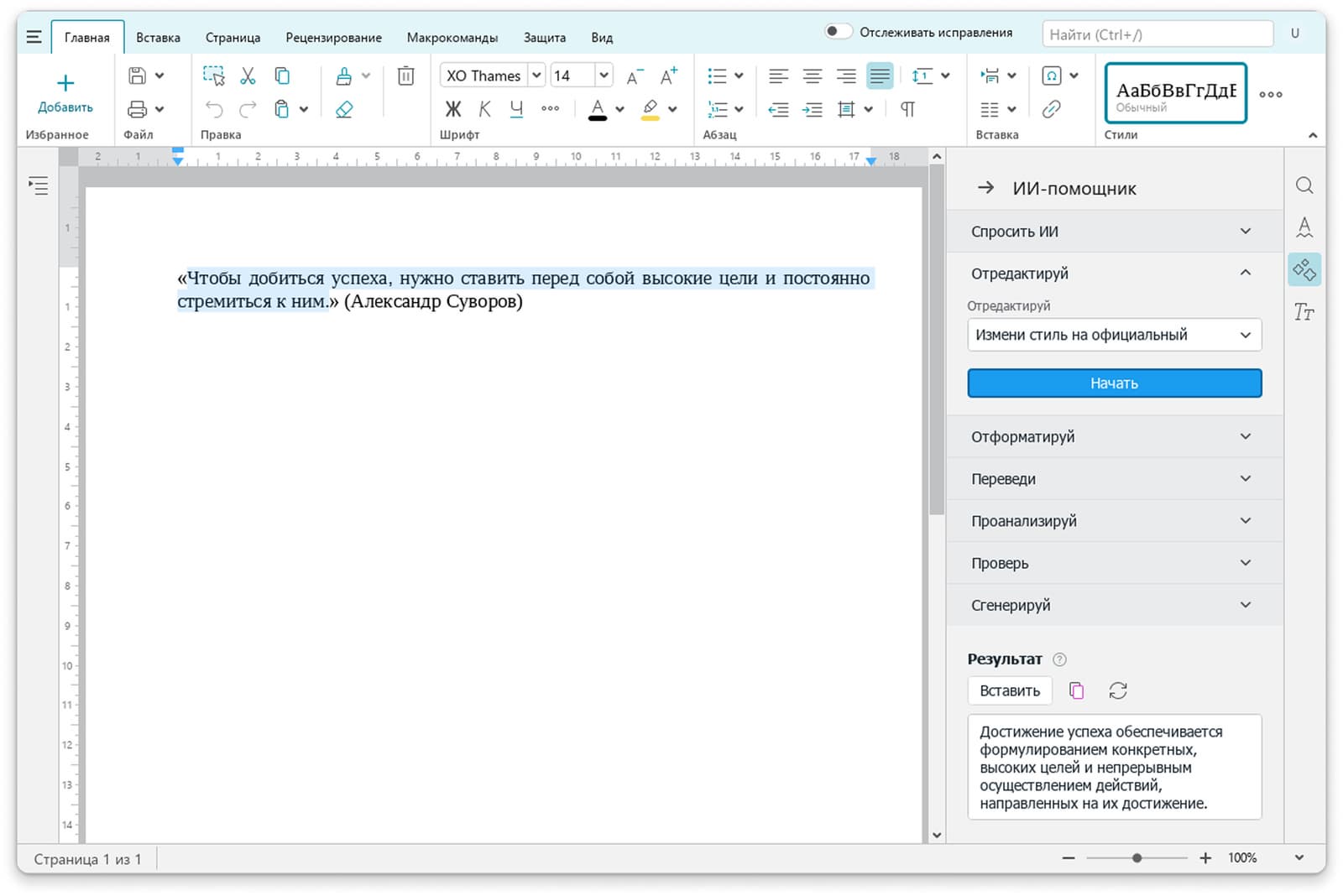
An AI assistant has been added to MoyTekst and to the web editors.
IT developer MoyOfis has introduced a new version of its office suite — release 26.1, with the main emphasis placed on integrating artificial intelligence into user scenarios. The update covers the desktop text editor MoyTekst, web editors, and the collaborative application MoyaDoska. In addition, release 26.1 includes interface improvements and new features for the Dokumenty Nastolnye editors.
A built-in AI assistant has been added to MoyTekst, helping users create and edit texts, correct errors, translate into foreign languages, and make summaries from large volumes of information. The user can configure the assistant's role (lawyer, accountant, or analyst), tone, and response format (businesslike or informal, concise or detailed). The AI assistant works autonomously and does not require a constant internet connection.
An AI assistant is also available in the web editors for text, spreadsheets, and presentations, allowing users to generate content, improve style, and translate texts. It can operate both in the cloud and within a closed corporate environment. The AI functionality in the web editors is being released in beta.
The MoyaDoska application now features a function for generating schemes and diagrams from a text prompt. The user describes the desired result, and the artificial intelligence converts it into Mermaid markup.