Translated with AI from the Russian original.
They can now be used for import substitution in government and corporate procurement.
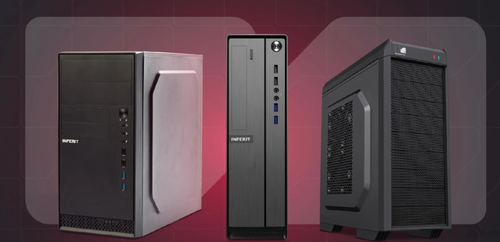
TechDesk computers from manufacturer Inferit Tekhnika, part of the Softline group of companies, based on DDR5 memory, have been added to the Ministry of Industry and Trade register. The TechDesk AS2071R, TechDesk AD7151R, and TechDesk VT5011R models have confirmed compliance with the requirements for domestically produced goods and can be used as part of import substitution.
As noted by the press service, inclusion in the register makes it possible to procure TechDesk computers under 44-FZ and 223-FZ. Certified models with DDR5 and Intel Alder Lake and Raptor Lake processors of the 12th to 14th generations are suitable for various tasks, from office work to resource-intensive computing.
TechDesk AS2071R is a compact PC supporting up to three M.2 devices and front ports, TechDesk AD7151R is a Mini Tower system supporting up to 128 GB of DDR5 RAM, and TechDesk VT5011R is a powerful workstation for video editing and 3D visualization with discrete Nvidia GeForce RTX 5070 graphics cards and up to 256 GB of DDR5. All models offer flexible configuration options and warranty support from 1 to 3 years.











