Translated with AI from the Russian original.
You can compare your prices with similar offers - where they correspond to the market level, and where they are higher or lower.

The Yandex team has launched a new service for business in Yandex Shopping. Online stores can now compare their prices with market prices thanks to Yandex analytics, which covers more than 4 billion product offers from small online stores to marketplaces.
Now they can see how their products are presented in Yandex search: whether the prices correspond to the average market prices, whether they are higher or lower than them. The labels are based on the OK-price technology, which takes into account the characteristics of the product, including color, region, configuration and price dynamics.
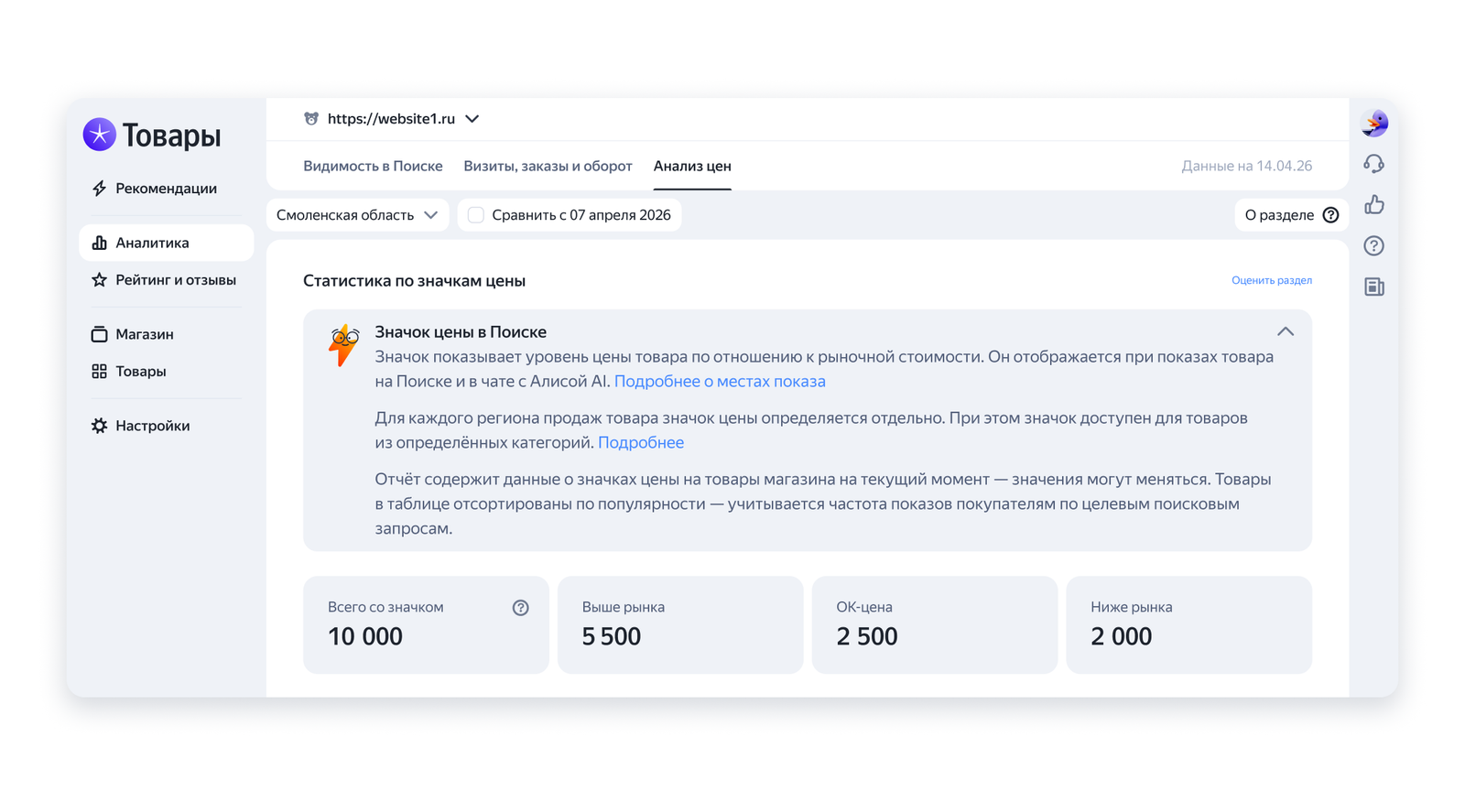
Analytics is available in the Yandex Shopping tool in the Price Analysis section, where you can find out the current value of the label — OK-price, Above Market or Below Market, as well as track changes over the week. Labels are formed taking into account the region, which allows you to take into account regional differences. To obtain data, you need to add a site and confirm your rights to it.
The OK-price technology has been operating in Yandex Search since October 2025. Each product is compared with the same model in different stores. It currently works for products from the categories Electronics, Household Appliances and Do It Yourself (DIY) costing from 1000 rubles, as well as Pharmacy and Beauty costing from 50 rubles.