Translated with AI from the Russian original.
The new version speeds up working with documents.
Directum has released a new version of the Directum Lite electronic document management system for small and medium-sized businesses. The system includes new printed forms for the validity periods of electronic powers of attorney, electronic signature certificates, universal transfer documents, and adjustment documents.
Updated VAT rates are supported, authorization in "Diadoc" via the OpenID Connect protocol is implemented, and the ability to create adjustment documents for other adjustment documents has been added. Universal messages have been introduced, which will replace receipt notifications, clarification notifications, and rejections in exchange services in 2026.
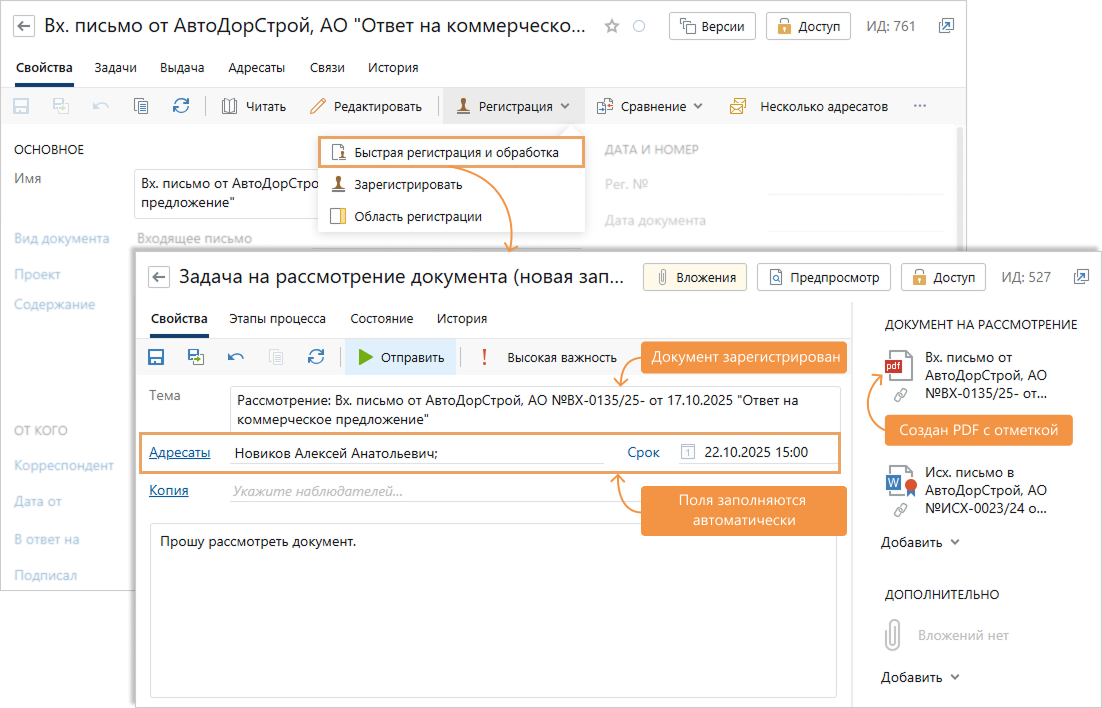
The updates speed up the processing of incoming correspondence: the clerk can register a document, generate a PDF with a receipt mark, and open the task card with one button. Automatic registration reduces the processing time of incoming documentation.
Users can upload a simple document from a file without filling in mandatory fields, display the related project in the document summary, and add a comment in the task forwarding window. The system supports dual organizational structure mode, reflecting organizational, staffing, and management units.
Directum Lite is based on the Directum RX 25.3 platform and is available in cloud and on-premises versions.











