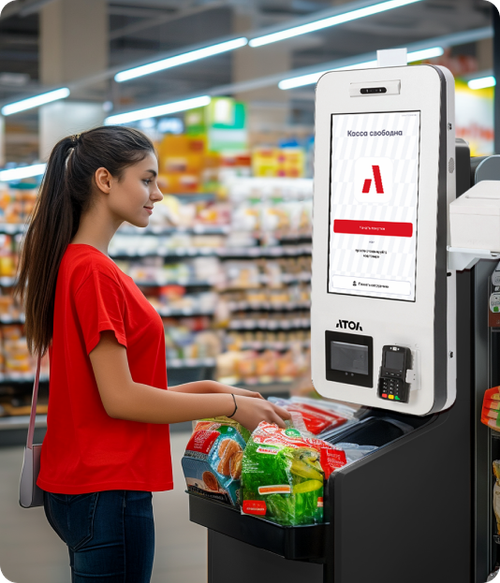
The Russian company "Atol" has implemented digital age verification via the Max messenger on its branded self-checkout systems. Now, customers can confirm their age when purchasing "18+" category products without the involvement of store employees. To do this, simply select the option "Verify age via Max" and scan the QR code of the digital ID from the application.
The technology is implemented in Frontol Selfie Pro software version 1.3.3 and complies with Russian legislation. As the developers emphasized, it provides a high level of personal data protection through the use of one-time TOTP codes with a limited validity period.
Igor Vaag, Deputy General Director of "Atol", emphasized that digital age verification allows retailers to automate control, reduce the burden on staff, and improve customer experience without compromising security. Since the fall of 2025, this technology has begun to be implemented by large retail chains such as "Magnit", "Pyaterochka", "Perekrestok". This solution enhances the functionality of self-checkout systems and simplifies the process of purchasing age-restricted products.
It is worth noting that almost 40% of purchases in Russia are made using "Atol" software and equipment. Every second online purchase goes through the "Atol Online" cloud service.