Translated with AI from the Russian original.
ITC ROSA has announced the beta version of the mobile operating system "ROSA Mobile" 2.3.
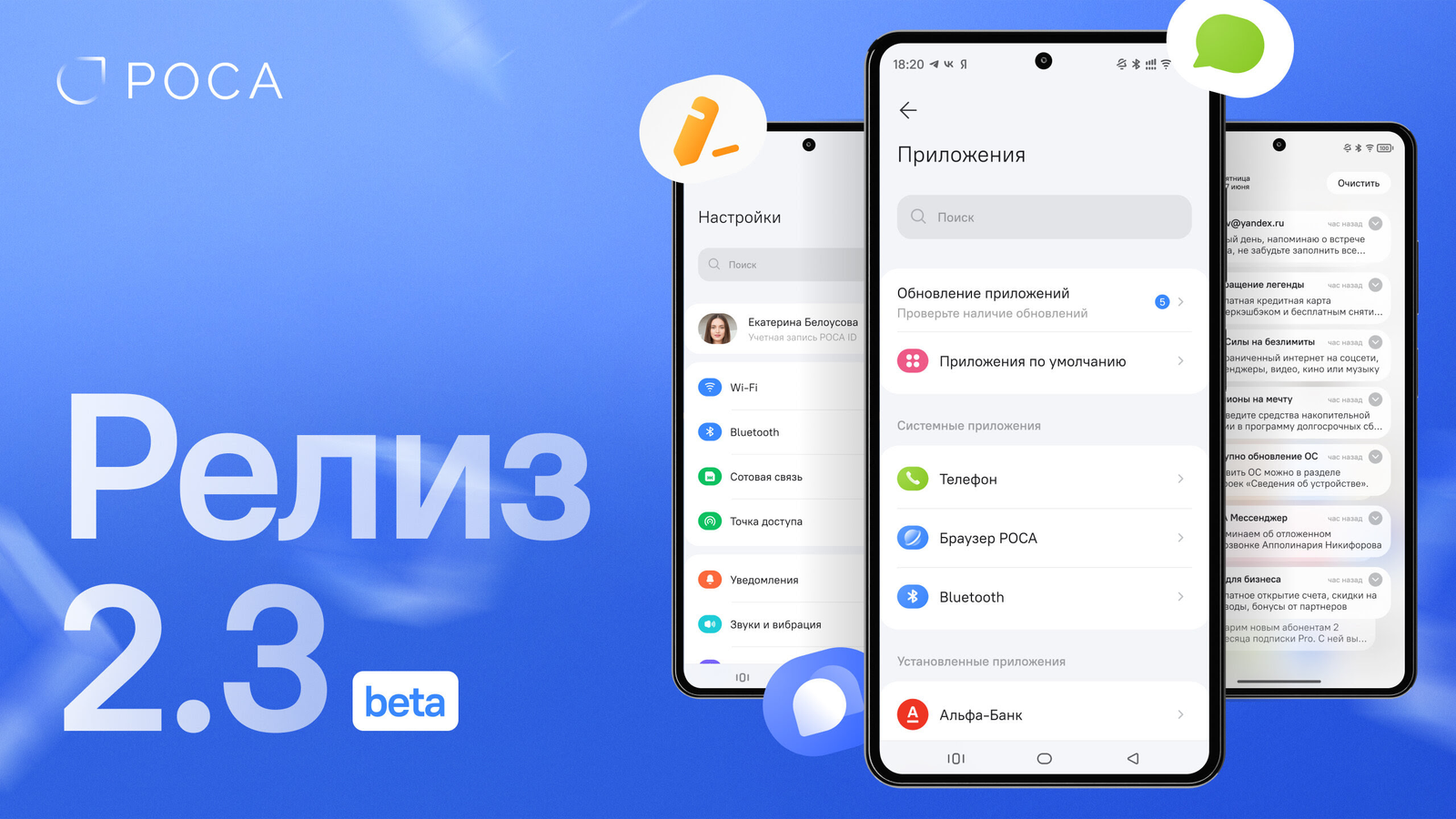
The new version features automatic geolocation, which simplifies working with maps and services that use location data. "ROSA Messenger" now includes audio and video calls in group chats, as well as improved performance and reliability of the application.
The functionality of the camera has been significantly improved: the date and time are now saved in the metadata of photos, which ensures correct sorting and compatibility with external services. The Android emulator now has full support for photo cameras, including switching between front and main cameras, focusing, and zooming.
The beta version of "ROSA Mobile" 2.3 also implements push notifications about updates, which allows the user to be promptly informed about the release of new versions and quickly update the system. In the system applications "Phone", "Contacts", and "Messages", the icons have been updated and errors in the display of avatars have been fixed. The keyboard has fixed display problems in horizontal orientation, corrected artifacts when switching languages, and optimized animations of additional keys.