Translated with AI from the Russian original.
In the future, it is planned to turn the portal into a multifunctional platform.
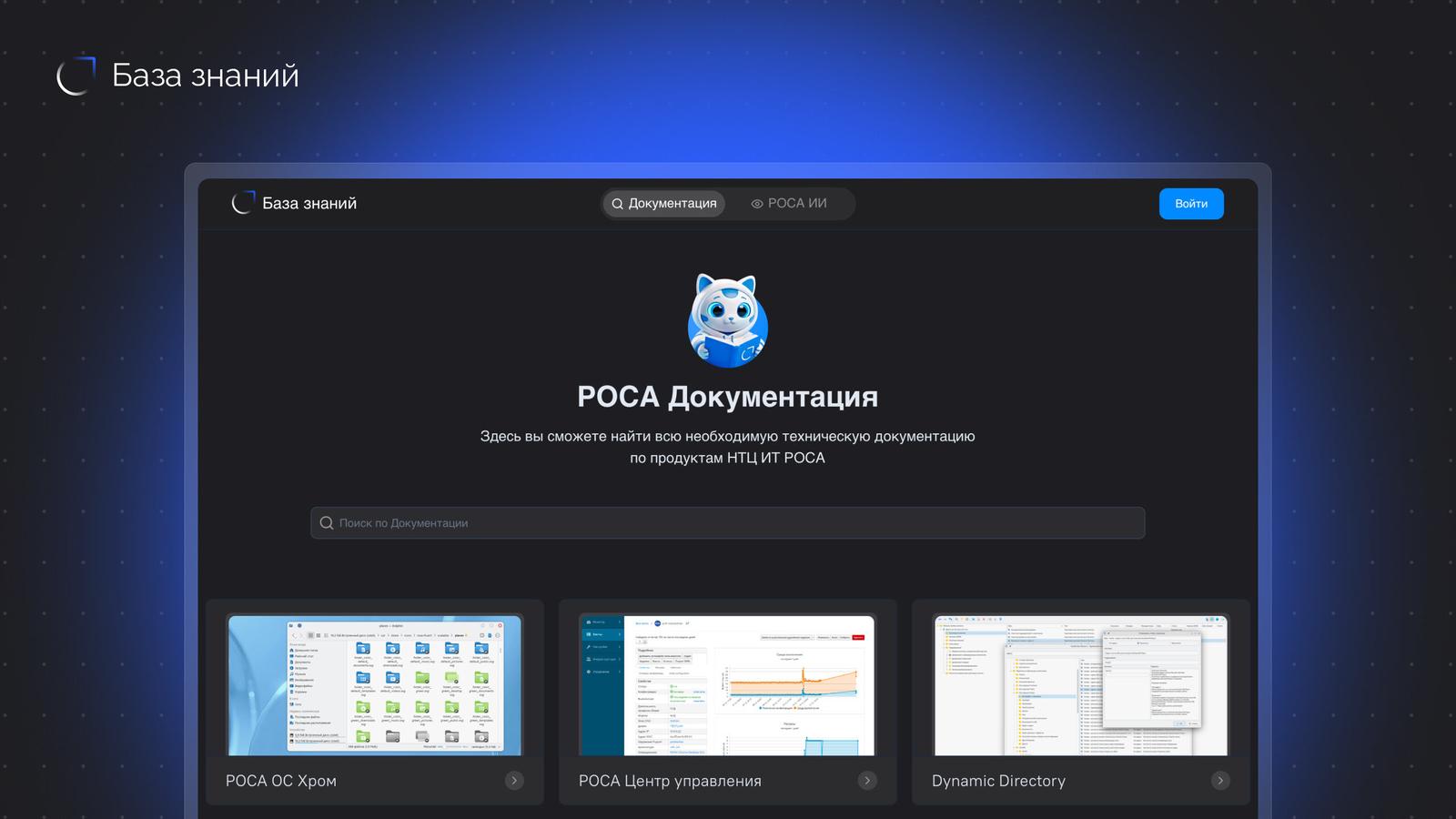
STC IT ROSA has introduced a new portal "ROSA Knowledge Base", which has become a single resource for accessing technical documentation for ecosystem products. The new portal is available at kb.rosa.ru and is intended for users, partners and customers of the company.
The main goal of the project is to combine all relevant technical information in one place with easy navigation and search. According to the developers, unlike the previous format, where the documentation was presented in the form of separate files and pages, the new portal provides connectivity of materials, correct indexing and a unified visual style.
In the future, it is planned to turn the portal into a multifunctional platform that combines documentation, a forum, a wiki, and knowledge bases for technical support. Access to specialized sections will be provided through "ROSA ID". A separate area of development for the portal will be the integration of an intelligent chat interface based on its own ROSA AI platform, which will be able to generate answers to user requests based on indexed documentation and internal resources of the company.