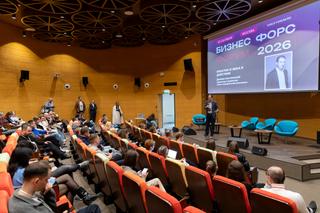
Sergey Molchanov, Head of Business Units at Innovation and Solutions Factory (Innowise) LLC, answers IXBT.pro's questions about how to create working digital solutions.

The vast majority of solutions based on artificial intelligence technologies do not bring the expected benefits to business. According to the latest report from the Massachusetts Institute of Technology, in 95% of cases, no measurable impact on profits and losses was detected, and only 5% of companies managed to achieve rapid growth through the introduction of AI. This is despite the fact that in the IT industry as a whole, this figure reaches up to 80%. Many researchers attribute this to errors in the implementation process. However, Sergey Molchanov, an expert in the field of creating and promoting digital technologies, is confident that the problem is complex and that software manufacturers themselves must take some responsibility for solving it. Molchanov is responsible for the profitability of key business units of the company, which for more than 15 years has been creating, implementing and supporting software for various industries, including products using AI in the field of blockchain technologies, the metaverse and others. This year, he joined the judging panel of the International Business Award Cases&Faces, where he assessed the financial impact of innovations presented by the laureates. We asked the expert which of them have high potential and what key steps will help businesses get the expected result from the introduction of new technologies, how solution providers should participate in this, and what role their sales system plays in this.
Sergey, statistics show that most companies are disappointed with the return on investment in innovative products. Since you head the business unit in a company that offers digital innovations for business, tell me,whatdoyousee as the reason?
The main reason, I believe, is the discrepancy between expectations and the reality of implementation. Often, companies start projects focusing on the hype around new technologies, rather than on specific business tasks. At the same time, the processes of adaptation and change within the organization are underestimated. Technology itself does not bring profit; a comprehensive approach is important for successful implementation. What I mean is this. First, you need to correctly assess why a company needs this or that software. Secondly, it is important to understand how to teach employees to use technological innovations. Thirdly, how to integrate a new IT product into existing systems. If you take all these points into account, the company will receive a clear benefit from the introduction of new digital technologies.
In the company, you are responsible for promoting products based on generative AI to the global market. At the same time, you believe that responsibility for the result for business users is also your business. Why?
Responsibility for the end result, in my opinion, is the main task of solution providers for business. Business buys not development, but measurable economic result. Therefore, it is important to include active interaction with the customer and end users in the development process in order to understand real business tasks and quickly adjust the product to changing requirements. Otherwise, the whole point of creating useful solutions is lost.
You pay a lot of attention to building a sales system, and, judging by the fact that the company is regularly included in the rankings of fast-growing companies, including according to Inc. 5000, you are doing it successfully. How important is a clear sales system to competently present complex technologies to the market that have not yet become widespread?
I believe that a clearly built and well-established sales system is generally the only working way to make breakthrough technologies profitable and scalable. It allows you to completely get rid of chaos, moving to transparent resource management. It is impossible to scale what cannot be controlled. From the point of view of solution providers, order in the sales system is the main key tool for monetizing innovations. From the point of view of consumers, it is a guarantee that the product that is offered to him will give the effect that he expects. But for this, the sales system should imply not so much the desire to receive revenue for the company, but should be aimed at ensuring that the consumer receives his benefit, then the financial and reputational benefit of the company becomes a natural result of the process.
In two years, the work of the sales department, which you head,itled to an almost doubling of revenue. How exactly did you implement your vision of the sales system to achieve such results?
The company's growth figures are a direct consequence of systemic discipline. I developed and implemented a new methodology - a pipeline for processing transactions. The bottom line is that we break each project into small, controlled stages. In the pilot, the client sees real metrics and is convinced that we are really moving towards the stated ROI (note. ed. - one of the main financial indicators that demonstrates the profitability or efficiency of invested capital). The pipeline instantly highlighted where exactly we are losing money and customers. This made it possible to exclude inefficient projects and concentrate only on what brings high profitability.
You created the Blockchain product direction in the company from scratch. How did this strategic initiative allow you to monetize the products developed by the team, and what benefits did it bring to customers?
In the most direct way. We sell not just a service, but a product that can be immediately monetized. For example, we take a virtual object - a 3D model - and use Blockchain to make it unique and secure ownership of it as a digital asset. The client receives not just a beautiful picture, but a tool with measurable financial value.
- This year you joined the jury of the International Business Award "Cases&Faces". What main mistakes or, conversely, key success factors in digital projects did you notice when evaluating the nominees?
It was indeed a large-scale event: more than 100 applications in 170 categories and projects from various industries. All the nominees were bright and talented, each presented innovations and new approaches. At first glance, all the projects seemed successful. But with a deep assessment of the real financial effect, two key mistakes became obvious. The first is the fascination with technology for the sake of technology itself without a clear understanding of their impact on the company's profits and expenses. The second is the partial implementation of solutions, when the company is not ready to rebuild its business processes and organizational structure for new technologies, which reduces efficiency. Real success is achieved when from the very beginning of the project there is a clear financial goal and readiness for a deep transformation of the business.
How, in your opinion, will the digital solutions market transform in the next few years and what innovations will bring measurable benefits to business?
In fact, we are not just waiting for a transformation, but a radical shift. If now everyone is talking about the introduction of AI, then tomorrow the focus will be on its deep, strategic integration with other domains, primarily with Web3. We will see how AI agents will begin to make decisions and manage digital assets in decentralized environments. This opens up completely new, measurable monetization models and provides hyper-personalization both in production and in interaction with customers. Those who can offer not just technology, but an end-to-end, engineering solution that acts as a strategic engine for the entire business, and not just another tool, will win in the market.