Translated with AI from the Russian original.
The device is designed for hardware acceleration of network tasks, offloading central processors and increasing the efficiency of data processing centers.
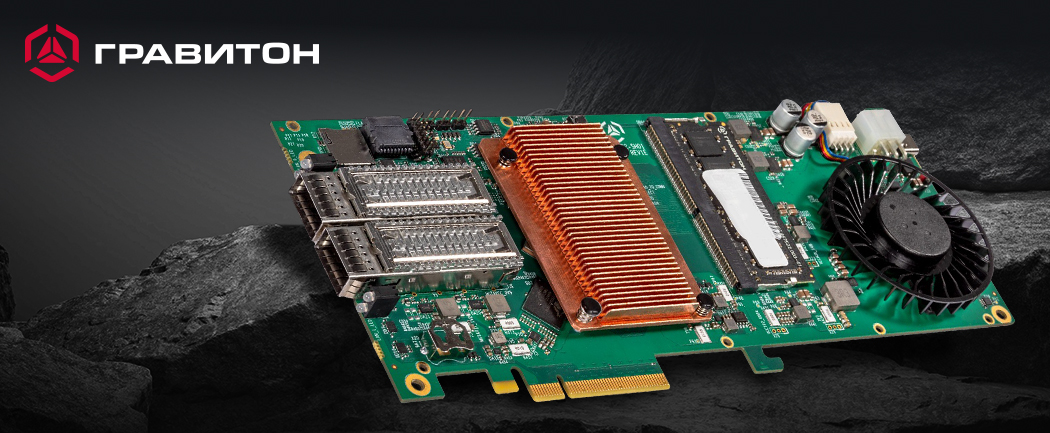
The Russian manufacturer of computer equipment "Graviton" announced the release of a new product - an intelligent network card (Smart NIC) model SNC-QSFP2-SH01. It is equipped with a PCIe Gen 3 x8 interface and two QSFP28 ports that support data transfer at speeds up to 100 Gbps. It is possible to install up to 32 GB of DDR4 RAM. The card is compatible with Linux and Windows operating systems. "Graviton" emphasized:
The new network card is based on a high-performance FPGA with more than a million logic cells and with a built-in block memory of more than 50 Mbit. The programmable logic tool in conjunction with the software and architectural solution of "Graviton" provides the ability to work with virtualization and traffic processing tasks of varying complexity.
The new model and subsequent implementations of intelligent network cards can be used as part of NGFW computing platforms, DPI systems and network traffic processing accelerators. "Graviton" also invites developers of applied network security systems to cooperate in adapting and refining intelligent network cards for specific tasks.











