Translated with AI from the Russian original.
The update is powered by language models from the Alice AI family, which are used in Alice and Alice Pro.
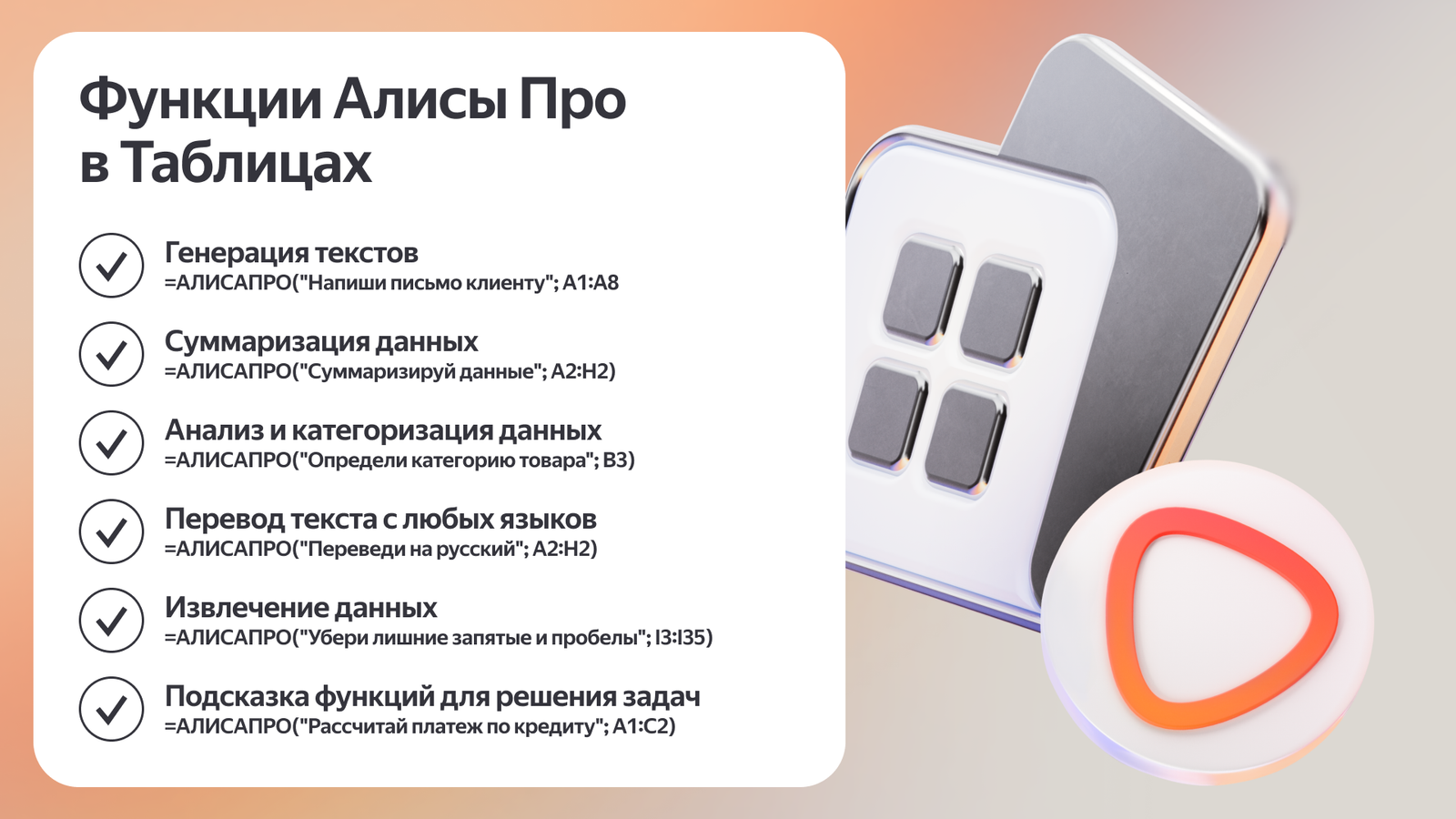
AI-powered features are now available in Yandex Tables. With the help of AI, you can structure data in tables, translate texts in cells to another language, compress them into short summaries, and more. For example, if a user has a list of products, AI can categorize them. And if the table contains customer reviews, it can determine their sentiment: positive, negative, or neutral. AI will also help to clean up data - remove double spaces or bring all dates to a single format.
To access AI, you need to call the "ALISAPRO" function. AI is available to all Yandex Tables users. In the free version of the service, AI can be addressed with 50 prompts per month.
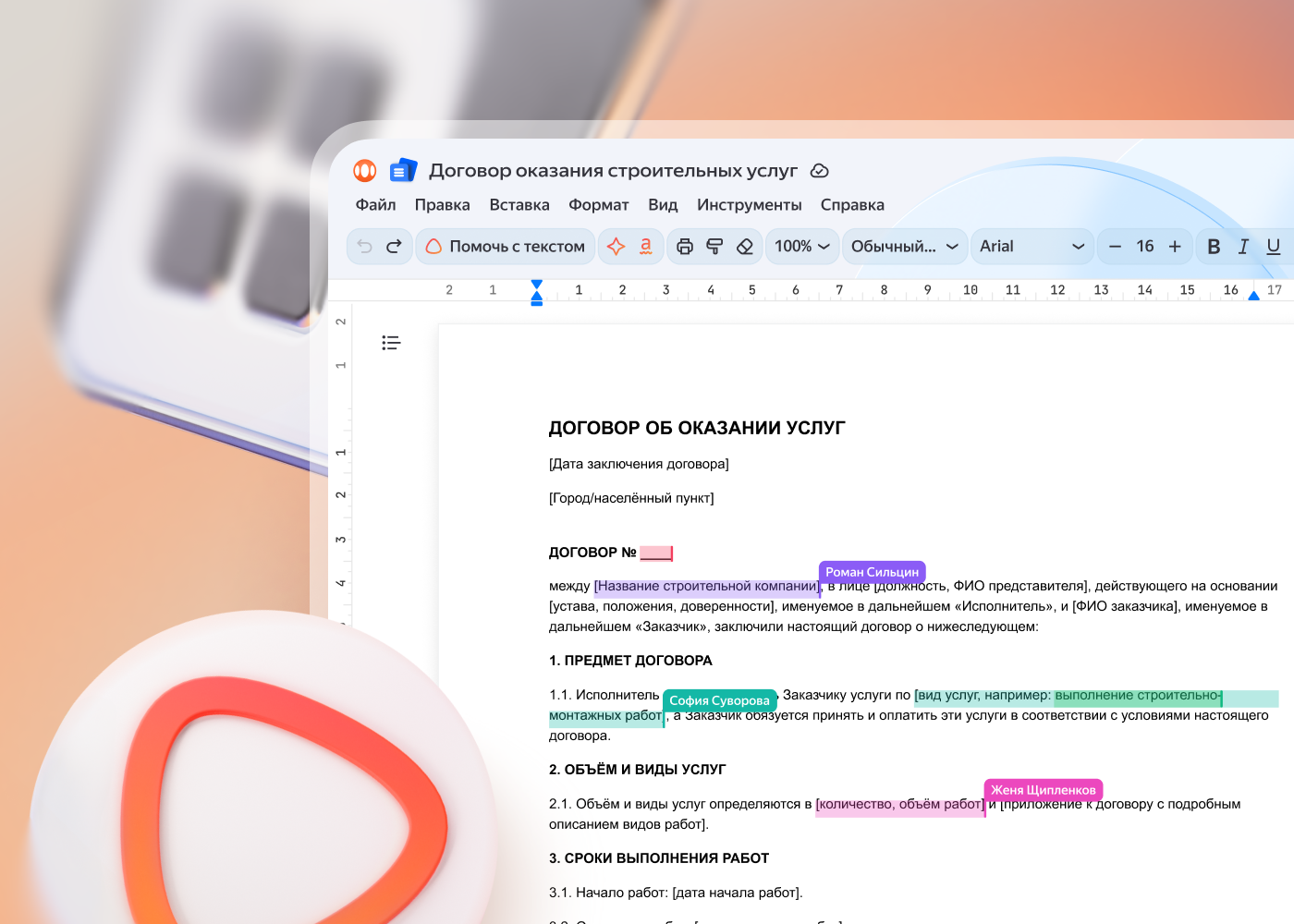
By the end of the year, the co-editing function in Yandex Documents will be updated. Up to 400 users will be able to work on one file simultaneously. In addition, desktop applications for Documents and Tables for Windows, macOS, and Linux will be released in the first quarter of 2026, which will be compatible with MS Office. At the start, users will have access to editing, commenting, and reviewing functions, and later synchronization with the cloud will appear.