Translated with AI from the Russian original.
The new format will become available to advertisers in November.
Yandex UrbanAds advertisers - advertising agencies, brand marketers, media managers and other partners - will have access to a new offline advertising format for the Russian market. They will be able to place video advertising on tablets in taxis. Such tablets have appeared in 500 cars in Moscow in the headrests of the front seats; by the end of the year, there will be 2,500 of them.
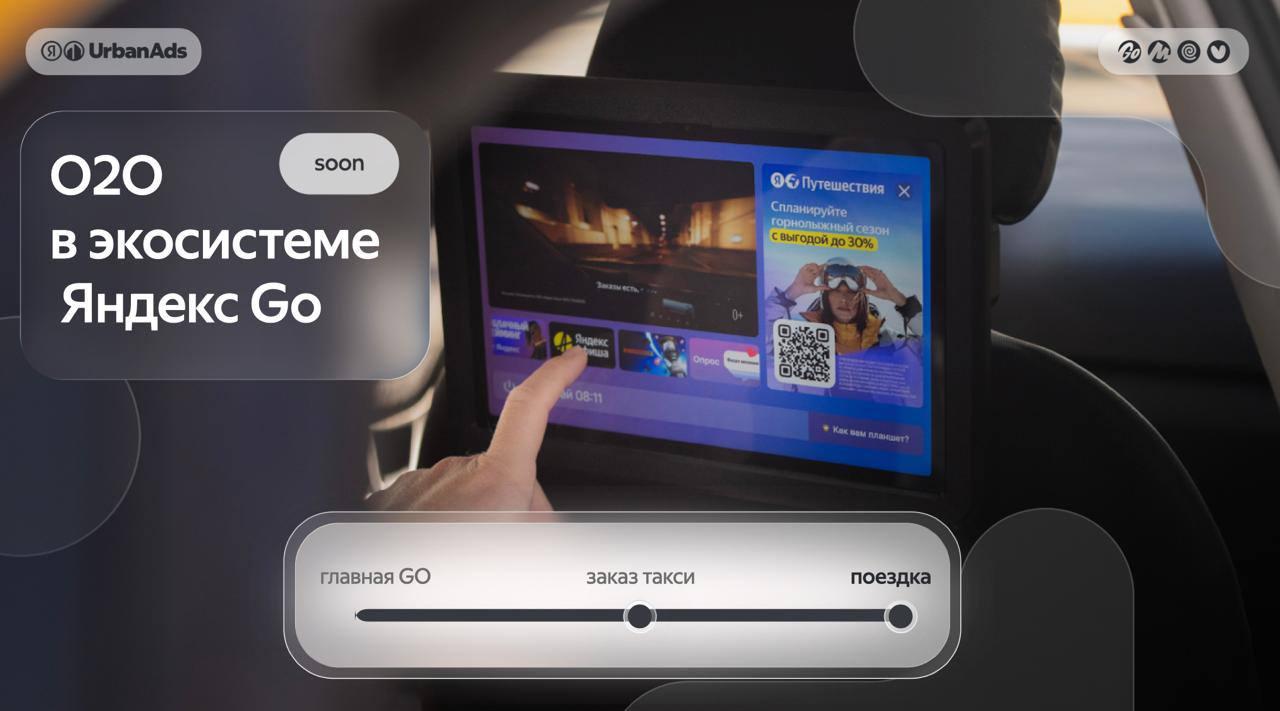
As Yandex explained, passengers will be able to watch the first episodes of popular TV series and cartoons on such tablets, find out the weather or play simple arcades during the trip, and advertisers will be able to place their video advertising among useful content.
The new offline advertising format can be targeted in the usual way - when setting up a campaign in the Yandex UrbanAds personal account or the Yandex Market seller account. Video advertising on a tablet in a taxi will only be seen by passengers who meet the selected parameters. You can manage both basic settings - by frequency and geography of the campaign, audience characteristics (gender, age, income), and advanced settings - for example, by the presence of a Yandex Plus subscription, preferred rates in Yandex Go, and others.
As a reminder, in the summer of 2025, Yandex scaled the advertising platform for branded city services. Now the advertising capabilities of Yandex Go, Eda and Delivery, Lavka and Market have been combined under the UrbanAds brand.











