Translated with AI from the Russian original.
The Russian company "Systeme Electric", a manufacturer of integrated solutions in the field of power distribution and automation, has supplemented the line of three-phase uninterruptible power supplies with floor-standing Uniprom Base and rack-mounted Uniprom RM.
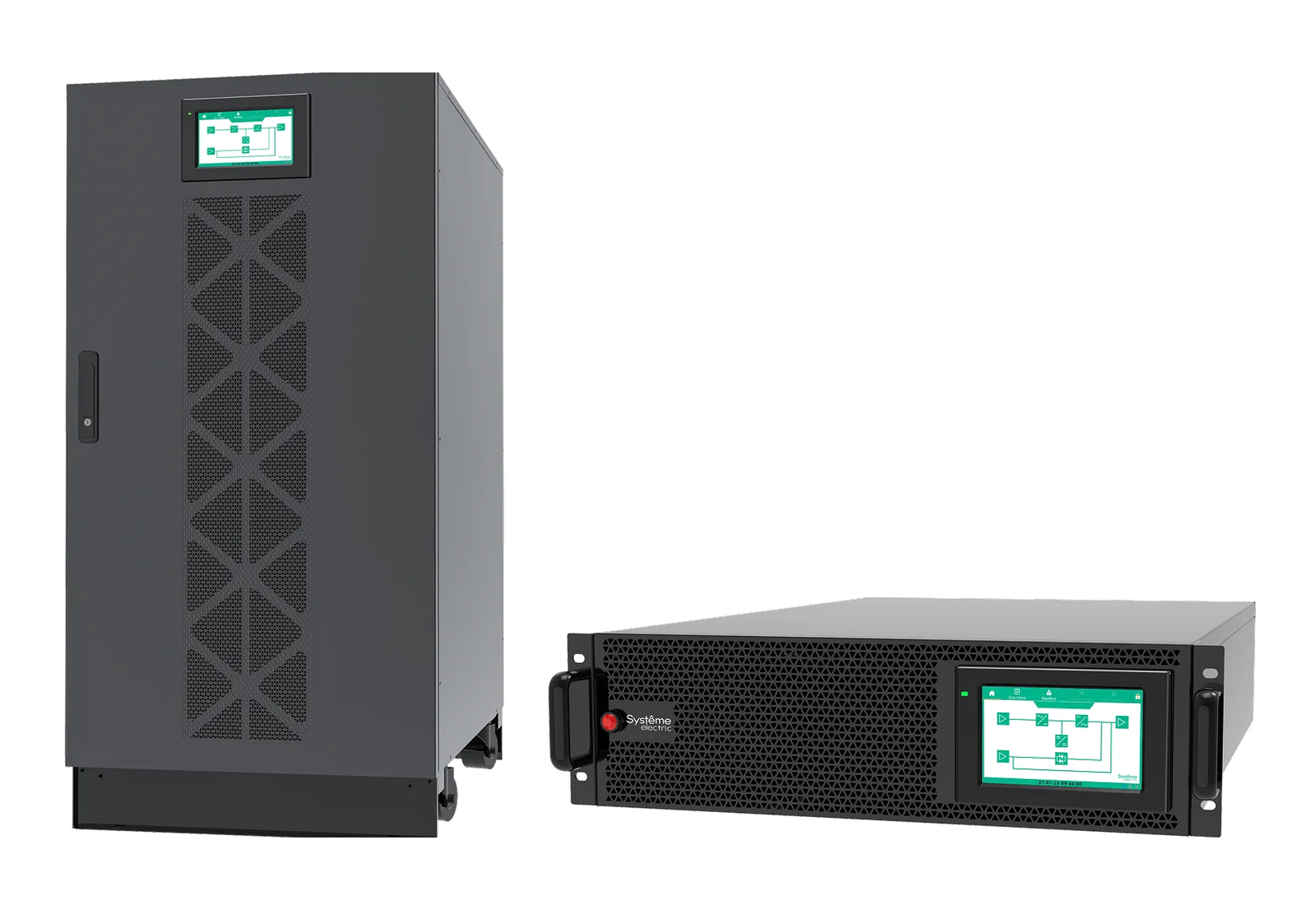
According to the manufacturer, the products have a range of available capacities from 10 to 200 kVA and are intended for use in industries with strict requirements for uninterrupted power supply of equipment due to financial and infrastructure risks.
Uniprom Base and Uniprom RM UPSs provide efficiency in double conversion mode up to 96%. The devices support various operating configurations, including 3:1 (for Uniprom RM 10-30 kVA models) and 3:3 (for Uniprom RM 10-60 kVA and Uniprom Base 10-200 kVA). A key feature is the output power factor (PF), which is equal to one and remains constant throughout the entire operating temperature range.
It is possible to operate a parallel system with a common battery array. Users can choose models with either internal or external batteries, depending on the required conditions. The SPOT load testing mode allows you to check the performance of the UPS without having to connect a load. In addition, the devices support both lead-acid and lithium batteries.











