Translated with AI from the Russian original.
Tantor Labs, a member of the Astra Group, has introduced a major release of the Tantor platform, designed for efficient management and monitoring of PostgreSQL clusters.
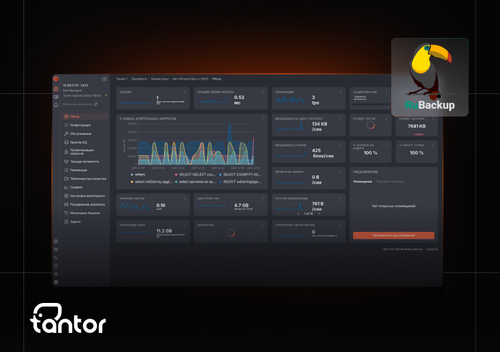
Tantor 6.0 features a completely redesigned user interface and optimized navigation, simplifying access to functions and settings, as well as allowing for more convenient organization of the workspace and more flexible management of user access rights.
For example, the SQL editor, anonymizer, analytics modules, backup monitoring, and others are now grouped into a single block.
The role-based access model has been updated, supporting the separation of rights at the system level (new role "System Owner") and at the tenant, administrator, and observer levels. Centralized management of roles and groups with support for mass assignments is available.
Improvements have been implemented to facilitate working with third-party services. For example, Tantor 6.0 introduces the ability to view all backups with creation result markers for the first time, thanks to integration with the Russian backup, recovery, and data protection system, RuBackup. In addition, connecting to a corporate mail server for sending notifications can now be configured directly in the interface, and no longer requires making changes to configuration files.











