Translated with AI from the Russian original.
Specialists of "Red Soft" company have published an image of the Red OS 8 operating system, adapted for the RockPro64 single-board computer.
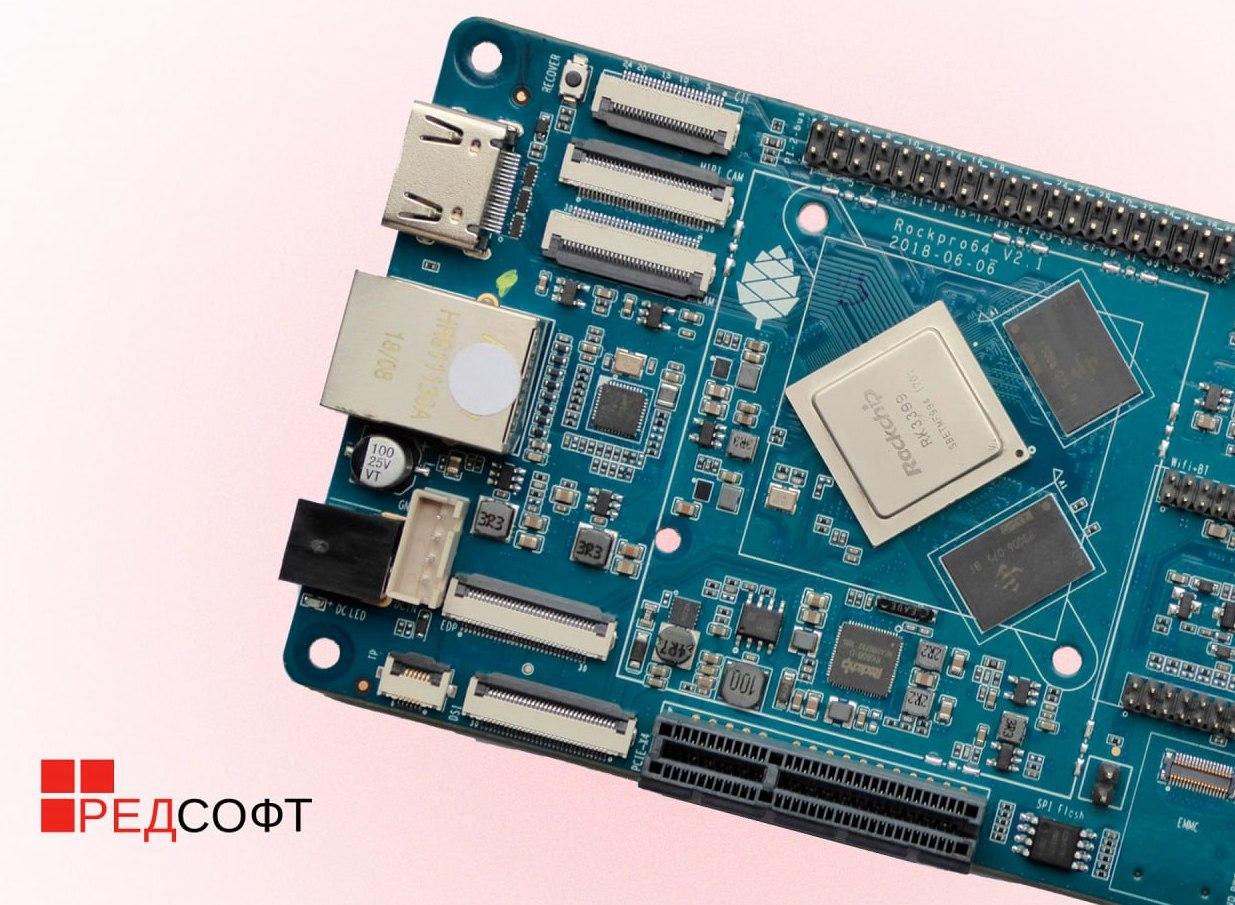
As the company explained, the use of Red OS 8 on the RockPro64 platform opens up new opportunities for various applications. It is suitable for developing embedded systems, educational tasks, manufacturing industrial devices, as well as creating personal server solutions.
Four variants of Red OS 8 images have been prepared for users:
- KDE - with KDE Plasma graphical environment;
- GNOME - with modern GNOME environment;
- MATE - with lightweight MATE environment;
- "Minimal Server" - an image without a graphical shell for server solutions.
"Red Soft" emphasized:
Integration with Red OS 8 makes RockPro64 a versatile platform that combines high performance, broad hardware capabilities, and a reliable domestic operating system. This allows it to be used in tasks where stability and security are important.
As a reminder, RockPro64 is a single-board computer from Pine64 based on a six-core SoC on the ARM architecture with support for PCIe, USB 3.0, USB-C, and Gigabit Ethernet, equipped with LPDDR4 RAM up to 4 GB.
The Red OS 8 image for RockPro64 and instructions for its installation are published on theRed OS website.











