Translated with AI from the Russian original.
Russian company Smart Engines has introduced the first AI agents for document recognition. Virtual assistants are responsible for creating templates for non-standard documents. Previously, the creation of such templates required project work with the vendor or the participation of specialists on the client's side.
In server solutions, Smart Engines technologies allow processing documents at a speed of 55 documents per second per processor without the use of GPUs. On a mobile phone, it takes less than a second to recognize one page of a document. The AI agents developed by Smart Engines work autonomously and locally - without the use of GPUs or external servers.
The development of AI agents is the result of the company's scientific research in the field of Agentic AI. The new neural network stack is integrated into the Smart Document Engine document recognition system, and AI agents are currently being tested by the company's partners.
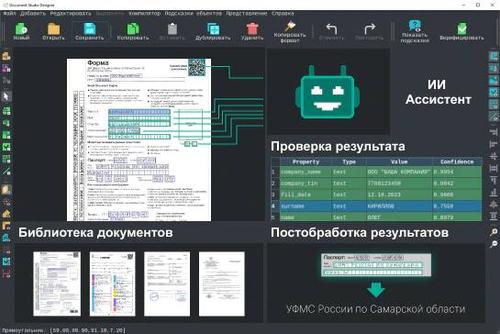
AI agents analyze the logic and structure of the document, identify all significant elements: handwritten and printed text fields, barcodes, QR codes, checkboxes, and even complex table structures. It takes an AI agent a few seconds to analyze and add a new form of questionnaire, report, survey or other complex document to the recognition system in the designer.
The user can observe the configuration process in real time, receiving a clear visualization of each stage and accurate algorithm confidence metrics.











