Translated with AI from the Russian original.
This information will help entrepreneurs analyze the popularity of visual content and identify what better attracts users' attention.
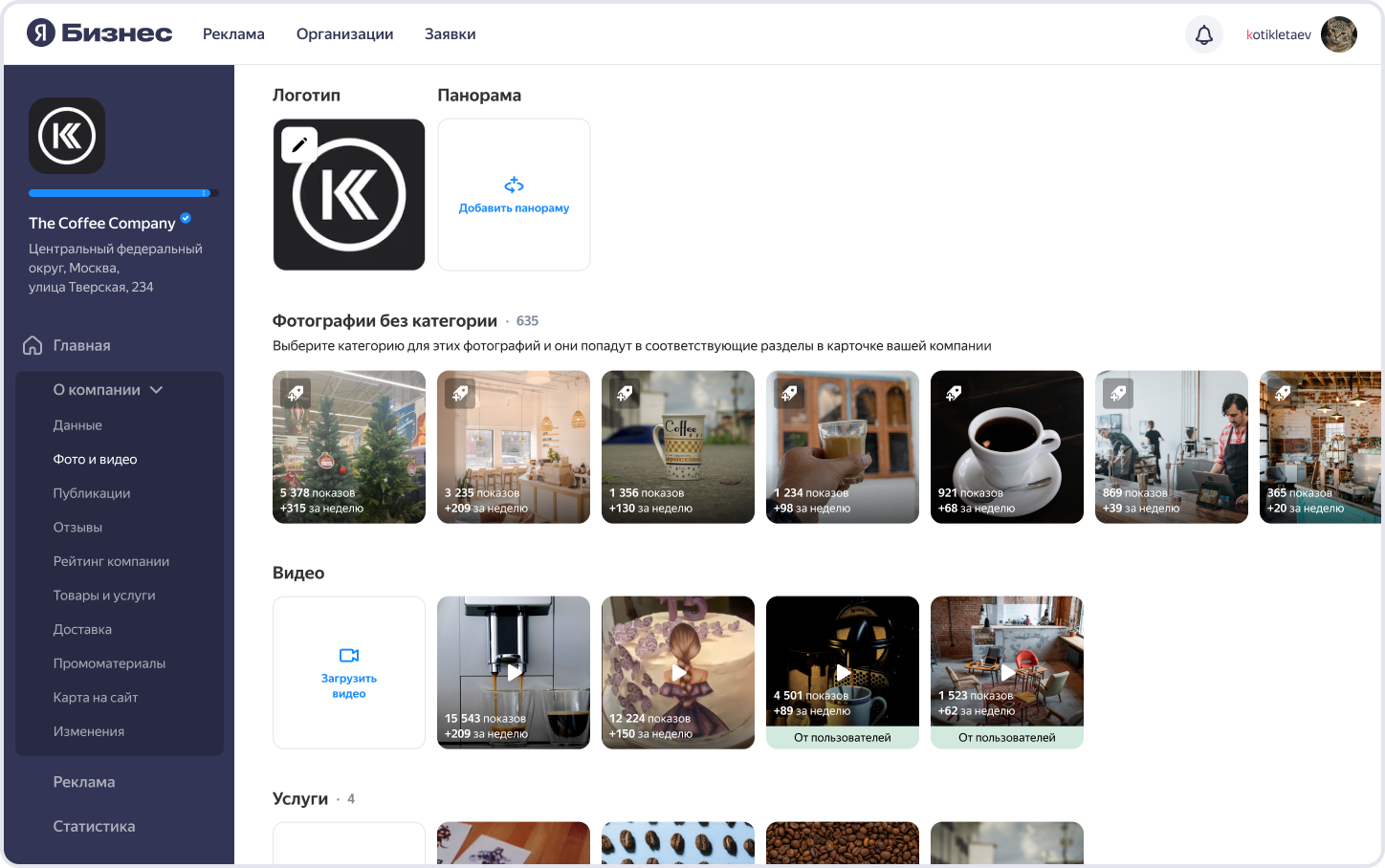
Statistics on impressions of photos and videos published in the organization's profile are now available in the Yandex Business personal account.
Information such as the number of photo and video views, and the dynamics of their views per week is presented. Entrepreneurs can also see who added the content - the organization itself or a user. Thanks to this information, business owners will be able to:
- Raise popular photos and videos higher or add them to the desired categories (for example, "Interior") to make them even more visible and help customers make a choice.
- Replace content that gets few impressions with more attractive content, add it to the correct category, or delete it.
- Notice popular content that may affect the opinion of the company in time and respond to it quickly.
Impression statistics can be found in the "Photos and Videos" section, on the main page, and in the "Updates" section in the network account. The data is updated on a daily basis.











