Translated with AI from the Russian original.
The developer ITC ROSA presented a new version of the "Control Center" platform, which integrated ROSA "Control" tools. Now you can centrally administer not only workstations and servers, but also mobile devices based on "ROSA Mobile", including the domestic "R-Phone".
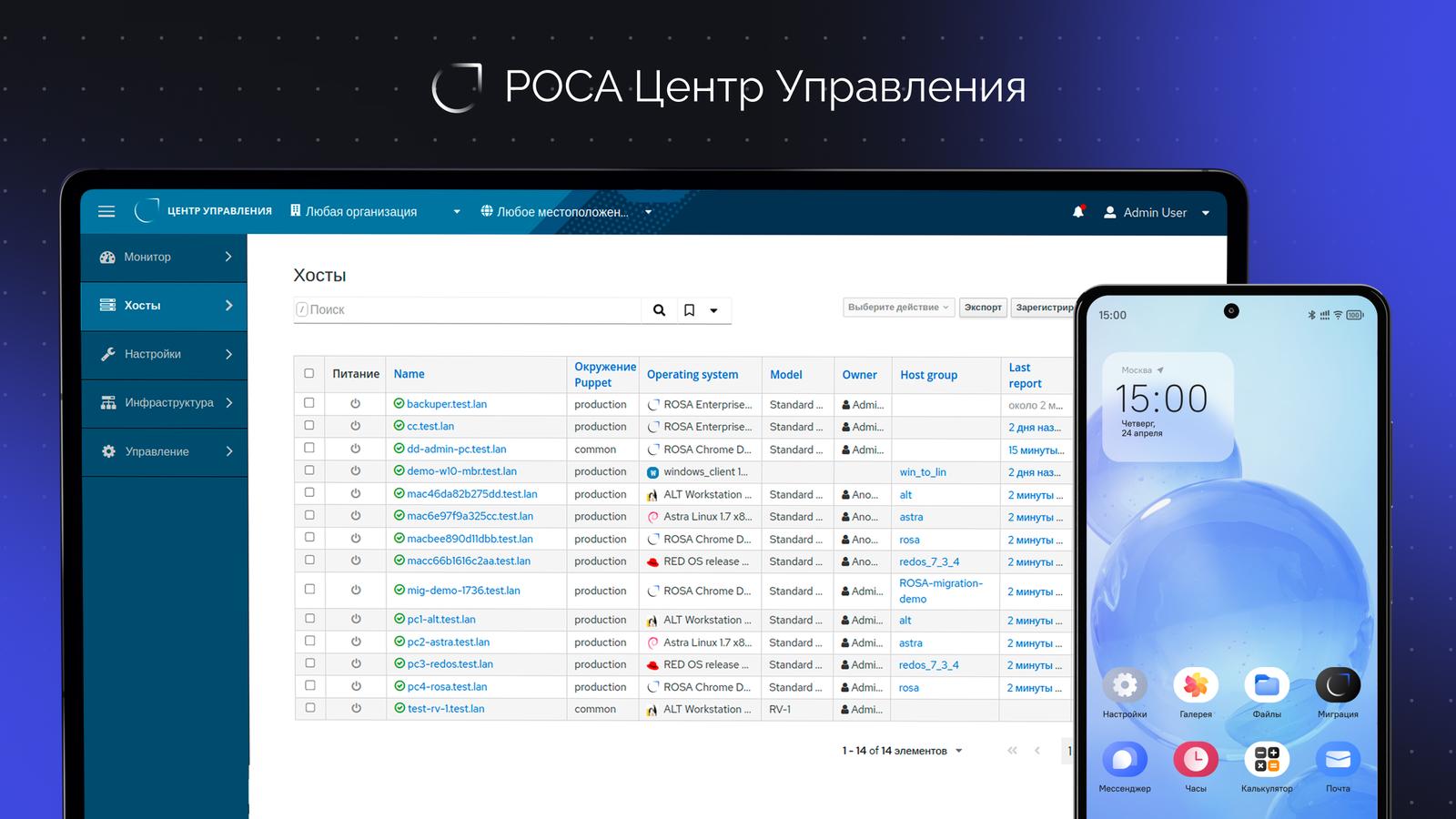
The new version of ROSA CC implements mechanisms for managing corporate smartphones, including installing, updating, and deleting applications, configuring connections to corporate repositories, enabling and disabling the camera, GPS, and cellular communications, as well as remotely changing the PIN code. Administrators will also begin to remotely receive information about battery charge and IMEI number.
ROSA "Control Center" is designed for comprehensive management of operating systems and software. Using the "single window" principle, the system provides deployment, monitoring, and configuration of devices, increasing the efficiency of infrastructure administration by up to 37% and reducing downtime of servers and workstations by up to 75%.
ITC ROSA noted:
Now these capabilities extend to mobile devices as well, which is especially important in the context of remote work and increased attention to the security of corporate data.











