Translated with AI from the Russian original.
The code will make it possible to accurately identify the product, its origin, and its key characteristics.
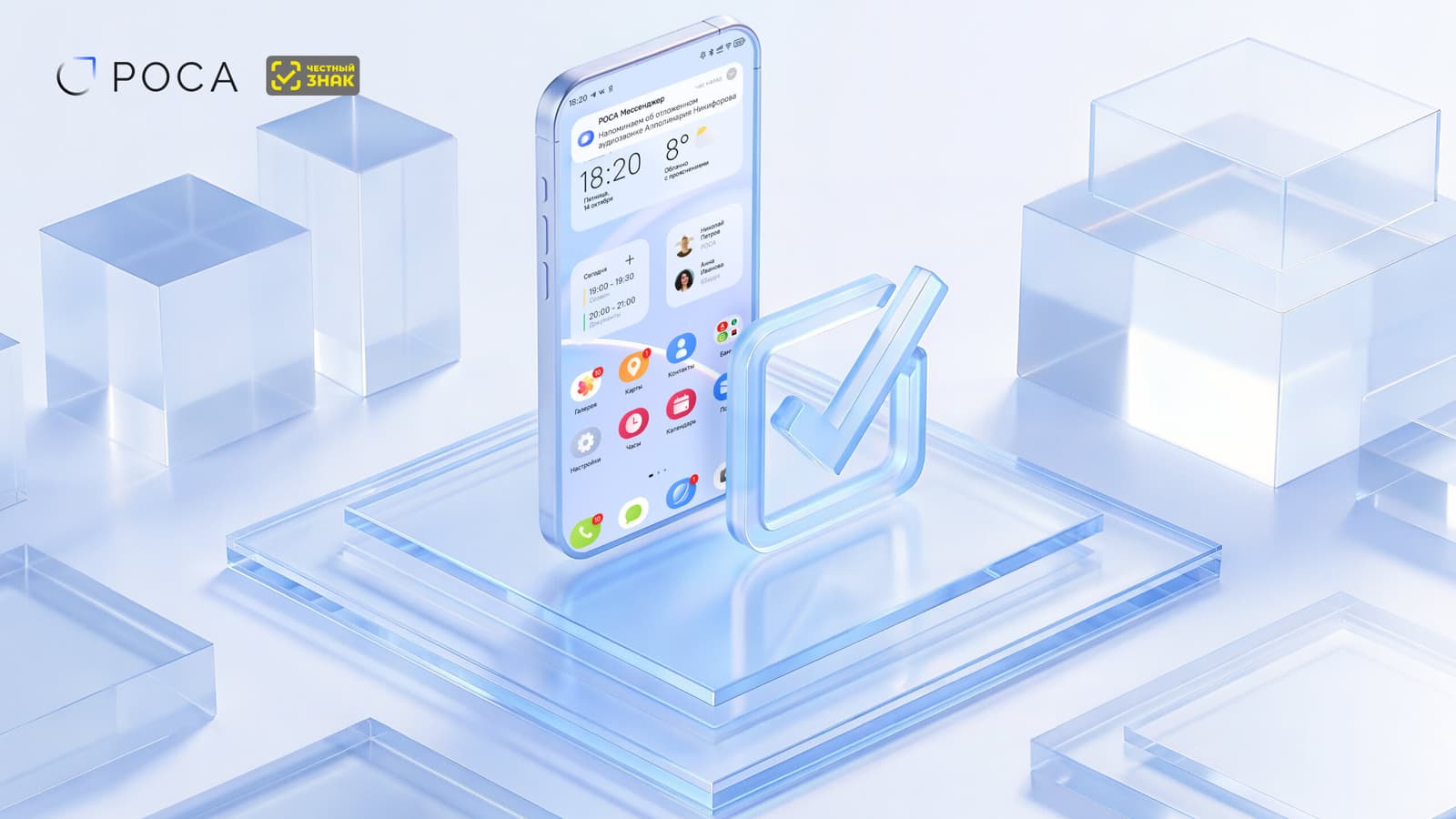
Developer NTTs IT "ROSA" and manufacturer "Rutek" announced the inclusion of the "R-Phon" smartphone running the Russian operating system "ROSA Mobile" in the "Chestny Znak" digital labeling system.
Now every box with "R-Phon" will receive a label with a unique code. Such labeling is becoming a standard part of the production process, just like other mandatory stages of product release. The code is linked to the "Chestny Znak" system and the serial number of a specific device. It contains information that makes it possible to accurately identify the product, its origin, and its key characteristics, weight, dimensions, and other data that accompany the product in the accounting system.
As noted by NTTs IT "ROSA", the work was carried out within the framework of the requirements established by Resolution No. 1954 of the Government of the Russian Federation dated November 28, 2025, which approved the rules for labeling certain types of radio-electronic products with identification means.