The company "Basis" has released an update to the platform for managing virtual desktop infrastructure (VDI) - Basis Workplace 3.2. The key innovations of the release are a VDI resource aggregation system for organizations with a geographically distributed infrastructure, a modular architecture for connecting to virtualization platforms with native support for Basis Dynamix Enterprise and OpenStack, as well as a number of improvements in the areas of administration and security.

Geographically Distributed VDI: A Unified Space for Geographically Distributed Organizations
Basis Workplace 3.2 implements a system for aggregating virtual desktop resources from multiple geographically distributed sites (geographically distributed VDI). Users gain simultaneous access to desktops in different data centers, and in the event of a failure at one of the sites, the system automatically redirects connections to available resources, providing the necessary fault tolerance.
For large organizations with a branch network, this means the ability to build a unified, fault-tolerant VDI infrastructure in which employees connect to the data center closest to them with minimal data transfer latency. At the same time, administrators manage the entire distributed environment from a single panel.
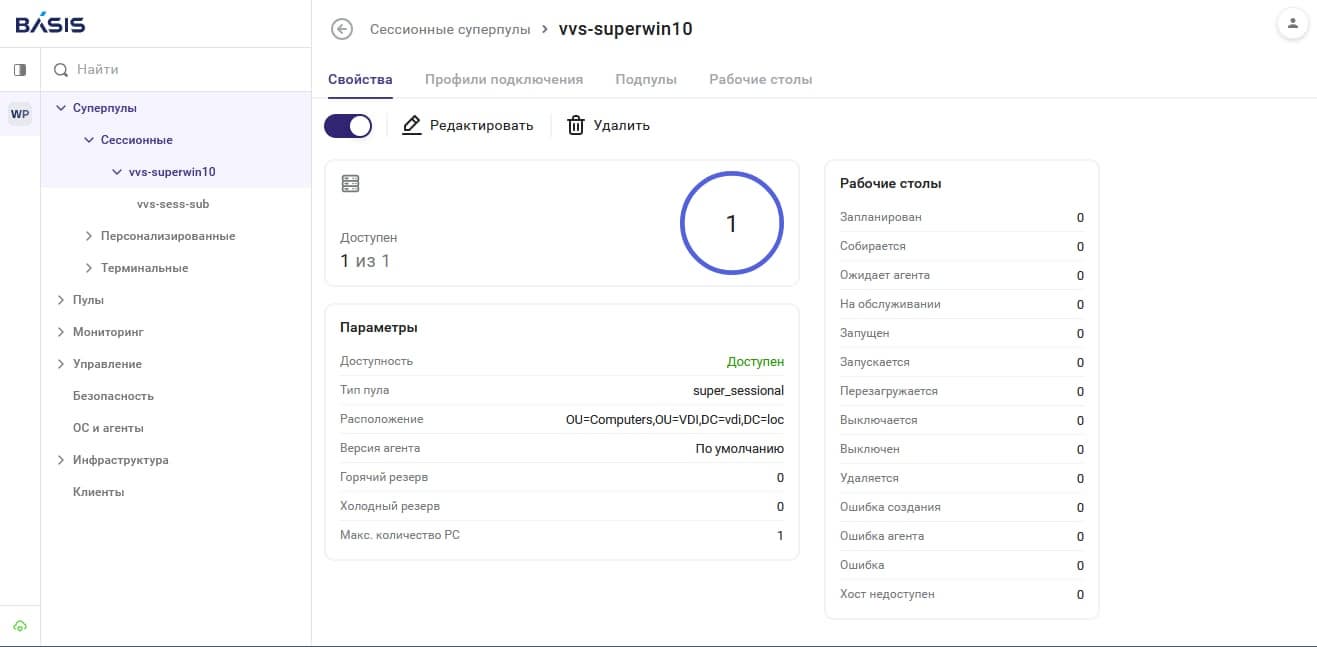
A convenient addition to geographically distributed VDI is terminal superpools — the ability to combine multiple terminal pools into a group for centralized management of settings, startup, shutdown, and monitoring of virtual machines.
Direct Connection to Virtualization Platforms
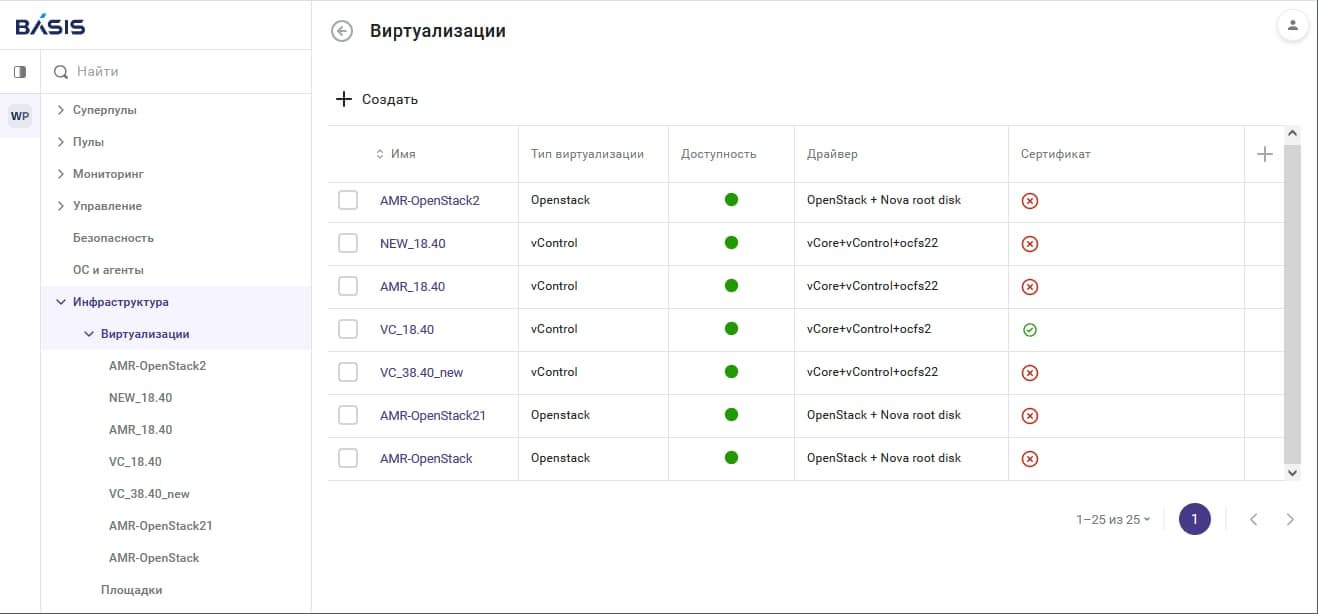
One of the most significant architectural changes in Basis Workplace 3.2 is the transition to a modular driver system for working with virtualization platforms. Previously, Basis Workplace interacted with hypervisors through the vControl module, which created additional dependencies during deployment and maintenance. Now, a separate driver is developed for each supported platform, which provides direct interaction without intermediaries.
This approach offers several advantages at once. Drivers are isolated from each other, which allows updating and refining the module for one platform without affecting the operation of the others. Adding support for new virtualization platforms also becomes easier and safer — it is enough to develop a new driver without making changes to the existing components of the system.
Version 3.2 adds drivers for Basis Dynamix Enterprise and platforms based on OpenStack. The driver for Dynamix Enterprise provides full management of virtual machines — creation, deletion, enabling, disabling, and rebooting — directly, without intermediate components. A similar driver for OpenStack opens up the possibility of using Basis Workplace in cloud environments built on this platform.
Advanced Administration Tools
Version Basis Workplace 3.2 brought noticeable improvements to the daily work of administrators. The ability to remotely connect to an active user session via the VNC protocol directly from the control panel has appeared — for operational technical support without the need to use third-party tools.
Settings management is now divided into two levels — system and organizational, which simplifies configuration in multitenant environments. Monitoring of virtual machine load by key parameters — CPU, RAM, and disk space — is implemented with the possibility of visualization in the form of graphs. The possibilities of working with tables in the control panel have been expanded: sorting, comparison, and filtering tools have been added. And service management — adding and updating software components — is now available directly from the web interface.
The approach to access control policies (ACL) has been redesigned. Instead of forming a separate set of rules for each object, a centralized list of policies is now maintained, which, if necessary, are assigned to pool profiles, devices, or groups of access devices. This significantly reduces setup time and reduces the likelihood of errors.
Peripherals and Multi-Monitor Support
The updated Basis Workplace client received tools for working with multiple monitors — when the display configuration changes, an automatic reconnection to the virtual workplace occurs with the application of new parameters.
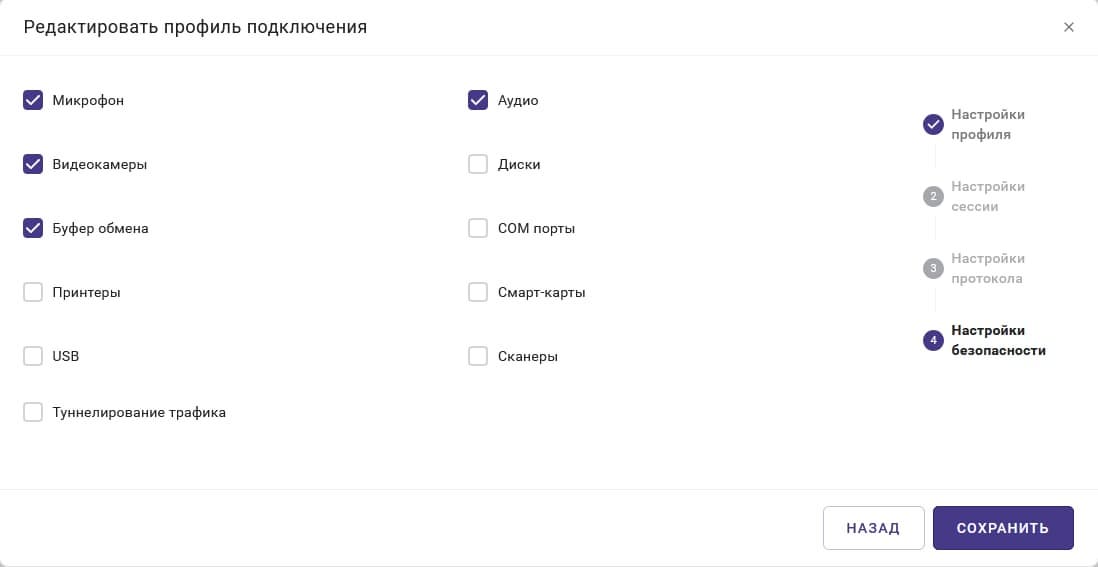
The possibilities of forwarding peripheral devices to virtual workplaces via the RDP/xRDP protocol using the platform's own tools have been expanded: support for Rutoken smart cards, printers, and video cameras for Windows–Linux, Linux–Linux, and Linux–Windows connections has been implemented.
Security and Compatibility
In terms of security, the mechanism for transmitting passwords and tokens during authorization has been improved, support for services with two CA certificates has been implemented — separately for interaction with databases and for inter-service communication. The Basis Workplace client now automatically downloads the CA certificate from the broker for the tunneling service.
Compatibility with Russian and open platforms has been expanded: support for the ALDpro directory service and the Ubuntu 22.04 operating system has been added.
"In the new release, we paid special attention to two areas that are in demand among our key customers. Large businesses with a geographically distributed and heterogeneous IT infrastructure need a VDI platform that works equally well with different virtualization environments and provides uninterrupted employee access to desktops regardless of the site. Basis Workplace 3.2 addresses this need, and also offers a number of new tools for comfortable administration of a dynamic infrastructure," — said Dmitry Sorokin, technical director of "Basis" company.