Translated with AI from the Russian original.
Passing the certification simplifies and speeds up the implementation of the messenger in commercial organizations and government structures.
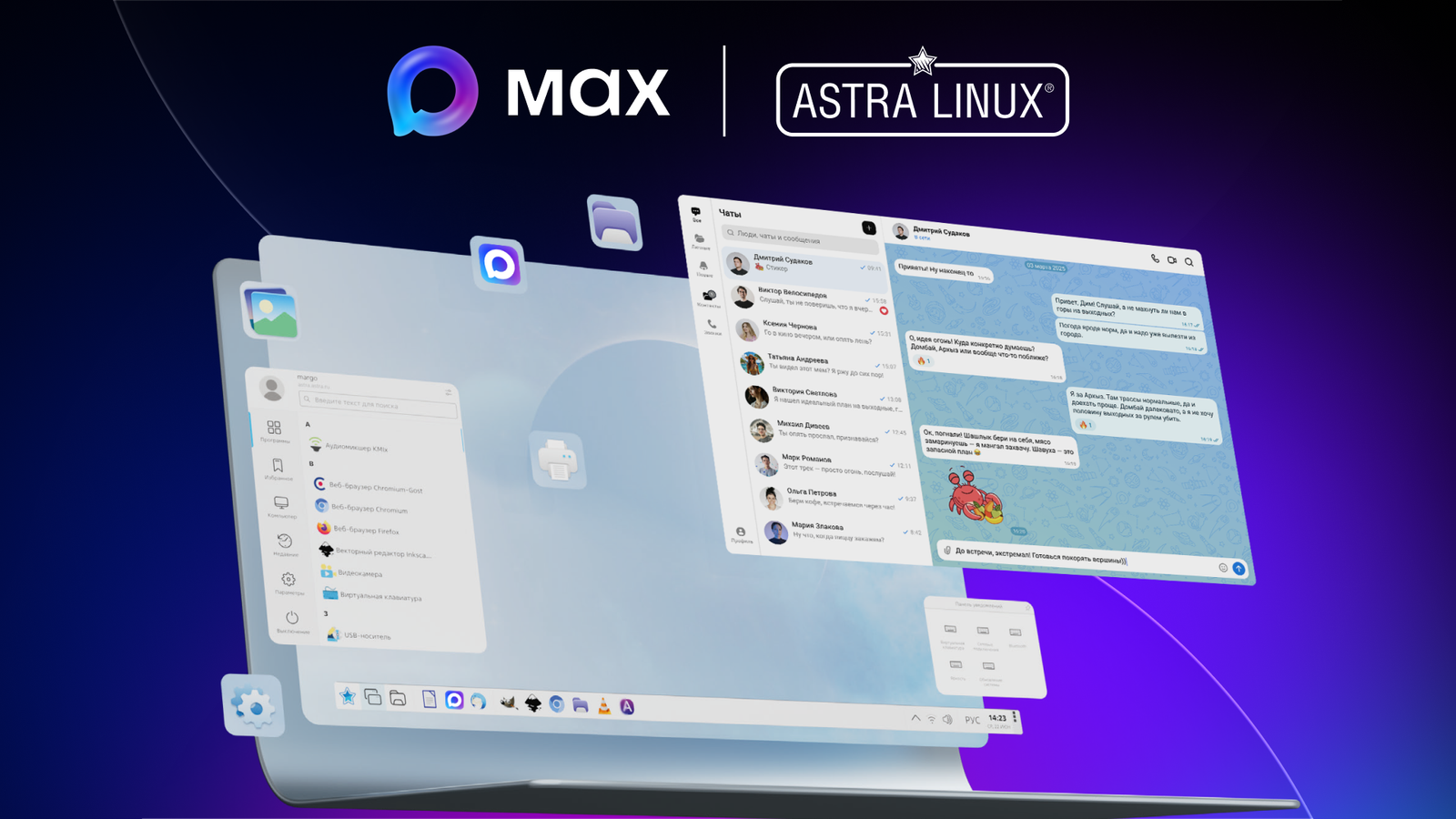
Astra Group and VK announced the completion of testing and confirmation of full compatibility of the national messenger Max with the Astra Linux operating system.
Based on the test results, a Ready for Astra certificate was issued - it proves the safe use of Max on devices running Astra Linux, including systems with increased information security requirements.
According to independent analysts at Strategy Partners, Astra Linux OS occupies 76% of the Russian operating systems market in 2024.
As a reminder, Max is a digital platform from VK that includes a messenger and a number of user services. The messenger offers audio and video calls, chats, voice messages, sending large files, money transfers, and information channels are operating in test mode. Business services in the format of mini-applications and chatbots are integrated into the platform. The application is included in the register of Russian software. Max is available in mobile, desktop and web versions. From September 1, 2025, the Max messenger must be preinstalled on all smartphones and tablets sold in Russia. In August, the number of registered users in Max exceeded 18 million, in early September - 30 million, and in mid-November - 55 million.