Translated with AI from the Russian original.
For the retrofitting of a mining and metallurgical plant, specialists from Electrosolutions, representing the EKF brand in Russia, selected modern analogues of devices that had reached the end of their service life.
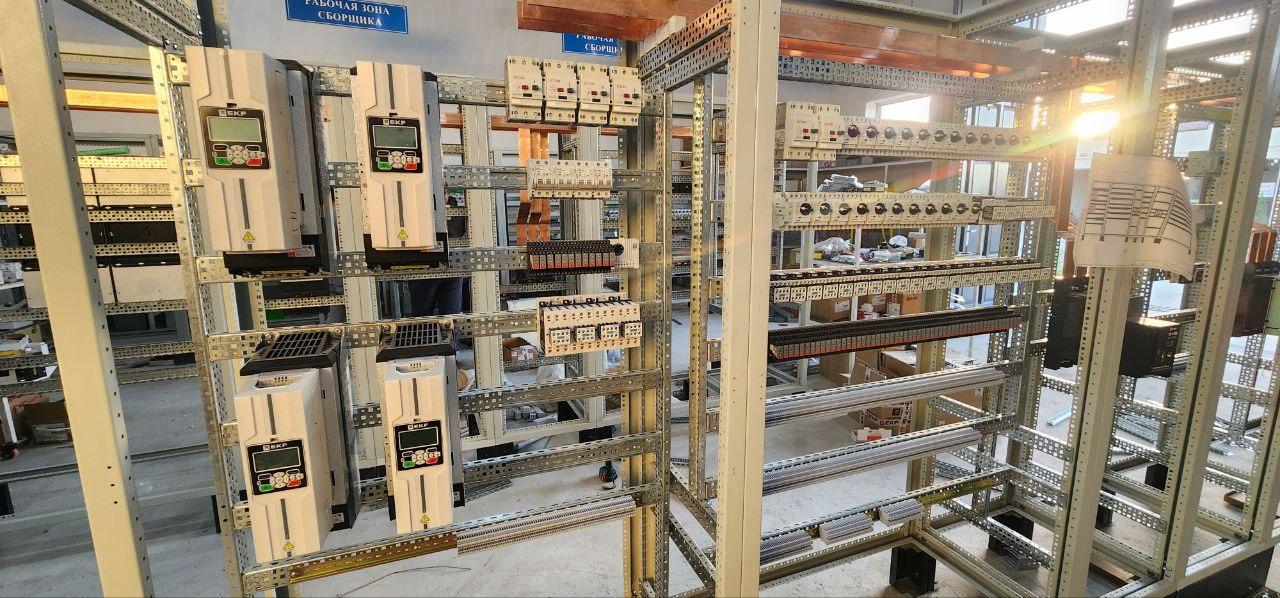
The project utilized the PRO-Drive 500 frequency converter, which allows for long cable runs. In its basic configuration, the device supports the Modbus TCP protocol. The AC drive can control motors with a power range from 1.5 to 630 kW at a voltage of 400 V. The modular design allows for the assembly of drive systems with a common power supply unit (AC-DC converter) and several inverters (DC-AC converters) connected on the same DC bus.
Updated GV2P (0.1-32 A) motor starter circuit breakers with a thermomagnetic trip unit were also installed. They are designed for switching AC circuits with a voltage of up to 690 V and a frequency of 50/60 Hz, controlling and protecting three-phase asynchronous motors from overload, phase loss, and short circuit. For the same purposes, updated APD-32 and APD-80 motor starter circuit breakers were added to the solution.
KTE contactors and compact KME contactors close the circuit and supply power to the motor when a command is given, ensuring start-up and shutdown without a preliminary stop in the network. AV Power molded case circuit breakers protect power circuits and motors from overloads and short circuits.











