Translated with AI from the Russian original.
With NFC tag and QR code - for payment via the Faster Payments System. The solution is aimed at businesses that operate both online and offline
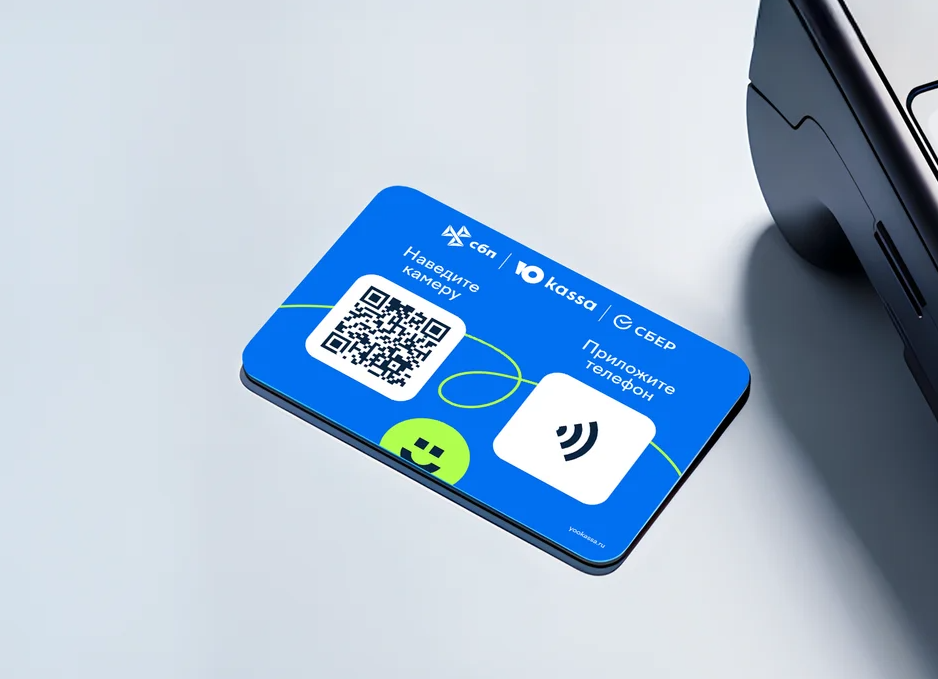
After installing the sticker at the checkout, the customer can choose a convenient payment method: QR code or NFC. To pay via NFC, you need to hold your phone up to the sticker; to pay via QR code, scan it and select a bank to pay via the FPS. The company explained:
At the same time, the entrepreneur receives a unified payment management system, regardless of whether the purchase was made in an online store or at a physical point.
Payments via such stickers are subject to commission at FPS rates without additional charges. You can order a sticker in a ready-made design or in your own, adapted to the brand's corporate identity, with delivery throughout Russia. To link to a cash register, you will need to scan the QR code from the received sticker at the checkout. For users of 1C, ATOL and Frontol software, no additional API integration is required.
As a reminder, "YuKassa" is a payment acceptance service of the fintech company "YuMoney" (formerly "Yandex.Money"). In 2020, after "Yandex.Money" came under the responsibility of Sberbank, the service was renamed "YuMoney."











