Translated with AI from the Russian original.
ITC ROSA has presented a special edition of the ROSA "Chrome" operating system, adapted for interactive panels and touch kiosks of Liga Group.
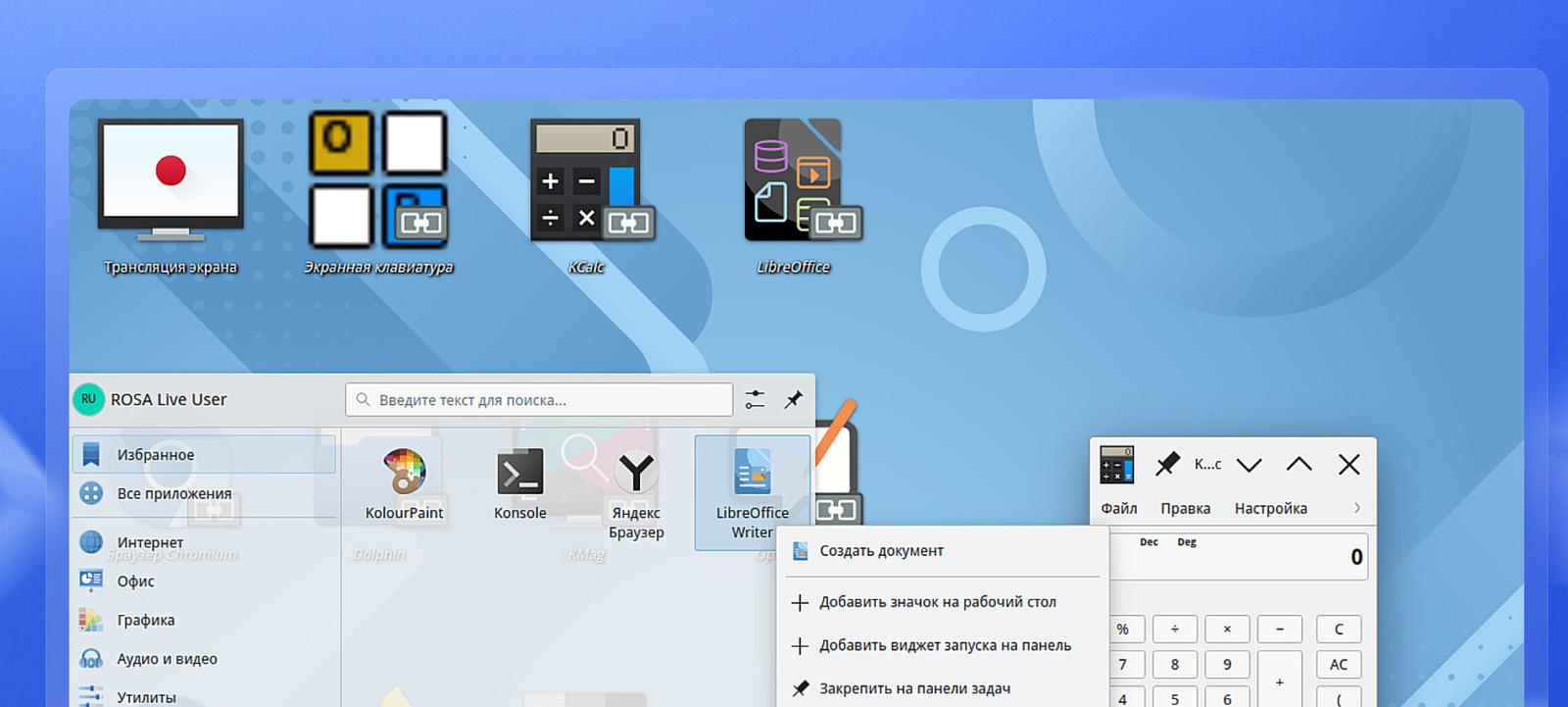
The new distribution is focused on use in schools, universities, government institutions, and meeting rooms. According to the developers, it ensures stable operation on both mass platforms Intel and AMD, and on domestic processors "Baikal-M".
The interface is optimized for finger control and working on a large touch screen. Users can interact with the system using gestures, and simultaneous operation by several people is supported. The system works in the X11 graphical environment, not Wayland.
The system includes a set of special applications. Among them are the OpenBoard electronic whiteboard with MOS modifications, the Krita professional graphics editor, and three browsers: Chromium as the main one, Firefox with out-of-the-box video decoding on AMD video cards, and the lightweight Falkon, which works correctly on the built-in graphics of "Baikal-M".
Kamoso and Audacity programs are pre-installed for working with the camera and microphone, as well as the "Blinker" utility, which reminds you to take breaks in accordance with SanPiN requirements.











