Translated with AI from the Russian original.
Advertisers can once again use emojis in banners. The feature is now available in VK Ads in desktop and mobile versions.
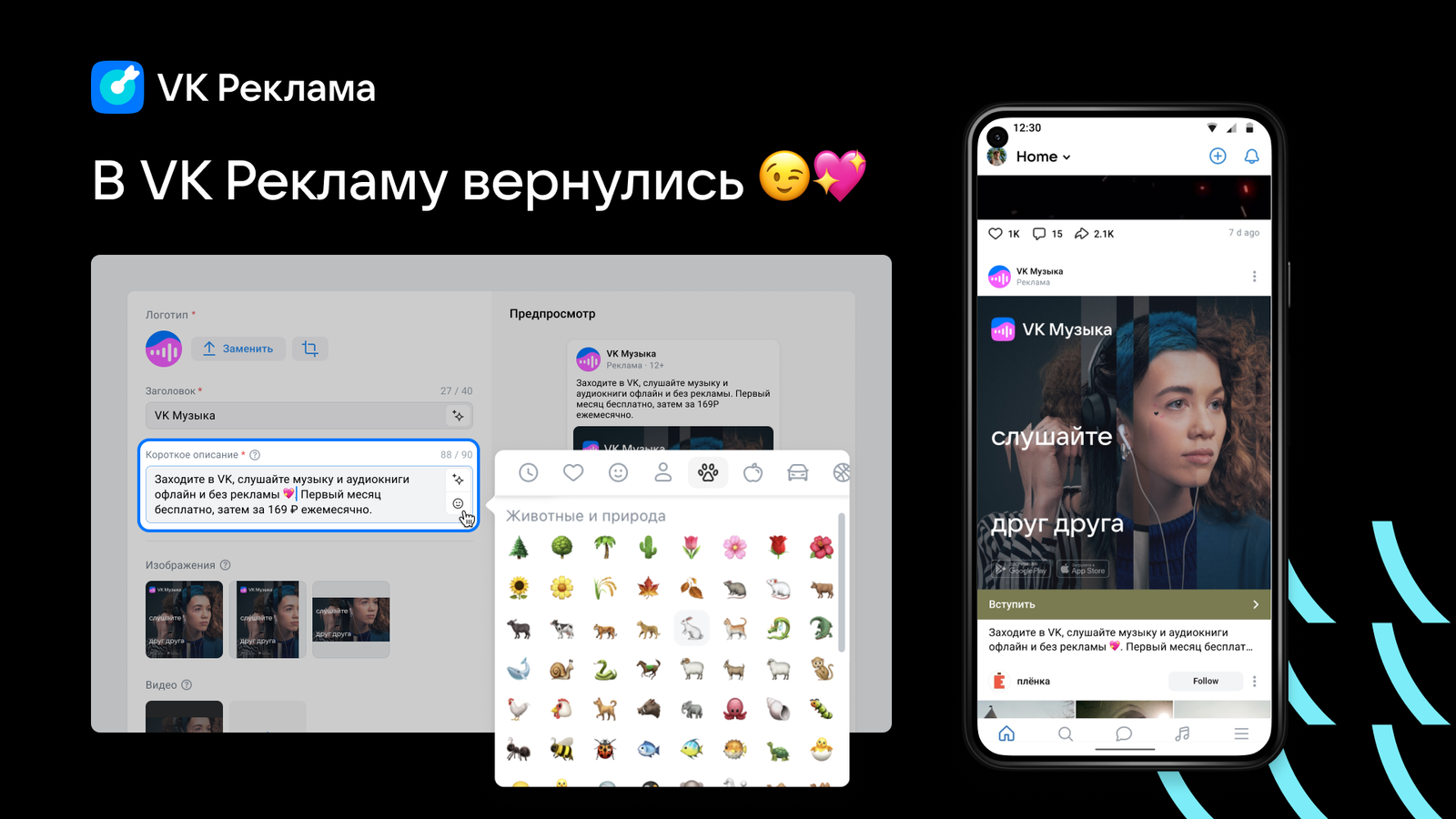
More than 800 emojis are available for users to add to advertisements. At the same time, no more than 5 emoji icons can be used in one advertising element (field or post in the banner), in addition, their placement is not available in headings and legal information.
The use of emojis in banners will be available for all advertising objects, except for Zen promotion objects and mobile applications in the "Awareness and reach" section. However, in the future it is planned to make the option available for them as well.
The use of emojis in banners is available for all advertising objects, except for the promotion objects of "Zen" and mobile applications in the "Awareness and reach" section. However, in the future it is planned to make the option available for them as well.
Yakov Stinsky, Product Director of VK Ads, said:
We have been tracking many requests from advertisers to return emojis to advertising. Indeed, the use of emojis will help to revive an advertising banner, increase the emotional coloring of the message and attract the attention of the target audience. At the same time, we have improved the tool, introduced certain rules to optimize and improve the advertising message, without making it look like spam.











