Translated with AI from the Russian original.
The Yandex B2B Tech team has published financial results for the first time for two key areas: the Yandex Cloud platform and the Yandex 360 virtual office.

Yandex B2B Tech's total revenue for 2024 amounted to 32.2 billion rubles, an increase of 48.4% compared to 2023. According to Yandex's estimate, Yandex B2B Tech's share in the market was about 13% with a total market volume of 240 billion rubles.
Revenue of the Yandex Cloud platform increased 1.5 times and reached 19.8 billion rubles. The total number of platform clients increased 1.5 times and exceeded 44 thousand. The fastest-growing area was information security services — their consumption increased 2.1 times during the year, followed by Yandex DataLens (2-fold growth) and AI services (1.6-fold growth). The share of AI services in the platform's total revenue increased to 5% during the year.
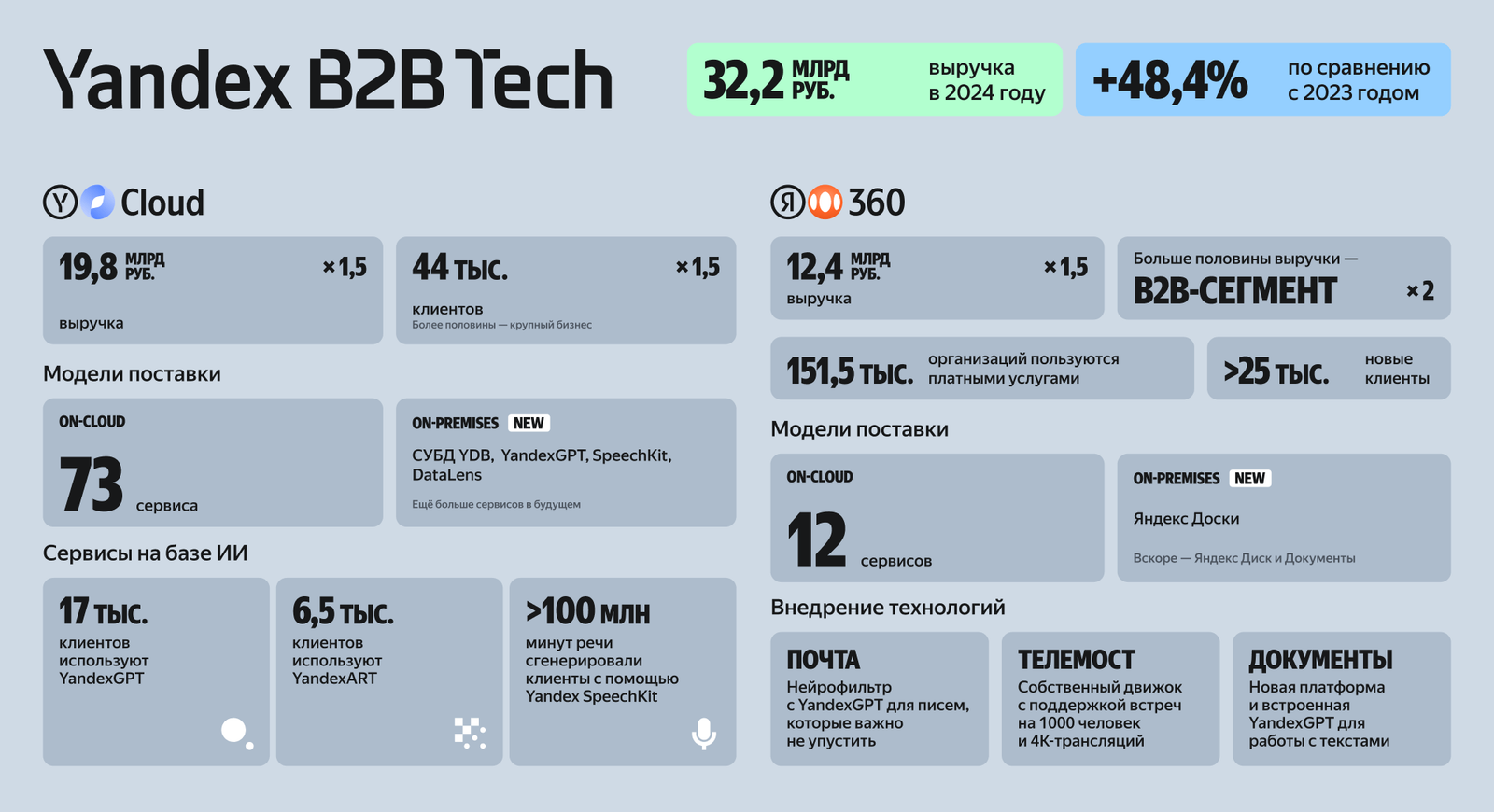
Yandex 360 revenue in 2024 increased almost 1.5 times and exceeded 12.4 billion rubles. At the same time, B2B segment revenue more than doubled and accounted for more than half of total revenue. The most popular services among B2B clients were Mail, Calendar, Disk and Telemost.
Yandex B2B Tech is a Yandex division that creates and develops solutions for the corporate sector.











