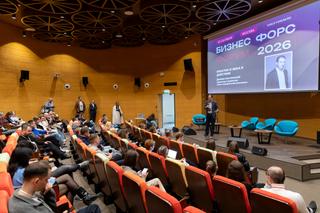
A software developer, mentor, and active participant in IT conferences discusses how to nurture an engineer, not just a coder.

According to a survey by IDC, an analytical and consulting company in the field of information technology, the shortage of IT specialists in the world will lead to losses in the global economy of $5.5 trillion by 2026. And a study by another international consulting company, Korn Ferry, predicts that up to 85 million vacancies in the technology sector will remain unfilled by 2030. At the same time, according to the international staffing company Robert Half, 95% of technology leaders are already experiencing difficulties in finding qualified employees.
Companies are increasingly realizing that it is not enough just to hire people; it is important to teach them to think like engineers who are capable of bringing a solution to release. And in this case, the need to build mentoring systems becomes paramount for companies, according to Ivan Shatukho, mentor of national and international educational programs Open IT, Start IT, and GeekStorm, who headed a department at Innowise, one of the largest IT developers in Eastern Europe, which has implemented more than 850 projects for clients in 50+ countries. Here, he developed teams with hundreds and thousands of developers.
Ivan Shatukho talks about how companies can maintain efficiency in the face of a shortage of IT specialists, and how to train engineers who not only write code but also know how to implement a project from idea to implementation.
The statistics on the shortage of IT specialists indicate that companies are already facing a serious problem. In your opinion, why is it so difficult to find programmers despite the huge number of courses and IT schools?
The problem is not in quantity, but in the quality of training. Today, thousands of people take online courses, but the market still does not receive ready-made specialists. Training often boils down to studying syntax and popular libraries. But in real development, something else is more important: the ability to understand the task, assess risks, and bring the result to production. Companies are looking not just for programmers, but for people who are able to think like engineers. That is, to see the system as a whole, to understand why this or that piece of code is needed, and how it will affect the product.
You built the department team of one of the largest IT developers in Eastern Europe, Innowise, in which over 180 engineers worked. What exactly should be done to nurture talent internally?
The easiest thing is to stop waiting for ready-made people from the market. It is better to invest in your own educational programs. At first, it may seem costly, but in the long run, it is more profitable: you get specialists who know not only the technology but also the company culture. It is also important to encourage mentoring. Experienced engineers should share knowledge; this raises the level of the entire team and reduces dependence on specific people.
You spoke at the All-Russian program Start IT 2.0, a prestigious national project aimed at supporting scientific and technical creativity of young people in the field of information technology. Why did you decide to get involved in this work and how do you help young specialists develop engineering thinking?
When I worked as a manager, I saw how often talented guys get stuck at the level of "I wrote the code, it works." In programs like Start IT, I try to teach them to see further—to think not only about the code but also about the business goal. We analyze real projects: somewhere I specifically give contradictory inputs so that they learn to ask questions and clarify requirements. This forms responsibility for the result—after all, an engineer is not someone who just writes correctly, but someone who brings it to the result under constraints.
You work a lot with people as a leader: you led a team of developers, speak at major educational conferences—including one of the largest IT conferences in Belarus—Open IT, GeekStorm—teach courses, and mentor specialists within companies. What helps you effectively train and develop teams?
I paid a lot of attention to the processes of hiring and adaptation. We built a system in which the conversion from hiring to a successful start of a project increased several times—these approaches were then adopted by other companies. I am a supporter of open knowledge sharing, and this motivates me to speak at conferences, conduct internal training, and teach a Python course. For example, at Open IT, I share these practices with novice developers—this is an important platform because it is here that the first professional thinking is formed. This allows you to scale experience—when one person grows, the whole team is pulled up behind him. I see the main idea in this.
You have led teams for many years, including at Innowise, and participated in technical interviews. Which approaches to employee selection have proven to be the most effective?
It is important to assess not only knowledge but also engineering thinking. At Innowise, we built interviews around real project tasks to understand how the candidate solves problems and works in a team. And then the growth of the newcomer was supported by mentoring, which helped to form strong and adaptive teams.
What advice would you give to a novice developer who wants to become "in demand" and not just "one of"?
Learn to see the context. Don't dwell on technology. Today you are learning Python, tomorrow everyone will switch to another stack—so what then? The main thing is to understand the principles: how the code is structured, how the architecture is designed, how the business works. And also—don't be afraid to take responsibility. Make sure that your code lives in production, that it is really used. This is the only way to become a strong engineer.
Your model of training engineers allowed the company to quickly form a team of specialists of the required level, and it has more than one and a half thousand people. Can we say that mentoring is becoming the new currency of IT?
Yes, absolutely. Mentoring is a catalyst for growth. It helps to quickly go from "I write code" to "I create a product." And now, when the industry is experiencing an acute shortage of personnel, it is those companies that know how to train and nurture specialists internally that will win. After all, you can poach staff, but culture and thinking can only be cultivated.