Translated with AI from the Russian original.
The selection of equipment hosting sites, infrastructure cost optimization, corporate network protection, and uninterrupted operation of digital services became key topics of the 21st Peering Forum, which took place on November 24, 2026, in Moscow. The event, organized by MSK-IX, was attended by 961 specialists, while another 704 people joined the online broadcast on Rutube.
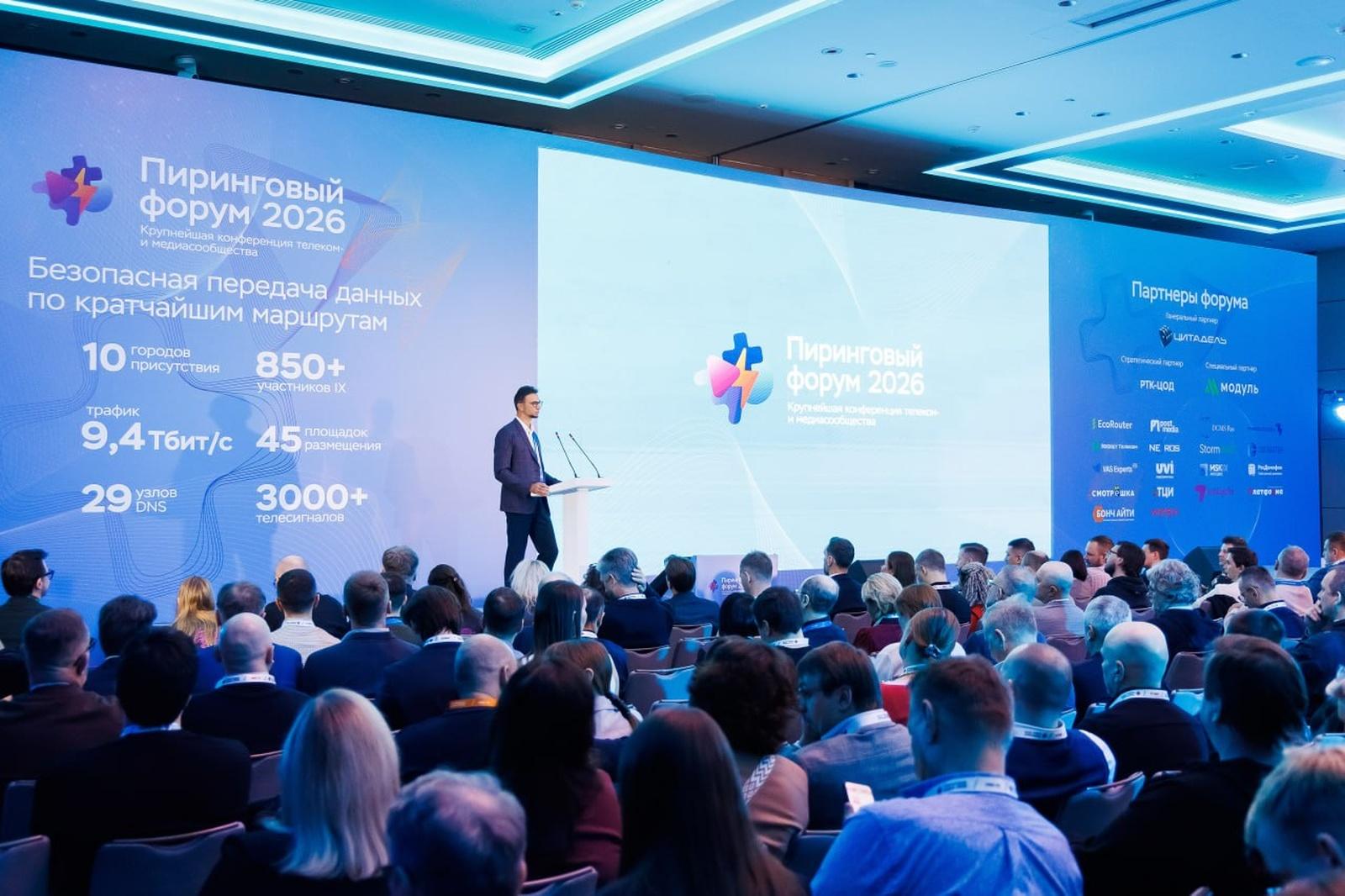
For the first time in the forum's history, the business program was divided into three parallel tracks. Alongside traditional discussions on network infrastructure and media technologies, special attention was paid to data centers, information security, and enterprise digital resilience.
The new thematic track brought together infrastructure solution providers and representatives of the banking sector, retail, e-commerce, and industry. Among the issues examined were criteria for choosing equipment hosting sites, the ratio of capital and operational expenses, and reducing data transmission latency. Participants also discussed the protection of distributed corporate perimeters and the specifics of operating autonomous systems under current regulatory requirements.
Expanding the program made it possible to consider digital infrastructure development not only from the perspective of technology service providers, but also from the viewpoint of companies that use these solutions in their operations.
Within the “Infrastructure and Network Services” track, the results of a study on the Russian fixed-line communications market were presented. Experts examined the development of national domains and domestic systems for measuring communication link quality.
A significant portion of the discussions was devoted to information security. Using practical examples, participants analyzed ways to repel cyberattacks on telecom operator infrastructure, as well as approaches to defense against attacks from their own subscribers and building fault-tolerant, geographically distributed networks.
The third track of the business program focused on the development of internet television, broadcast redundancy in the face of growing cybersecurity threats, and the adaptation of media companies to new broadcasting formats.
Experts discussed the prospects of launching FAST TV in Russia—free ad-supported streaming television channels—legal regulation issues for new formats, and the use of artificial intelligence in media production.
The track’s program concluded with an open conversation with TV host and journalist Dmitry Dibrov about the evolution of on-screen formats in the digital era.
The overarching theme of the forum's three tracks was the interdependence of various digital infrastructure segments. The reliability of end services is determined by the operation of an entire technological chain, including data centers, communication links, internet exchange points, media platforms, and information security systems. “Expanding the forum to three tracks was a direct response to market demand: today, the resilience of digital services depends on the coordinated work of the entire chain—from the data center and backbone communication lines to traffic exchange points, media platforms, and cybersecurity systems,” noted Alexey Kostin, Director of the Product Office at MSK-IX and head of the Peering Forum organizing committee.
According to the organizers, the forum's business program included 15 thematic sessions featuring over 80 speakers and industry experts, who presented more than 20 hours of practical content. In total, 1,258 specialists registered for the event.
iXBT.com served as an information partner of Peering Forum 2026.