Translated with AI from the Russian original.
Developers have implemented the VP9 codec for video calls and the AV1 codec for screen sharing.
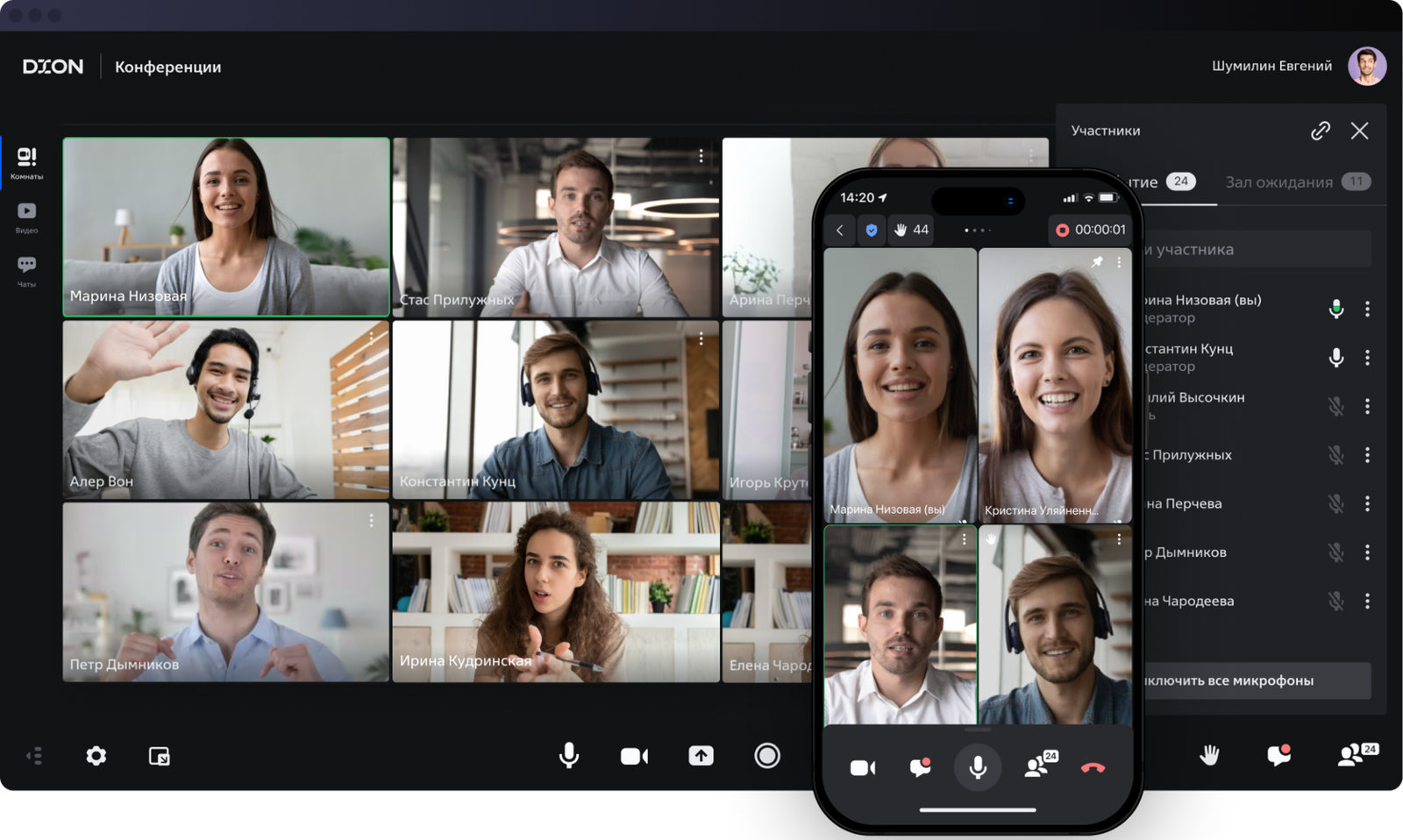
The Dion corporate communications platform, developed by IT holding company T1, has improved video communication quality and functionality through the implementation of new codecs.
The Dion desktop application now uses the VP9 codec for video calls, which has reduced the amount of data transmitted by 35% and improved image quality by 25%. This has made it possible to abandon the outdated VP8 codec and Simulcast technology. According to the developers, previously, due to Simulcast, a user's device with the camera turned on had to send several copies of video streams at once, which created excessive load on the application and the network.
The AV1 codec is used for screen sharing in the desktop application and web version, which saves bitrate compared to the VP8 codec and reduces the load on the network infrastructure by approximately 20% with the same image quality.
Roman Cherednikov, Director of the Dion project portfolio, emphasized:
The implementation of the VP9 codec for video calls allows us to meet less stringent network requirements, while AV1 for screen sharing ensures the transmission of the clearest possible image with minimal load on the Internet channel.











