Translated with AI from the Russian original.
The Astra Group has announced the release of the Astra Linux OS update. Version 1.8.2 continues the development of the main directions laid down in release 1.8: support for modern hardware, administration automation, performance improvement, and user interface enhancement for quick system adoption.
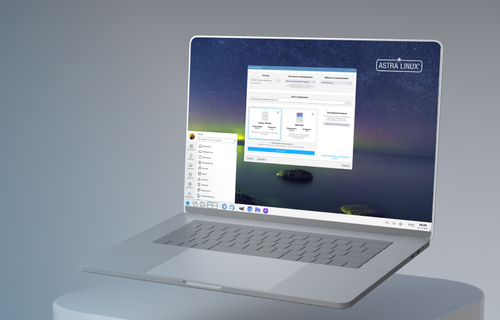
Astra Linux 1.8.2 uses an improved installer with LiveCD mode and a new OEM mode, which allows hardware manufacturers to configure the platform before transferring the device to the end user.
The parameters of previously implemented pre-installed security profiles have been expanded, the ability to create custom profiles has been added, as well as tools for managing access control lists in NFSv4.x. Security auditing has been strengthened: the system records more events, including account lockouts and changes to network settings.
A number of innovations have been introduced into the user interface: voice input of text, voice output of screen content, flexible settings for the "Start" menu, and a redesigned "Notification Center". For example, during a screen demonstration, you can enable the "Do Not Disturb" option.
For virtualization, integrity control of backups, NVMe emulation support, and a new lvm-qcow2 driver have been added to improve the performance of virtual machines. They can now be deleted in groups, and managing virtual networks has also become easier.
Improvements have also been made to working with remote connections: the remote access service via the RDP protocol has been optimized, video stream compression has been implemented according to the H.264 standard, and the security level has been increased through TLS support. All this reduces the load on the processor and network during remote work.
The Ark archiver now supports multi-volume archives, and the Evolution mail client can import MSG files and has new functions for working with attachments. Additional software and tools for developers have appeared in the repositories.
In the server platform, work with Podman has been improved: launching in user sessions with low integrity has been optimized, the event logging system has been improved, and compatibility with Docker commands has been expanded. The network infrastructure received an updated version of Samba 4.21.3 with an improved notification system, and the sssd authentication service has expanded support for two-factor authentication and account lockout monitoring.
The updated FreeIPA 4.11 facilitates deployment and integration with Windows Active Directory. Key server components have been updated: Apache2 web server to version 2.4.62, DNS server BIND9 to 9.18.33, Kerberos authentication server to 1.21.3, and Zabbix monitoring system to 7.0.5 with a new database template.
Additions to the main and extended repositories include solutions for monitoring (ioping), data management (nwipe, MinIO), and security, new modules for working with NVIDIA graphics accelerators, and security policy management tools.