Translated with AI from the Russian original.
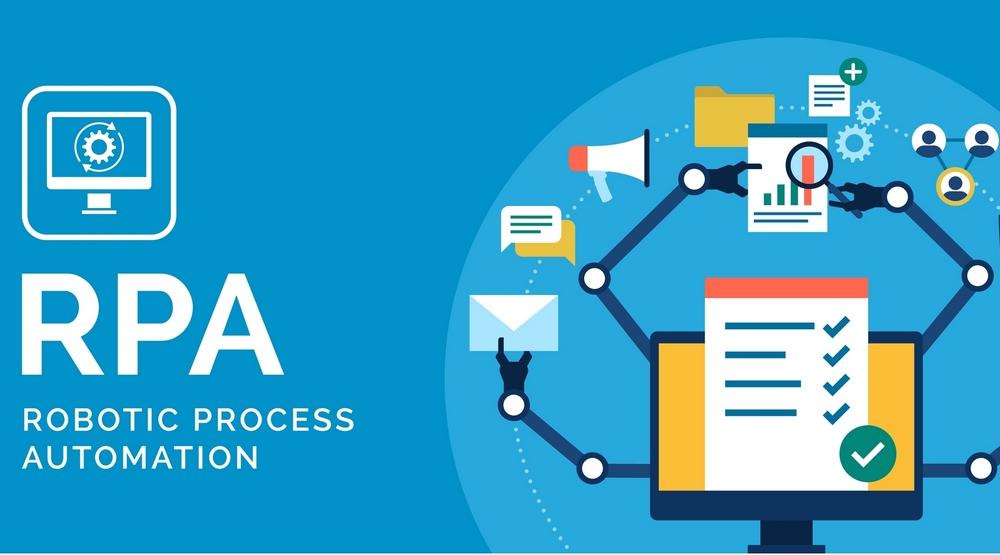
RPA (Robotic Process Automation) is the practice of using various software components to automate routine office tasks, such as analyzing or filling out forms, transferring files, etc. Robotic process automation optimizes workflows by removing routine tasks from employees' workdays.
History of RPA Development
Robotic process automation has evolved from simple scripting solutions to a key technology for digital transformation. Its development can be divided into several stages, each associated with technological breakthroughs and business needs.
The history of RPA (robotic process automation) began in the 1950s with automation on mainframes. In the 1960s, it became clear that many business processes could be automated using software solutions. In the 1980s, companies began using computer programs to manage business processes. In the 1990s, the first programs appeared that could automate repetitive tasks and processes. RPA flourished in the 2010s. The term RPA came into common use, companies attracted billions in investments, and low-code platforms emerged. Since 2020, the era of hyperautomation has begun, where RPA is being combined with artificial intelligence and machine learning.
In Russia, platforms such as PIX Robotics and Robin RPA were created in the 2010s. Domestic RPA platforms appeared in Russia in 2019. Three years later, about a dozen major Russian manufacturers were registered in this area, but by that time, Western companies such as Automation Anywhere, Blue Prism, and UiPath already occupied, according to various estimates, 70-80% of the Russian market. Their customers were the largest companies in telecom, banking, retail, etc., that is, those sectors of the market where there was a large flow of routine processes.
Process automation using software robots in our country was quite slow. Usually, customers only agreed to test operation, but often this was the end of the implementation process. Western solutions in this area were quite expensive, but gradually Western vendors offering software robots optimized their pricing policy, reduced the payback period of implementations to one year, and the business began to gain momentum.
Software Robot Market
In general, the Russian RPA market is assessed very differently by different analysts. For example, Svetlana Arkhipkina, CEO of ROOMY bots, assessed the current situation as follows: "In 2021, the volume of the Russian RPA market was about 16 billion rubles, and in 2022, due to the departure of Western vendors, it decreased to 500 million rubles."
Here is information for 2024. According to TAdviser, the Russian RPA systems market reached 21-24 billion rubles in 2024. According to forecasts by IBA, the volume of the Russian software robot (RPA) market in 2024 amounted to about 60 billion rubles, with a growth rate of 40-50%. Primo RPA agrees with these data, and it is expected that in 2024-2025 the RPA market will grow by 40% or more. The source technologymagazine.com links RPA with AI and machine learning, noting market growth to $1.3 billion by 2025.
The volume of the industrial robot market for 2024 amounted to 7.6 billion rubles. This was announced in an interview with the Russia 24 TV channel by the Minister of Industry and Trade of the Russian Federation Anton Alikhanov.
In which industries is RPA used?
Robotic Process Automation technology is used in various industries where there are routine tasks and processes. RPA is mainly in demand in finance, industry, logistics, trade, and healthcare.
The use of RPA in finance is developing most actively. This leads to a reduction in errors. According to the analytical company Deloitte, the accuracy of operations with the participation of robots reaches 96%. Software robots operate almost continuously, performing tasks faster than employees. RPA helps reduce the time it takes to complete operations from minutes to seconds, freeing up resources for more creative work.
The implementation of RPA allows banks to significantly reduce maintenance costs, reducing dependence on manual labor and increasing overall efficiency. Robots are simply integrated into existing information systems, providing rapid implementation with minimal burden on IT personnel. According to a Deloitte study, the payback of RPA projects is less than 12 months. An increase in the quality of customer service is also ensured. According to the company "Reksoft," the payback of software robots in supporting functions reaches several months.
In logistics, the use of RPA leads to faster order processing, optimization of the use of warehouse resources — for example, the system can automatically distribute goods around the warehouse, taking into account the frequency of access to them, which reduces the time to search for goods. Coordination between suppliers, manufacturers, and distributors is also improved.
Minimizing the human factor in logistics reduces the likelihood of human errors.
In healthcare, RPA is also gradually beginning to be used. There is a lot of work for software robots here, including automating the processing of patient data, automatically entering and updating data, registering new patients, and updating medical records. Insurance policies are also processed — checking and approving insurance claims, checking policies, sending notifications. Managing the doctor's schedule is most relevant for patients.
RPA in Industry
As for Russian industry, RPA technology was first introduced into the business processes of the Magnitogorsk Iron and Steel Works (MMK) in 2018, and today the company already operates more than 349 robots. This was noted at the sixth industry conference "Next Connect: Alloy of Technologies."
MMK is one of the leaders in the implementation of RPA among industrial enterprises in Russia. Evgeny Tarabaev, Head of the Economics Department of MMK, clarified that over the past four years, almost 4 billion rubles have been invested in various digital solutions at MMK, and an economic effect of 4.7 billion rubles has been obtained.
Among the large implementations of software robots, the following can be mentioned. For example, employees of Gazpromtrans have developed more than 70 software robots to automate business processes, which save the company's specialists 3 thousand hours per year. Gazpromtrans has been developing software robots since 2022. During this time, more than 130 employees have been trained in business process automation, and in 2019, 316 employees of Severstal — CES underwent robotization training.
New functions of software robots
Most Russian RPA solutions in recent years have focused on repeating or replacing the functionality of world leaders. Immediately after the departure of Western vendors from the Russian market, converters became popular solutions to simplify migrations from foreign RPA solutions to Russian ones.
The developers of the PIX platform presented the PIX Adapter complex, which greatly simplified the migration of RPA projects from foreign platforms.
Russian business is now extremely busy with import substitution problems. Artificial intelligence and machine learning have become one of the important drivers of growth in the robotic automation market.
Dmitry Muravyov, Head of the Artificial Intelligence Center of MMK-Informservice, said at the Next Connect industry conference: "When RPA is used in conjunction with artificial intelligence, machine learning, computer vision, and data analysis, software robots not only repeat human actions, but can also make decisions themselves based on data."
The right choice of processes for RPA
Here, the costs consist of the labor costs for finding suitable processes for automation, directly developing software and implementing a software robot, as well as the cost of software licenses.
When searching for suitable processes, it makes sense to use Process Mining and Task Mining.
With the help of robots, you can even automate the search for repetitive business processes suitable for automation. That is, the robots themselves are looking for a field of activity for themselves, and thanks to the support of the No Code mode, they can independently create robots to automate the found niches.
Developers RPA conclude agreements, test, train
Here are some of the news from the RPA market:
- Companies that implement software robots conclude agreements on cooperation and promotion of RPA software. Such an agreement was concluded by Gazpromneft-CR with the Russian developer of the Primo RPA business process automation platform. At the same time, Gazpromneft-Digital Solutions will become the official distributor and integrator of the platform.
- The developer of business applications for government and corporate clients SL Soft (Softline Group) and JSC "NPPKT" announced that their solutions — the OSnova operating system and the ROBIN intelligent automation platform — have successfully passed compatibility testing.
- According to the results of joint tests conducted by SL Soft and Astra Group, the correctness of the ROBIN platform in the Astra Linux operating system environment was proven.
- PIX Robotics announced the expansion of the PIX Enlightenment program to promote popular professions in IT among young people. Together with leading universities in the country, the PIX Robotics team will train students in RPA development and BI analytics on Russian products.
- Low-code RPA platform Atom.RITA allows you to organize a full cycle of software automation of business processes: creation of software robots, debugging, support and development.
Large implementation of RPA systems in Russia
The Federal Tax Service of Russia is implementing the Russian low-code platform Puzzle RPA with an artificial intelligence module. In July 2025, a state contract was implemented, which provides for a perpetual and unlimited license, rights for the development of the platform within the department, as well as technical support until 2028. This is one of the largest implementations of a domestic RPA solution in the public sector: the system architecture is designed for a scale of more than 120 thousand jobs. This was reported to CNews by a representative of Puzzle RPA.
Leading RPA developers
Among the leading Russian developers of software robots are the following: PIX Robotics, Atom.RITA (Rosatom), Robin (part of Softline), Salute RPA, Primo RPA, Sherpa Robotics, One RPA.