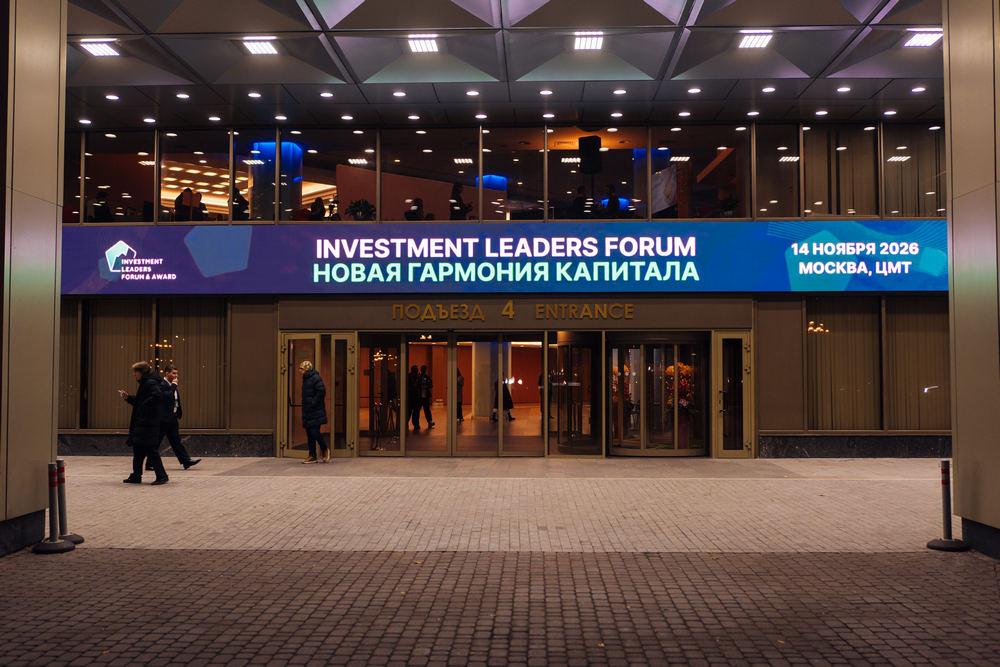
The forum concluded with the Investment Leaders Award ceremony. The award winners included MC Alfa-Capital, BCS World of Investments, Live Investing Group, MC Pervaya, Positive Technologies, MC TETIS Capital, SberNPF (a partner of SberInvestments), the Vesperfin financial school, SFN, ASTORIUS, the SVOY fintech group, and the INFINITUM specialized depository. They are united by a shared market demand for a sustainable capital management strategy.
For retail investors, access to the market is no longer an issue. What matters now is understanding which instrument aligns with their goals, time horizon, and risk tolerance.
“Technology makes investing more accessible, but it does not eliminate the need for informed choices. It is crucial that behind a user-friendly app lie clear instruments, high-quality analytics, and professional support. Decisions should be made based on one’s goals, investment horizon, and risk tolerance, rather than under the influence of market noise,” noted Andrey Yatskov, Head of the Brokerage Services Department at VTB.
Active private investors show growing demand not for individual trading ideas, but for discipline, risk control, and systemic infrastructure.
“Rate cuts trigger an outflow of capital from bank deposits to the stock exchange, yet the news backdrop remains highly volatile. Therefore, investors are shifting from amateur strategies toward professional trading in prop trading firms: what matters here are not forecasts, but liquidity analysis and risk control without carrying positions overnight,” said Sergey Alekseev, CEO of Live Investing Group.
In the institutional segment, the investment horizon is becoming decisive.
“In less than three years, the Long-Term Savings Program (PDS) has become a key product for institutional investors and a source of long-term capital for the economy. Thanks to a 15-year horizon, non-state pension funds are becoming the primary net buyers of OFZ bonds. As the rate cut cycle continues and risk appetite grows, fund interest will turn toward other long-term asset classes: equities, securitized bonds, and so on,” noted Dmitry Doynikov, Chief Investment Officer at SberNPF, partner of SberInvestments.
This demand for sustainability is especially evident in real estate.
“The key trends in the investment market are diversification and a focus on asset quality. Decisions are shaped by interest rates, inflation, and geopolitical risks. Particular attention should be paid to real estate with a sustainable rental income stream. When selecting properties, location, liquidity, and capital appreciation potential are vital, not just the current yield,” noted Andrey Oshchepkov, Investment Director at MC TETIS Capital.
In the debt market, the choice of instrument increasingly depends on the investor’s horizon and tolerance for volatility.
“We see the situation in the debt market through the end of the year as follows. More subdued expectations regarding key rate cuts make floaters (floating-rate bonds) and money market instruments—classes of assets whose coupon depends on key rate dynamics—more relevant. These instruments are particularly suitable for conservative investors. At the same time, if an investor has a longer investment horizon and is tolerant of volatility, the corporate bond market and fixed-coupon OFZs allow locking in current rate levels for a longer term,” noted Vladislav Danilov, Portfolio Manager at MC Pervaya.
In real estate, the focus is also shifting from price appreciation expectations toward the asset’s ability to generate stable cash flow.
“The commercial real estate market is transitioning from record growth to stabilization, with capital being redistributed in favor of offices and income-generating completed properties. What comes to the fore is not the expectation of general growth, but an asset’s ability to maintain demand and cash flow across different economic cycles,” noted Ruslan Nadrov, Deputy General Director of MC Modern Real Estate Funds (SFN).
At the same time, fund-based formats expand access to real estate for investors seeking passive income.
“Real estate is an important part of an investment portfolio, but only when guided by the right strategy. Today, selection requires analyzing location, concept, and precise calculation of investment metrics, taking into account asset appreciation and holding costs. Financial instruments will help build capital architecture. Real estate closed-end funds (ZPIFs) can attract more and more investors interested in earning passive income without managing properties themselves,” noted Ekaterina Avdeeva, Chairman of the Board of Directors of ASTORIUS Real Estate Corporation.
“According to forecasts by IC Svoy Capital, by 2030, market-traded ZPIFs will account for about 50% of real estate investments made via funds. Fund shares will become the main, if not the only, opportunity for most people to earn from this asset: buying residential and commercial space without debt is already expensive today, even for people with above-average incomes,” shared Evgeny Aslamov, CEO of Svoy Capital Investment Company (part of the SVOY fintech group).
Behind investment decisions lies the operational foundation of the market: accounting, fund administration, and process reliability.
“Today, management companies have the opportunity to make an informed choice—whether to build their own operational circuit or focus on investment strategy. Delegating accounting functions to a specialized depository can become a strong competitive advantage,” believes Ilya Anikin, Director of Outsourcing and Fund Administration at INFINITUM.
Amid uncertainty, investors are evaluating asset quality and company sustainability more closely.
“Today, investors are becoming more selective and are scrutinizing the risk-return balance more carefully. In conditions of economic uncertainty, portfolio diversification, asset quality, a company’s long-term sustainability, and its financial and operational performance play a special role,” noted Viktoria Kuzmina, PR/IR Director at NIRUM.
Investor financial literacy is no less important. “The economy is under no obligation to create favorable investment opportunities for us. Today, an investor’s main asset is knowledge. It helps leverage market potential both in tranquil times and during crises. Financial literacy is always needed, not just when everything is going well,” noted Arina Vesper, CEO and founder of the Vesperfin financial school.
Companies participating in the Investment Leaders Forum & Award 2026 point out that market competitiveness is increasingly less determined by an individual product or favorable market conditions. Service clarity, analytics quality, risk management discipline, asset sustainability, and the ability of infrastructure to withstand a long investment cycle are becoming increasingly crucial.