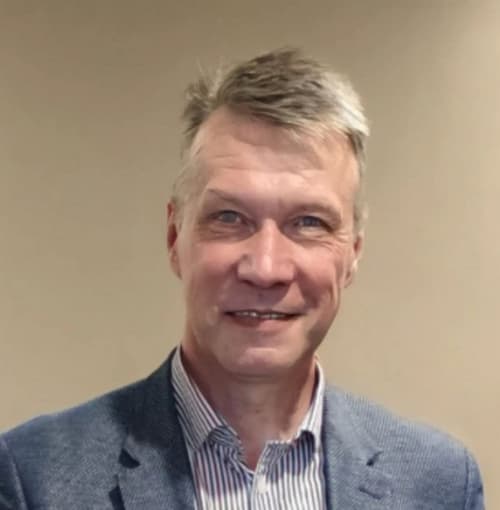
Vladimir Petukhov, Sales Director for Russia and CIS at KingDian, answers questions from the IXBT.pro editorial team.
Many memory and SSD manufacturers are currently reducing their presence in the consumer segment. Why did KingDian choose this particular moment for active expansion into Russia?
KingDian's entry into the Russian market indeed coincided with a storm in the memory market. Many large manufacturers are shifting resources to server memory and AI equipment. Many are reducing supplies of consumer equipment. But the demand for computers is still high. Someone's problems are someone else's opportunities. KingDian historically works on short-term exchange contracts for chip orders. This now provides greater flexibility and more opportunities to meet partners' requests. KingDian does not spread itself thin, does not try to produce everything for everyone. The company has many years of experience and expertise specifically in consumer products, and we want to use this expertise to the fullest.
The company was founded in 2010 and has a 15-year history. What was the main trigger for entering the Russian market now, rather than earlier?
KingDian has long shown interest in the Russian market. Back in 2024, the company participated in Russian IT exhibitions. That's when I personally met the management. We realized that we "speak the same language," which means we can enter the market and implement big plans. And in 2025, we already launched our cooperation.
The official announcement emphasizes "global expansion." What place does Russia and the CIS countries occupy in this global strategy?
KingDian successfully operates in more than 50 countries worldwide - in Latin America, Mexico, Indonesia, India, South Korea, and, of course, in China itself. Russia, by territory, is 1/6 of the world, but we are still very far from 1/6 of the global IT market share. Even before the introduction of various restrictions, the share of the Russian market in the sales of global IT giants rarely exceeded 5%. KingDian's own factory, located in Shenzhen, can produce up to 1.5 million devices per month. I am very pleased that in the first year of operation, we managed to approach the Russian market share for the company at the same 4-5%.
Your assortment includes both high-speed DDR4/DDR5 RAM and various SSDs. For which audience of Russian users will these products be most interesting first and foremost?
KingDian produces mass-market products that are primarily of interest to the mass user. There are also niche products. For example, the G33 - an M2 form factor SSD, only 33 mm long - 2230. But M2 2280 SSDs are much more in demand.
The company's website states that you even have SSD series with RGB backlighting and cooling radiators. Will such "gaming" products be presented in Russia, or will the focus be on more mass-market series?
RGB backlighting is a matter of taste, but a cooling radiator is very useful even in non-gaming PCs. Products with radiators and RGB are already actively sold in Russia. For example, on Wildberries. But I'll be honest - the most mass-market and in-demand products are the cheapest ones, without radiators and RGB.
How do KingDian products (for example, NVMe PCIe Gen3 and Gen4 lines) technologically differ from the offerings of brands already established in the Russian market?
We are unlikely to "surprise the world." Our forte is high-quality, reliable products at an attractive price.
For many Russian users, the reliability and resource of drives (TBW) are critical. Can you provide the key durability parameters for your flagship SSD models?
TBW (Total Bytes Written) is the total amount of data (in terabytes) that an SSD is guaranteed to be able to write over its entire service life; it directly depends on the SSD's capacity. For example, if you buy a 1 TB SSD with a TBW rating of 600 TB, it means you can completely rewrite the disk with data "from scratch to failure" 600 times. With typical home use (writing about 20 GB per day), this resource will be exhausted in approximately 82 years. For business, with an intensive load of 300 GB of writing daily, the drive will last about 5.5 years.
The resource of drives heavily depends on the resource of memory chips. KingDian uses only TLC memory chips for SSDs. Their write/erase resource is about 1000 cycles.
The SSD controller uses Wear Leveling algorithms to evenly move data across memory cells so that they wear out equally. Over-Provisioning is a part of the disk used by the controller to replace failed cells and maintain high write speed. Without free space, the drive will start to work slower and fail faster. It is very important to have free space for writing cache data on the disk - at least 10-15%.
You are already present on Wildberries. Will this be the main platform, or do you plan to develop classic distribution through IT channels (system integrators, PC assemblers, retail chains)?
Wildberries is the largest Russian marketplace and is becoming one of the largest players in the electronics market. But we do not plan to "put all our eggs in one basket." The "classic" distribution channel is already working, we are represented in many classic computer stores - OnlineTrade, X-Com, Regard, KNS, regional ones - KM-Union, E2E4, ALDO, and many others.
How do you plan to build service support and warranty service in Russia?
Here we are not reinventing the wheel and work through partners. It is very encouraging that so far there are very, very few warranty claims.
Against the backdrop of exchange rate fluctuations and logistical difficulties, how will KingDian manage to maintain "inexpensive and high-quality solutions" (as stated on the website) compared to Chinese brands that have long been present on the market?
We strive to support partners and meet them halfway in overcoming logistical difficulties. Current results show that we are successfully competing. One of the key advantages is our own factory, which means short production times and strict quality control. Another advantage is a private company and an experienced, highly qualified team. Now, when decisions about orders sometimes have to be made within a few hours, this is very important.
You have cooperation with OEM partners. Is KingDian ready to consider supplies for local assembly of PCs and laptops in Russia or the CIS?
Most of KingDian's current supplies go to OEM partners.
Will the packaging, documentation, and, more importantly, the interface of the proprietary software (for disk cloning, S.M.A.R.T. monitoring) be fully translated into Russian?
KingDian drives and memory comply with industry standards and are compatible with popular software. For example, with CrystalDisk. We do not plan to spend resources on developing our own software. We save our money and our partners' money. The packaging already contains information in Russian - this is a requirement of Russian legislation and a real need for buyers.
What three key steps will KingDian take in the next six months to make Russian consumers aware of and trust the new brand?
The biggest and most important step is participation in the Computex-2026 exhibition. This is the largest computer exhibition - an excellent meeting place for Russian partners and partners from all over the world. I invite Russian companies to the exhibition!
Do you plan to adapt any models to specific Russian operating conditions (wide temperature range, increased reliability requirements for voltage fluctuations)?
We do not plan to. Everyone should do their own thing and not try to do everything at once.
We will continue to produce quality consumer products.
Looking 3-5 years ahead: what do you see as KingDian's market share in the Russian SSD and RAM segment?
The memory market is changing very quickly. 5 years ago, Kingston was the undisputed leader in the Russian market. Now its share has decreased many times over. A year ago, few could have predicted today's shortage and multiple price increases. Until now, the memory price market has changed in cycles - "growth-decline-growth-decline." There is an opinion that the current "supercycle" of price growth will end in 2027. But some say in 2030. We'll see. I am firmly convinced of one thing - the need for consumer memory and SSDs will remain. People will use computers at home, at work, and for gaming. We will try to support existing partners and attract new ones.
The maximum program is to enter the TOP-5 vendors of the Russian market in the SSD memory segment, so that buyers know the KingDian brand well, and know it from the best side.